Mapping the Literary Constellation: 50 Key Moments in a Personal History

The Guardian UK loves lists, and they spend plenty of air time debating the purpose and usefulness of this form. Katie Kitamura waxes in her article “Literary Lists: Proof of our existence”:

Lists are used as a formally alienating device, a dehumanising agent, that is nonetheless entirely wrapped up in the question of human life.

How do we describe the fact of human existence? At a certain point, perhaps, style fails us. Language, even and in particular at its most evocative, becomes less of an aid and more of a difficulty. In these circumstances, a certain kind of writer has, again and again, reverted to the list – perhaps as the simplest proof of existence in the first place. It’s no accident that these lists often delineate material objects, the physical evidence of a life.

…[Umberto] Eco is talking about what I can only describe as a big feeling, and one that requires all the support of its formal and literary scaffolding. He is not, in the main, talking about grocery lists or lists of books read. But as long as we’re keeping lists, no matter what those lists are, we’re keeping faith with some idea of perpetuity. We are making the assumption that the list will endure even when we do not.

Furthering the idea that lists endure, The Guardian enumerated English literature’s 50 key moments from Marlowe to JK Rowling, registering historical moments and literary milestones. Here’s a taste:

Note: what follows is not merely a book list, but an attempt to identify some of the hinge moments in our literature – a composite of significant events, notable poems, plays, and novels, plus influential deaths, starting with the violent death of Shakespeare’s one serious rival …

1. The death of Christopher Marlowe (1593)

2. William Shakespeare: The Sonnets (1609)

3. The King James Bible (1611)

4. William Shakespeare: The First Folio (1623)78)

In the spirit of Eco’s perpetuity, here’s a personal record–certainly not exhaustive nor complete–noting moments of  self discovery, influential people, places, films, musicians, mentors, trailblazers to follow, and other artifacts that have shaped this literary self. The below register doesn’t follow chronological order nor an order of importance but is a haphazard attempt to pin down the brightest constellations that wheel over my literary skies. Like any piece of writing, it’s been revised nth times over, and these fidgety fingers are still tempted to make further emendations. It will be interesting to revisit ten and twenty years from now and discover how the skyscape has shifted.

1. Central Station
2. The City of Angels
3. My soul mate, PJS.
4. Arundhati Roy’s The God of Small Things
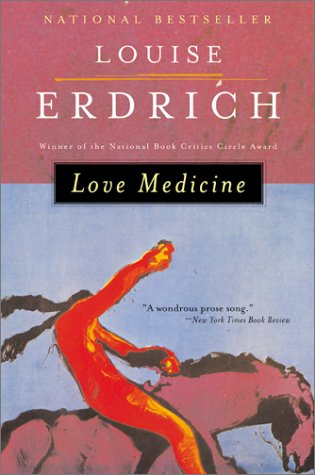
5. Louise Erdrich’s Love Medicine
6. Barbara Jane Reyes
7. Lysley Tenorio
8. Rosemary Graham, Marilyn Abildskov, and Cecilia Brainard Manguerra
9. Saint Mary’s College of California MFA Creative Writing Program (2006)
10. UCLA Creative Writing Program: David Wong Louie and Paula Gunn Allen (1998)
11. Teaching Composition Classes
12. NYT article on Filipino House Bands
13. LA Weekly
14. Beethoven
15. The Smiths
16. MacDowell Colony Residency, January 2013
17. Maternal & paternal grandparents’ lives & stories
18. Virginia Woolf
19. Gabriel Garcia Marquez (short stories–not the novels!)
20. Typewriter Model #____
21. Apple
22. WordPress
23. Mi hermanito
24. BBC’s adaptation of Elizabeth Gaskell’s North & South

25. EM Forster
26. Kiran Desai’s The Inheritance of Loss
27. The City of Angels

At Home in Venice, Los Angeeles
28. Andrea Levy’s Small Island
29. Joseph Conrad and his Heart of Darkness
30. Thomas Hardy (Tess of d’Ubervilles, Return of the Native, and Far From the Maddening Crowd)
31. Frederich Nietzsche
32. This Bridge Called My Back and Borderlands/Las Fronteras

33. Shakespeare’s Hamlet
34. Mr. Thurston’s Honors English class at Monte Vista High School and his extra credit reading list
35. Mr. Tato, Avocado Elementary School
36. Libraries at Highland Elementary, MVHS, Avocado, and Spring Valley Middle School
37. Elementary School Bookfairs (Scholastic Catalogs–does anyone remember these?)
38. Laura Ingalls Wilder Series
39. The Romantics: Shelley, Byron, Wordsworth, and the rest of the guys in the band
40. Charlotte Bronte
41. Emily Bronte & Wuthering Heights

42. Sandra Cisneros, Woman Hollering Creek and Loose Woman
43. The UCLA Ten Series and The Norton Anthology of English Literature I and II
44. The Great Chuck D, aka Charles Dickens
45. Poets & Writers
46. Mary Volmer, Nick D. Leither, and Emily Breunig
47. KPFK’s Global Village’s Yatrika Shah-Rais and Derek Rath
48. KCRW’s Tom Schnabel
49. Pa and the copies of Aesop’s Fables and Greek mythology books he gave me as a child
50. Ma, all her books and paperwork that crammed our house and her indomitable encouragement to read & write

Hopefully this inventory might give you pause to reflect over the personal and private moments that have shaped your art and passion. This could include lovers, would-be lovers, chance encounters, TV shows, songs, albums, poets, comediennes–whatever gets your engine revved. You’ll leave beloved people and places out that will make you cringe with regret, as I have, but that’s the nature of lists. As much as they stand as testament; they’re essentially ephemera like every other form we try and hold fast to. These watersheds don’t have to be explained but should mean everything to you.

Revving Engine for Babylon Salon: 2 March 2013, 7pm

If you’re in the city this weekend, please consider stopping by Cantina SF for some literary love and libations.

Free Admission —  Cash Bar Exotica 
Doors at 7, Reading at 7:30

Cantina SF – 580 Sutter St, San Francisco

Babylon Salon
presents:
Our Spring Reading
Saturday, March 2, 2013, 7:00 PM at Cantina SF (basement)
featuring
Hugo & Nebula award-winning author Terry Bisson 
& acclaimed author of West of Kabul, East of New York Tamim Ansary


Also presenting transmedia artist Kate Durbin, novelist Renee Thompson, author of The Plume Hunter, and essayist and short story writer Rashaan Alexis Meneses.


Terry Bisson is an American science fiction and fantasy author best known for his short stories. Several of his works, including “Bears Discover Fire”, have won top awards in the science fiction community, such as the Hugo and the Nebula.

Tamim Ansary is the author of Destiny Disrupted: A History of the World through Islamic

Eyes and West of Kabul, East of New York, among other books. For ten years he wrote a monthly column for Encarta.com, and has published essays and commentary in the San Francisco Chronicle, Salon, Alternet, TomPaine.com, Edutopia, Parade, Los Angeles Times, and elsewhere. Born in Afghanistan in 1948, he moved to the U.S. in 1964. He lives in San Francisco, where he is director of the San Francisco Writers Workshop.

Post-Residency: Was It All A Dream?

A GravestoneIf New Hamspshire were a lover, she would be bitter at times and take to teasing her admirers. One day, her sky is scintillating, crystal clear, the air crisp as an autumn leaf, but she will turn on you the following afternoon. Storm clouds troop across what used to be a dome of limitless color, and the woods that shivered bright in all shades of brown and black turn somber in a heavy veil of mist. The contrast chills the senses. Sheer blinding light reflected from the snowfall seems as if it could stretch for infinite infinities is cut short by startling stone grays and blues from rocks defying the snow, and the endless trees that turn darker the whiter the landscape gets. The white tries to blanket every surface, and there is no escaping it except to take cover indoors then, before anyone knows it, the ice melts, the sound of rushing water surrounds, you, as if the whole world will slip into a steady stream.

In this setting, I renewed my commitment to writing, vows sanctified by fellow colonists, board members, and the gentle and caring staff of MacDowell. Being at the colony is a recognition of faithful commitment, acknowledged by a historic institution, sanctioned by a tradition, a national and international culture that carries the  legacy of what art is, what it could be, and what it has meant since 1907.

This place serves something like a training camp for creative types turned athletes. Here we learn the loneliness of longPeterborough Town Library distance running or how to build stamina for short fevered bursts of process and creative output. In the utter silence of our studio, we test the elasticity of our strengths, learn our weaknesses, and strategize how to tone our creative muscles, so we can re-enter the other world, the world of earning paychecks and paying rent or mortgages, which is someone else’s fantasy we’re obliged to participate in from time to time, but not while at MacDowell.

An hour feels like three in our studios. It’s amazing how much work you get done when you sit down to it, and let your mind settle with the tasks in front of you. There is this idea of being social and creative, and the two are sometimes mutually exclusive, and sometimes they go hand in hand. You learn the dance of both at MacDowell.

in case of emergency break iceAside from missing my MacDowell family, comprised of composers, architects, a martini-making photographer, a dancing upholsterer, ping-pong playing poets, novelists, playwrights, filmmakers, and interdisciplinary practitioners, if there is anything I could wish for is a residency solely for reading. To sit with a book and immerse in words is also an art, which takes discipline and practice. Of course, a residency dedicated solely to reading may be asking for too much, as if MacDowell doesn’t spoil one enough.

What I’ve learned & accomplished @ MacDowell include some of the following though it will take a while to fully digest the experience:

  • Revised 250 pages of the novel.
  • In revision, imagine each word costs $5. Figure out how much you can take away from and still have the essence of the story intact. Think Minimalism.
  • Do not dance with long johns on.
  • You will over-eat.
  • Life is not about looking for answers, but seeking big and meaningful questions for the chase of a lifetime.
  • Spotted, deer, one bushy white-stomached squirrel, two crows, flocks of turkey, which are bigger and blacker than the California ones.
  • Met my family from Maine and am amazed and inspired by their love.
  • Survived 7° weather + snow + 50mph wind.
  • Snow plows make me think of Москва.
  • There are no Targets in the UK.
  • A folly is a nineteenth century typology for landscape with no functional purpose.
  • Never fly United. Never.
  • I miss my MacDowell family and dearly hope to reconnect in person soon.
  • Thank god for Facebook, really!
  • If you’re deep and close enough to the projekt, it will tell you what needs to be done and instruct you how to proceed.

For safe-keeping in planning the next residency, which is just around the corner, here’s a list of what to bring for next time:

  1. blank pads of paper and post-its
  2. permanent markers
  3. push pins
  4. chocolate
  5. chai tea
  6. nice stationary
  7. wall calendar
  8. scissors, tape, and other small travel office supplies (check out Muji)
  9. scented candles
  10. gin
  11. beer
  12. extra batteries
  13. extra plug for mobile phone and Kindle
  14. lighter and/or matches
  15. hard disk
  16. good hand lotion
  17. pocketknife

Thank you MacDowell for a dream come true! Here’s hoping for a return visit soon.

San Francisco Wins @ Cantina SF, 2 March 2013, 7:30pm

Let’s not be sad about Sunday’s outcome. San Francisco is still a city to be proud of because it’s home to winning readers & writers, some of whom will be reading their work, myself included, Saturday, March 2, 7:30pm at Cantina SF. Aside from a stellar roster, Cantina SF serves some tasty cocktails. Below are the details. Please consider marking your calendar and forwarding to all interested parties.

Our Spring Reading
Saturday, March 2, 2013, 7:00 PM at Cantina SF (basement)
featuring
Hugo & Nebula award-winning author Terry Bisson 
& Afghan-American author Tamim Ansary 

Also presenting transmedia artist Kate Durbin, novelist and screenwriter Louis B. Jones, author of California’s Over and Radiance, novelist Renee Thompson, author of The Plume Hunter, and essayist and short story writer Rashaan Alexis Meneses.


Terry Bisson is an American science fiction and fantasy author best known for his short stories. Several of his works, including “Bears Discover Fire”, have won top awards in the science fiction community, such as the Hugo and the Nebula.

Tamim Ansary is the author of Destiny Disrupted: A History of the World through Islamic Eyes and West of Kabul, East of New York, among other books. For ten years he wrote a monthly column for Encarta.com, and has published essays and commentary in the San Francisco Chronicle, Salon, Alternet, TomPaine.com, Edutopia, Parade, Los Angeles Times, and elsewhere. Born in Afghanistan in 1948, he moved to the U.S. in 1964. He lives in San Francisco, where he is director of the San Francisco Writers Workshop.

Excerpt on the Re-Cap of Mills College Workshop: Geography as the Body

From Ruelle Electrique’s “Geography as the Body & Inherited Landscapes: A Shamefully Overdue Re-cap on the Mills College Workshop, November 18, 2012”:

Political Content Engagement Writing Workshop

Absolutely and positively late in re-capping but still here it is, an overview of the Mills workshop that your salonniere was invited to as a guest speaker hosted and organized by the gracious and talented writer and publisher melissa r. sipin , sponsored by ANAKBAYAN East Bay, TAYO Literary Magazine, Philippine American Writers & Artists and Mills College. The Political Content & Engagement Writing Workshop was a series of five free writing workshops where participants from all age ranges and from across the Bay Area also performed at a reading gala and had their work published in the “i am ND” anthology…

…When it came time for writing, yours truly created prompts to play with ideas on memory and/or cultural amnesia regarding native land, family, culture and tradition. The students wrote about body and space, concerning their hometowns of Vallejo, Toulumne, Los Angeles, and my neck of the woods, Paradise Hills in East County San Diego. The slides below are from the presentation on “Love & Labour: Geography and the Body” where writers explored their childhood neighborhoods and were challenged to describe their homes as a lover or an old friend.

Read the entire excerpt here.

Slide03

Past the Halfway Point

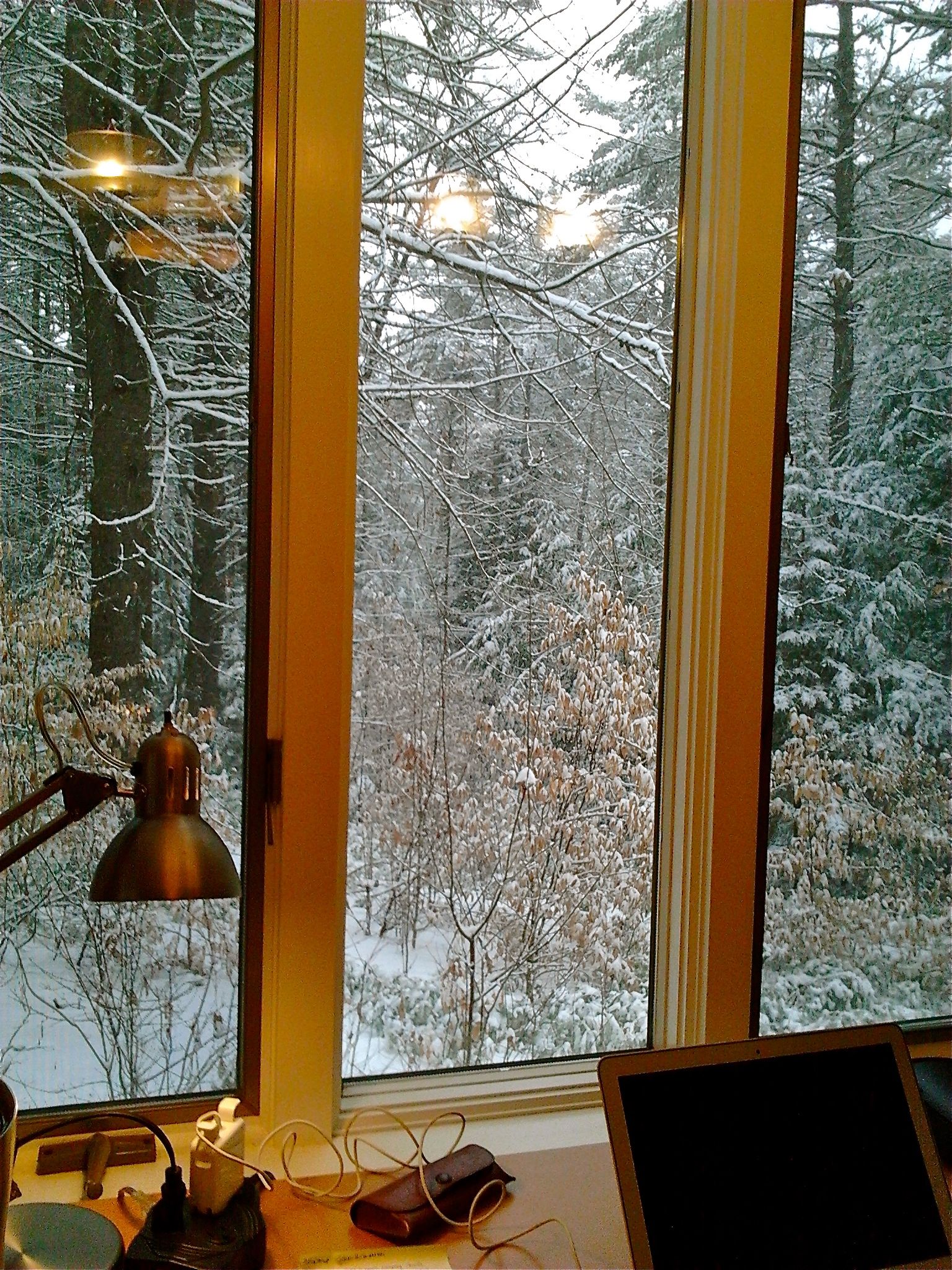
Colony Hall in the snnow
Colony Hall in the snow

Just past the mid-way point at MacDowell, a lot can happen in the space of a week and change. The second week has brought snow, snow plows, a visit with family from Maine, and sightings of one turkey, much bigger, blacker and more shy than California turkeys, a squirrel, which are fuzzier and have white bellies, and finally an interlude of birdsong during a freezing truncated walk through the woods.

It snowed the third night, and the next morning they were plowing the road with such industriousness that yours truly

Eaves Dormitory
Eaves Dormitory

could only think how grateful I am not to live in Russia. Witnessing such hard labor in contrast to the virtually immobile exertion committed in my studio made me consider the usefulness and practicality of this skill I’ve been bent on honing at MacDowell, but that worry was struck down pretty quickly when I turned back to the projekt at hand, and I have no doubt about the urgency of this piece. For a small moment of time, I almost compared the work between plowing snow to revision, trying to clear the path, for others to journey is arduous, sweaty, nerve-wracking, labor, and there is always plenty to plow.

a snowy day in the studio

One of the many traditions practiced at the Colony is for fellows, or colonists as they’re called here, to give presentations of their work, whether it be a reading or an open studio, you’re encouraged to share your artistic endeavors. The idea wasn’t that appealing, really, until a fellow explained that its best to present earlier rather than later during residency so that other fellows will have much needed context in terms of why you’re here and what you’re doing. This context cements a substantive foundation to conversations at dinner, breakfast, random encounters on the hallway or on the way to the studio. The whole purpose of the colony is not just for individual, solitary work but to be a part of the community, and being a part of a community means sharing. So, yes, there was a reading, and it was gratifying. In explaining my work to this crowd, I have a better grasp on how to explain what I’m doing, which not only helps keep me on track but also helps clarify the concept, so I can share with other communities as well.

Prometheus up in here

I’ve heard it said that the artists who step through MacDowell are the “cultural matrix” of U.S. Arts & Culture. A fellow colonist, over dinner, urged us to imagine all the different figures who have stepped through the doors and walked these grounds. The idea is over-whelming, frankly, and something I will have to sit and live with long after my time here is said and done.

If its possible, the projekt seems to be instructing me on what needs to happen next with revision. Its as if the manuskript is teaching me how to write. How is that?

With ten more days left, I’m trying to prepare myself for the return to someone else’s fantasy that I participate in, which I refuse to call “reality” because, as far as I’m concerned, living in this artistic mind and physical space is my reality.

More to come on the last week. For now, its steady and deliberate work on writing. Though I haven’t nearly gotten as much reading done as I had hoped, which is something I would like to work on, the art of reading, but there’s still time. One can always try.

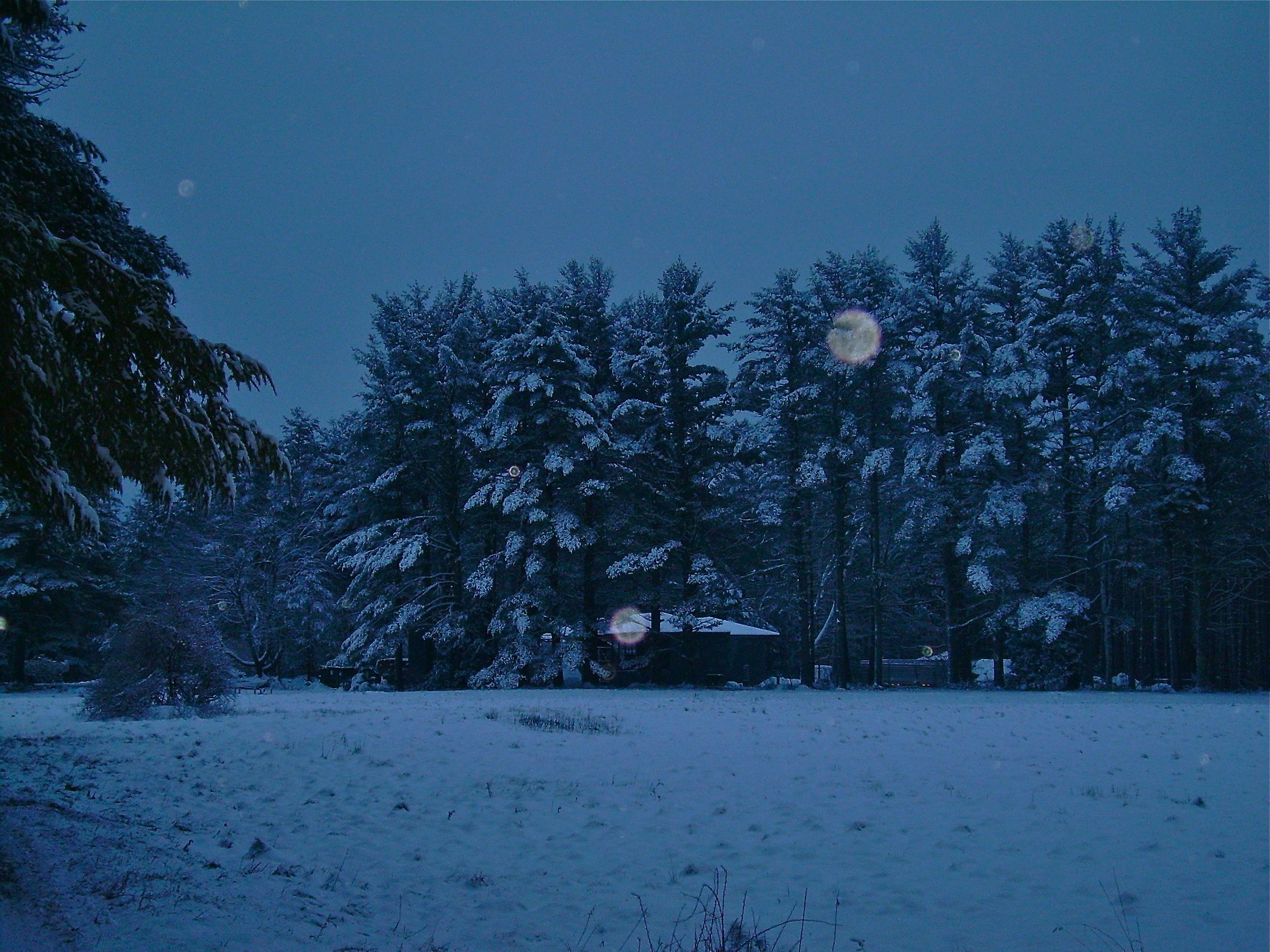
snowy night at the colony

@ Mansfield Studio

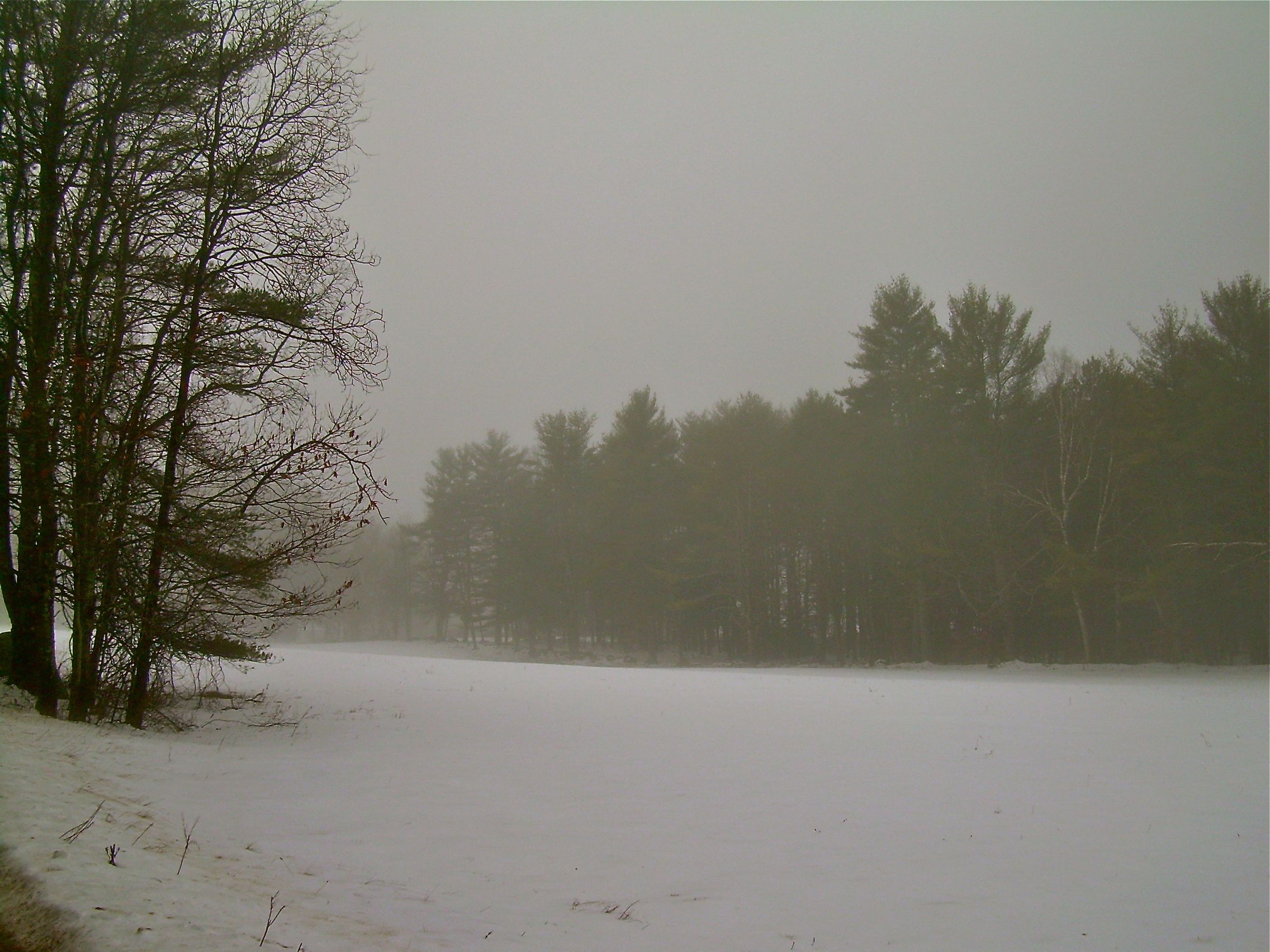
and my studio Mansfield in the mist

What is the latest at Mansfield Studio at The MacDowell Colony in New Hampshire? And who has been the greatest at Mansfield Studio? Mansfield Studio is a spacious hideaway just a seven minute walk from Colony Hall and Eaves dormitory, which is where yours truly finds herself hard at work for the next three weeks. Equipped with its own fire place and bathroom sans shower, an enclosed but chilly porch for sipping hot cocoa, and two desk spaces with enough room to dance the shivers away. Mansfield might be the space where I redefine my role as a writer and where I am renewing my vows to the act and art of writing.

Who has been the greatest at MacDowell? Each room has a set of boards, called headstones, where past fellows inscribe their name and the date of their stay, some of the greatest, though by no means not all include: ZZ Packer, Michael Chabon, Tillie Olsen, Richard Yates, R. Zamora Linmark (two fellowships at Mansfield!) Jean Valentine, Tayari Jones, Mary Jo Salter, Susan Steinberg, Julie Orringer (who I worked with in grad school, thank you Julie, your wise words stay with me even today). Rosellen Brown, and Rick Moody. So in the short time that I’ve been here, I’ve tried to channel the best of these great writers, who have paced the floor where I now pace, stared out the window, possibly pulling their hair as I do now, and rested on the bed staring at the ceiling. These are the artists and writers I know in my limited experience though the headstones span all the way back to the turn of the century.

Check out R Zamora Linmark

Since arrival, the first thing one may notice is how astoundingly loud a single, individual mind can be. The silence is deafening meanwhile my brain has been screaming to make up for the void of sound. In the dormitory, the most noise you’ll hear is the clank of the furnace when it switches on, which can seem thunderous compared to the moments before and the moments that follow. The studio is twenty time as quiet, and my brain feels like an airport. I can’t seem to shut off the flow of thoughts, words, song snippets, and random dialogue with myself that manifests in instinctual reaction to the utter noiselessness. Obviously some meditation is in order here.

a misty afternoon

What happens at MacDowell stays at MacDowell, particularly the meals, which are outrageously decadent. Soon as I arrived my first dinner was a hearty serving of ginormous pork chops with a cherry and red wine reduction, and someone offered me a gin martini. That’s right, gin, not vodka. Blessed be. The next night, lamb as the main course and cream puffs for dessert. We enjoy baskets of lunch delivered to our doorstep, and I’m trying my best to keep working past noon, so I don’t stand at the door like a panting dog, Pavlovian conditioned.

the daily basket of lunch


Aside from stuffing ourselves silly and hanging out like college kids again in Bond Hall, we are here to work, and there is plenty of work happening. Its twenty-four, seven. Someone is always away @ their studio, no matter the hour or deep into research in the one building that has internet connection. The underlying idea here is that each fellow forges a new, more committed relationship with their craft. I really feel like I’m renewing my vows and wonder how my role as a writer, my relationship with writing may gain a different and/or deeper meaning in this completely new and wholly dedicated context. Its exciting, the evolution.

There are readings almost every other night and open studios for artists who want to show their work. I’ve met architects, composers, photographers, poets, writers, ceramacists, and painters. What is easy to take for granted but is most sacred and special about this fellowship is that the process is prized above all. It doesn’t matter what you end up creating. Its not really about creation or a finished product, at all, but about creating and even thinking about creating. One doesn’t have to necessarily create. I consider a stay here the equivalent of those long peripatetic walks that the Romantics took. As much as it is about the act and art of creating, what this time and space encourages is the meta, being conscious about the form and matter of the act of art-making.

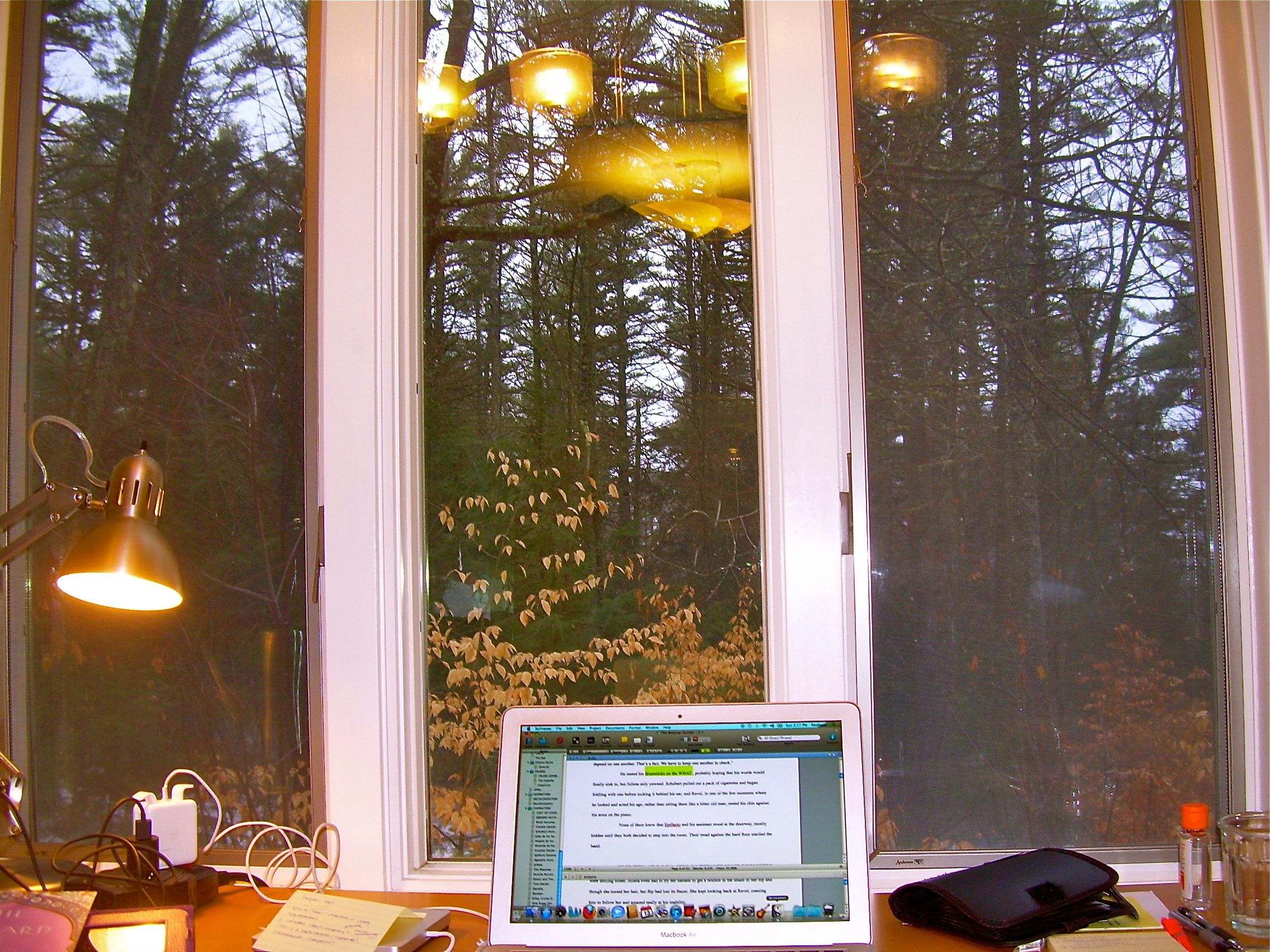
work in progressIf not in the morning then in the evening someone is bound to ask how the day went, and that question has an entirely different meaning here than in any other context. There’s an unspoken understanding if the day went well or was steeped in hair-tugging frustration. Asked the same inquiry a couple of days ago, I could only respond that I felt like I was in the boxing ring, going to toe-to-toe with a beast of manuscript I had sworn to tame. Now I’m feeling that the projekt is more like a cousin who I’ve only seen on holidays but am now enjoying a long season with and starting to find some rhyme and reason to this cousin’s idiosyncracies. Though I’m fully aware that this relationship can turn on me much like the weather. One day its 53 degrees and warmer than the Bay Area, which I’m missing like crazy, and tonight we’re expecting snow showers.

I’ve been reading Elif Shafak’s The Bastard of Istanbul, and she quotes a Turkish saying: “The soul needs to shiver to wake.” We shall see if my soul shall waken with the cold to come.

the road to my studio


“The Next Big Thing,” courtesy of Marianne Villanueva

Vicente de Memije, Aspecto symbólico del mundo híspanico, 1761.

Blushing intensely right now not just because I’ve been tagged by Marianne Villanueva as “The Next Big Thing” but I’m also shamefully late in responding to the recognition, but in the spirit of better late than never, here are some musings over this meme’s query. Cheers, Marianne, for the shout out!

1. What is the working title of your book?

Sorry, this one is under wraps.

2. Where did the idea for the book come from?
For the last four or five years, I’ve been obsessed with this New York Times article: http://www.nytimes.com/2005/05/29/magazine/29FILIPINO.html?pagewanted=all&_r=0

3. What is the genre of the book?

Its all made up.

4. Which actors would you choose to play your characters in a movie rendition?

I wish I was more current with Filipino actors, but there’s no getting around the fact it’d have to be an APC (All Pinoy Cast).

5. What is the one-sentence synopsis of your book?

Work-in-progress.

6. Who is publishing your book?

One step at a time, please, thank you.

7. How long did it take you to write the first draft of your manuscript?

Probably a year and a half. I’ve been on negative one draft for the last two or three years…

8. What other works would you compare this book to within your genre?

I’m stealing as much as I can from Kiran Desai’s Inheritance of Loss, and I would love to nab from Carsten Jensen’s We The Drowned, but that’s just me dreaming. Oh, and there’s some heavy borrowing from Fitzgerald’s Gatsby in terms of POV and who is or who isn’t the main character.

9. Who or what inspired you to write this book?

The NY Times article cited above is the primary mover for this; there’s also my grandparents on both sides who immigrated for love and labour. A PBS documentary, The Learning, from the POV series really resonated and keeps me on the straight and narrow when I lose my way with the manuscript. I’m hoping to show my students the film this Spring 2013 when I teach for the second time L&CS 123: Modern Global Issues. The projekt is very much based on ideas about diaspora, cosmopolitanism, geography & the body, and globalization.

From the POV website:

The Learning is the story of four Filipina women who reluctantly leave their families and schools to teach in Baltimore. With their increased salaries, they hope to transform their families’ lives back in their impoverished country. But the women also bring idealistic visions of the teacher’s craft and of life in America, which soon collide with Baltimore’s tough realities. A co-production of CineDiaz and ITVS in association with The Center for Asian American Media, with funding provided by the Corporation for Public Broadcasting and American Documentary | POV. (90 minutes)

Image from the International Observatory on Statelessness: All of the children were born in Sabah to illegal Filipino immigrants

Finally, DRM Irving’s Colonial Counterpoint has been a wonderful resource and fount of inspiration. Here’s just a taste on why from Chapter 1 “Colonial Capital, Global City”:

Manila was the world’s first global city. Its foundation as a Spanish colonial capital in 1571 forged the last link in a chain of trade routes that encircled the Earth. For the first time in human history, there emerged a system of transoceanic connections that allowed for the regular transport of people around the world and sustained exchange of ideas and commodities. Early modern Manila’s interstitial function in opening (and in some ways closing) the Chinese market to the world, together with its role as a cultural, commercial, and geographical nexus between Asia and the Americas–and, by extension Africa and Europe–endowed it with a global economic and political significance, outstripping that of any other city in the region…Manila was, essentially, a microcosm of the world. (19)

10. What else about your book/your writing might pique the reader’s interest?

Two words: Murder Mystery.

***

And to pay it forward, I’m expected to pass the mic around to five writers who I consider “The Next Big Thing,” and they are:

Jennie Durant

Emily Breunig

Melissa Rae Sipin-Gabon

Liz Green

Allison Landa

Here’s to a new year of writing and recognition! Much appreciated.

Excerpt on Lysley Tenorio’s Reading at San Francisco Philippine Consulate

On Wednesday November 28, after a wet and windy day, yours truly had the pleasure and honor of introducing my grad school mentor and thesis advisor fiction writer and Professor Lysley Tenorio, who’s new book, Monstress, a short story collection, was recently published by Ecco. Organized by PAWA Inc and hosted by the San Francisco Philippine Consulate, the literary event was started off with a welcome from the Consul General.

The introduction went something like this:

 A former Stegner Fellow at Stanford, Lysley Tenorio has received a Whiting Writer’s

Lysley Tenorio

Award, fellowships from The MacDowell Colony, Yaddo, and the National Endowment for the Arts. His stories have appeared in The Atlantic, Zoetrope: All-Story, Ploughshares, Manoa, The Chicago Tribune, and The Best New American Voices along with Pushcart Prize anthologies.

His latest book, Monstress published by Ecco/HarperCollins was reviewed in the New York Times where ANDREW HAIG MARTIN called his collectiona refreshingly off-kilter approach to the lives of Filipinos in America.”

Katy Waldman from SLATE.com wrote “it is the unassuming pitch of these stories that makes them so exquisitely deadly.”

And Dan Lopez in Lambda Literary described the collection saying: Hard lives and hard choices take center stage in Monstress, but this is no bleak landscape that Tenorio limns. Woven throughout the collection is a wry narrative of ambition. These characters whether they are gay or straight, American or Filipino, all share an abiding desire to succeed, their shared identity of otherness paradoxically empowering as it appears to disenfranchise. In that sense, they belong to a larger project of outsider fiction.”

To read more about the event, click here.

Rashaan Alexis Meneses