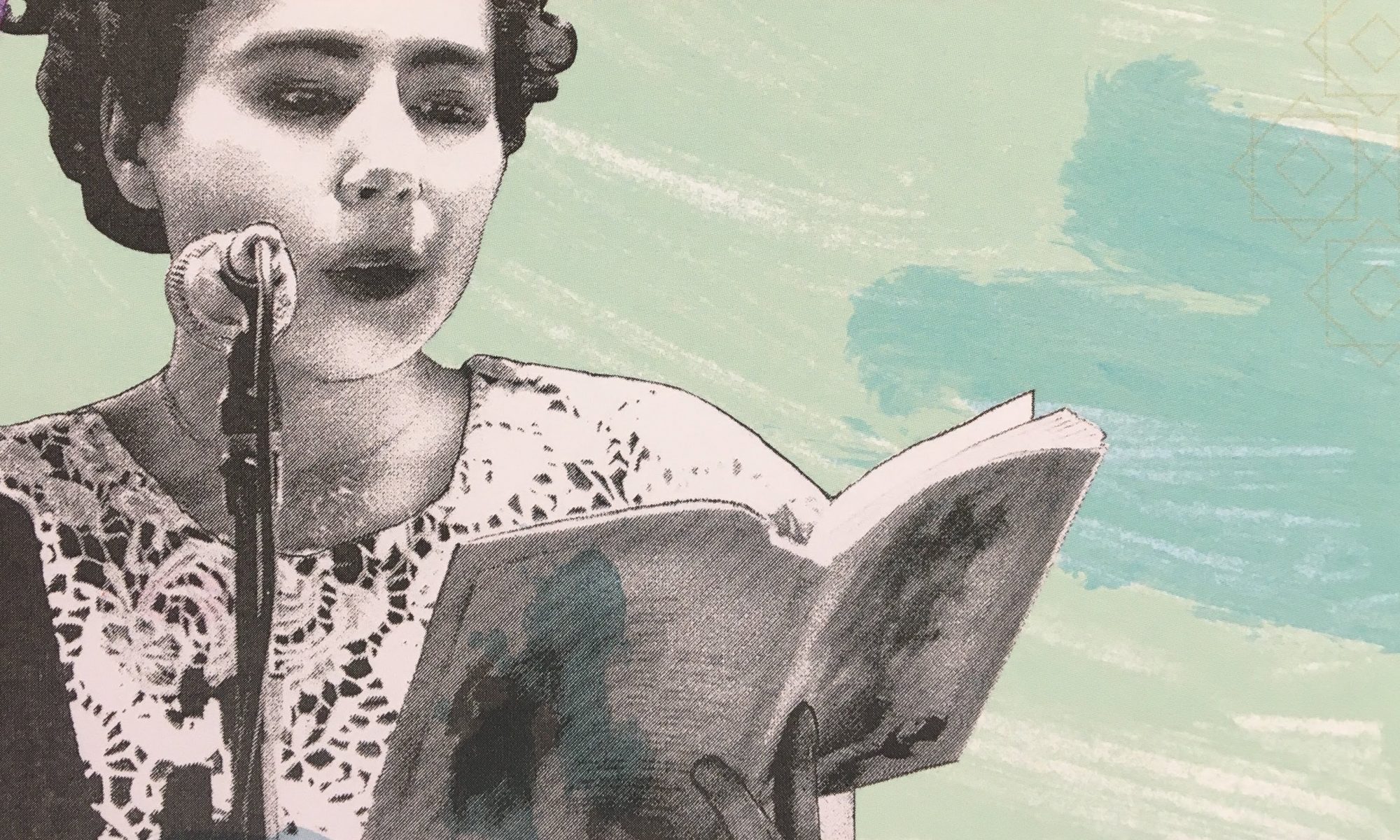
“the many ways in which our individual memories, histories, and stories may intersect with our cultural memories, histories, and stories”

Poet and Professor Barbara Jane Reyes covers the University of San Francisco fiction talk and workshop for her class “Filipino American Arts” in her post “Random: Culture, Commodity, Performance, Production”

…I am also thinking about erasure and invisibility (so, what’s new?). Last week in class, we discussed Lysley Tenorio’s story, “Save the I-Hotel,” which moves back and forth between the 1930’s and 1977, specifically the day of the final evictions of the I-Hotel. The story follows two men, laborers named Fortunado and Vicente, who are I-Hotel residents during that entire time period. We get the kind of care they exhibit toward one another, one helping the other find employment, sharing space however cramped, protecting each other from white male violence, keeping each other company when loneliness and homesickness are consuming, lending a coat to keep the other warm. It’s very tender. How do these things not amount to love, and how is this love never romantic? So that’s that, about erasure and silence; we simply cannot know that 100% of the Manongs were hetero, though we never ever hear about Manongs who were not.

I am also thinking of Rashaan Alexis Meneses’s visit to my class, also last week. She discussed how she came to her story, “Here in the States,” from the anthology Growing Up Filipino II, and her series of stories about immigrant workers in our urban areas (specifically, Los Angeles), what things about their American lives we never know because even though they’re omnipresent, we never ask them to tell us their life stories. She talked about the process of writing these stories and considering an audience who may not have the same cultural knowledge, how much to explain and translate, and how to explain and translate, while balancing what the story needs, at what pace it needs to move, from whose point of view it must be told.

She also conducted a writing workshop for my students, based upon memories, items that always occupy a special or significant place in our memories, and how to go about writing about these things. We started with a list of seven items and from there, did a freewrite engaging all the senses. I like this, the practice of keeping a written inventory of memories to which we can always return as artists. I like how this practice can bring to light the many ways in which our individual memories, histories, and stories may intersect with our cultural memories, histories, and stories. My students had some really great responses, and were, for the most part, quite open about why those items were so important to them, and where they are now in relation to these items. I later on told Rashaan about my mental inventory, and that I always go back to the same memory; all of th.e items on my list pertain to that memory of visiting Papa’s house in Gattaran when I was six…

Read the rest of the post here.

More coverage on the fiction workshop at the University of San Francisco will be forthcoming…

“a recent outpouring of memoirs, fiction, poetry, blogs and even some readable military reports by combatants in Iraq and Afghanistan”

The New York Times’ writer James Dao covers war-time writing from soldiers in his article, “A Well Written War, Told in the First Person,” published, Monday, February 8, 2010.

Excerpt:
The current group is different. As part of a modern all-volunteer force, they explore the timeless theme of the futility of war — but wars that they for the most part support. The books, many written as rites of passage by members of a highly educated young officer corps, are filled with gore, inept commanders and anguish over men lost in combat, but not questions about the conflicts themselves. “They look at war as an aspect of glory, of finding honor,” said Mr. O’Brien, who was drafted for Vietnam in 1968 out of Macalester College in St. Paul. “It’s almost an old-fashioned, Victorian way of looking at war.”

Read entire article

Reading List

Memoirs & Poetry

JOKER ONE: A MARINE PLATOON’S STORY OF COURAGE, LEADERSHIP, AND BROTHERHOOD By Donovan Campbell. (Random House.) Read review.

ONE BULLET AWAY: THE MAKING OF A MARINE OFFICER By Nathaniel Fick. (Houghton Mifflin Company.) Read review.

THE UNFORGIVING MINUTE: A SOLDIER’S EDUCATION By Craig M. Mullaney. (The Penguin Press.) Read review.

HERE, BULLET By Brian Turner. (Alice James.) Read review.

LOVE MY RIFLE MORE THAN YOU: YOUNG AND FEMALE IN THE U.S. ARMY By Kayla Williams. (W. W. Norton.) Read review.

POWDER: WRITING BY WOMEN IN THE RANKS, FROM VIETNAM TO IRAQ. Edited by Lisa Bowden and Shannon Cain. (Kore Press.)

Military Reports

FIXING INTEL: A BLUEPRINT FOR MAKING INTELLIGENCE RELEVANT IN AFGHANISTAN By Maj. Gen. Michael T. Flynn, Capt. Matt Pottinger, and Paul D. Batchelor. Read report.

AN UNRELEASED ARMY HISTORY ABOUT THE JULY 2008 BATTLE OF WANAT By Douglas R. Cubbison. Read the draft report (pdf).

Zadie Smith, a post post-colonial writer?

From The New York Times’ “Other Voices, Other Selves” published January 14, 2010, Pankaj Mishra explores important points regarding Zadie Smith’s collection of essays in the collection, Changing My Mind, which, according to Mishra, Smith only edges around post-colonial politics, and skirts past mixed-race themes when she should be tackling these issues head on:

The essays that follow discuss some prominent dead white writers (George Eliot, Kafka, E. M. Forster, Nabokov, Barthes, David Foster Wallace), but they display no Edward Said-style counterreading of canonical texts. Their quirky pleasures derive from Smith’s own critical persona — always bold, jauntily self-reflexive and amusing — and her inspired cultural references, which include both Simone Weil and “Buffy the Vampire Slayer.”

There is little hint of Smith’s culturally diverse background in her essays on (mostly Hollywood) movies and stars; they belong recognizably to an Anglo-American tradition of writing about cinema that alternates between masochistic reverence and slash-and-burn japery.

As a mixed writer, am of two minds about this. Wondering why we are expected to declare our ethnicity time and time again, as if our skin color, our names, our history, our family, and every living pore of us doesn’t announce it everyday of our lives. Sometimes we’d just rather talk about something other than our otherness. There’s more to that, as well, why be the first one to call ourselves out. If we announce our ethnicity, we are immediately placing ourself in the ethnic corner, which the critics will do whether we like it or now. Why can’t we just be “writer” or “president” without the qualifiying

In this essay (which compares Joseph O’Neill’s “Netherland” with Tom McCar­thy’s “Remainder”), Smith passes over the many novels from outside the West that have helped expand traditional bourgeois notions of self and identity. Yet her essay on Barack Obama is replete with the postcolonial-cum-postmodernist themes — hybridity, mimicry and ambivalence — that professors of literature and cultural studies commonly employ in American and British universities. Smith’s hope that Obama’s “flexibility of voice” may lead to “flexibility in all things” derives not so much from hardheaded political analysis as from academic high theory, which assumes that those who live between cultures best represent and articulate the human condition today. According to Smith, the moral of Obama’s story is that “each man must be true to his selves, plural.”

On this point, at least, Smith is ideologically consistent. In fact, the idea that “the unified singular self is an illusion” could be the leitmotif of this collection. It allows Smith to revisit her own early assumptions and to question such essentialist notions as “black woman-ness.” Reflecting on Kafka’s ambivalence about his ethnic background, she writes: “There is a sense in which Kafka’s Jewish question (‘What have I in common with Jews?’) has become everybody’s question, Jewish alienation the template for all our doubts. What is Muslimness? What is femaleness? What is Polishness? What is Englishness? These days we all find our anterior legs flailing before us. We’re all insects, all Ungeziefer, now.”

This may sound a bit melodramatic. But then — as Salman Rushdie and other practitioners of postcolonial postmodernism have stressed — ambivalence, doubt and confusion are essential to forming dynamic new hybrid selves. Smith seems to bring to this now entrenched critical orthodoxy the particular weltschmerz of today’s bright, successful but sad young writers. This is most evident in the collection’s final essay, a long and passionately argued panegyric to David Foster Wallace in which Smith diagnoses the central dilemmas of her own increasingly lost generation. These are dilemmas, she argues, that Henry James, who assumed awareness leads to responsibility, never encountered: “the ubiquity of television, the voraciousness of late capitalism, the triumph of therapeutic discourse and philosophy’s demotion into a branch of linguistics.”

Having hybrid identities, not belonging anywhere or indeed belonging everywhere, may have its advantages, but these attributes must still contend with pressing circumstances like the voraciousness of 21st-century capitalism. Far from floating free in a state of unbelonging, most people are trapped in predetermined social and political positions; they must act within the history that surrounds them. The possession of multiple selves and voices doesn’t seem to be helping — and may even be inhibiting — Barack Obama. The victims of the seemingly endless violence in Pakistan and Afghanistan would draw scant comfort from the knowledge that the present occupant of the White House has an ear for different accents and can mimic everyone from a white Harvard nerd to a Ken­yan elder.

Read entire article

“Growing Up Filipino II” takes a bite out of the Big Apple when Albany, NY gives a shout out

From Times Union: Serving New York’s Capital Region, Albany, NY

A book of note: Growing up Filipino 2
January 15, 2010 at 10:27 am by Michael Janairo, Arts & Entertainment Editor

Here’s an interesting book that probably deserves a wider audience: “Growing up Filipino 2.” Among the literature of the United States, a recognition of writers telling stories from a Filipino or Filipino-American point of view is often sorely lacking. So here’s one book that aims to expand the understanding of what it means to be American.

See full article

Celebrate this Saturday, January 16, 2-5pm @ Bayanihan Community Center (Civic BART)

PAWA (Philippine American Writers and Artists) in conjunction with Arkipelago Books presents a book launch of:

Growing Up Filipino II: More Stories for Young Adults
Edited and Collected by Cecilia Manguerra Brainard

Saturday, January 16, 2010
2:00 – 5:00 PM

Bayanihan Community Center, 1010 Mission St., San Francisco

Featuring Readers Rashaan Alexis Meneses, Veronica Montes, Tony Robles, and Marianne Villanueva.


By Karen Pierce Gonzales

What I like most about folk stories is that they tell us something important about other people. They create specific examples of universal themes that exist in all cultures; they express the uniqueness of a particular time and a particular people that enlightens us all about our own humanity.

This is what I recently experienced after reading Growing Up Filipino II: More Stories for Young Adults, a collection of contemporary stories for young adults collected and edited by Cecilia Manguerra Brainard.and spread the word to friends, family, students and other interested parties…


…Other stories also reveal the hard facts of immigrant life. Alma (‘Here in the States’ by Rashaan Alexis Meneses) struggles to understand how hard her mother must work as a nanny to make ends meet. Shame and sadness mingle when she questions the discrepancy between her mother’s role as a respected professional back home and her new role as a domestic helper. Adolescent resentment and rebellion about having to help care for younger siblings (something the maid back home did) further complicate Alma’s efforts to make sense of this new world. It is in her mother’s quiet strength and acceptance of life’s uncertainties that Alma finds her greatest comfort and connection.

Read More

BOOK DESCRIPTION: A welcome addition to Filipino American literature, Growing Up Filipino II: More Stories for Young Adults is the second volume of the Growing Up Filipino series by PALH. In this collection of 27 short stories, Filipino and Filipino American writers explore the universal challenges and experiences of Filipino teens after the historic events of 9/11. The modern demands do not hinder Filipino youth from dealing with the universal concerns of growing up: family, friends, love, home, budding sexuality, leaving home. The delightful stories are written by well known as well as emerging writers. While the target audience of this fine anthology is young adults, the stories can be enjoyed by adult readers as well.

CONTRIBUTORS: Dean Francis Alfar, Katrina Ramos Atienza, Maria Victoria Beltran, M.G. Bertulfo, Cecilia Manguerra Brainard, Amalia B. Bueno, Max Gutierrez, Leslieann Hobayan, Jaime An Lim, Paulino Lim Jr., Rebecca Mabanglo-Mayor, Dolores de Manuel, Rashaan Alexis Meneses, Veronica Montes, Charlson Ong, Marily Ysip Orosa, Kannika Claudine D. Peña, Oscar Peñaranda, Edgar Poma, Tony Robles, Brian Ascalon Roley, Jonathan Jimena Siason, Aileen Suzara, Geronimo G. Tagatac, Marianne Villanueva

ISBN: 978-0-9719458-2-1
ISBN: 978-0-9719458-3-8

PUBLISHED BY:
PALH
P. O. Box 5099
Santa Monica, CA 90409
Tel/fax: 310-452-1195; email: palh@aol.com; http://www.palhbooks.com

For more information on the event contact:
PAWA, Inc. at pawa@pawainc.com, http://www.pawainc.com

Its not a small world after all?

Covering the flip side to “world music” The Guardian’s Tony Naylor in his “Is Ethno-techno exploiting world music?”reports some musicians love the freedom this genre grants and others think that freedom is a shameful lie:

Matias Aguayo, however, is less enthusiastic. Born in Chile, raised in Germany, now resident in Buenos Aires, the electro maverick concedes that it may be a matter of taste – “and, in most cases, putting samples of traditional songs on a techno beat is in very bad taste” – but he rejects any deeper reading of this “ethno-minimal” trend. To him, such music is cheap “exoticism”, in a colonial tradition. Where you, in La Mezcla, might hear a joyful intermingling of ideas, he hears a Western techno producer imposing order: “It doesn’t seem very ‘free’ to me. Adding a few congas and a ‘Latino’ vocal does not reflect a willingness to learn from other cultures.”

Such musical references feed into the idea of techno as this fluid global community, but Aguayo is scathing: “Maybe for techno’s easyJet set it’s a small world. But ask young musicians in Santiago or Buenos Aires how easy it is to move around. It’s naive, in a brutal way, to say that we’re all world citizens.”

Think on that next time you’re whooping it up to La Mezcla.

Read the article.

“how our Filipino and Filipino American brothers and sisters experience life in America”

Elated and humbled by Karen Pierce Gonzales’ review of Growing Up Filipino II: More Stories for Young Adults posted December 29, 2009 on Folkheart Press: the art of folktales.  A wonderful way to close the year.

What I like most about folk stories is that they tell us something important about other people. They create specific examples of universal themes that exist in all cultures; they express the uniqueness of a particular time and a particular people that enlightens us all about our own humanity.

This is what I recently experienced after reading Growing Up Filipino II: More Stories for Young Adults, a collection of contemporary stories for young adults collected and edited by Cecilia Manguerra Brainard. The 257-page book published by PALH (Philippine American Literary House) was first brought to my attention by fellow writer Rebecca Mabanglo-Mayor. A bright writer herself who lives in Washington, she was able to share with me not only the beauty of her own literary work but also the richness of her cultural heritage.

Thanks to her I was allowed into the post 9/11 world of Filipino and Filipino American youth. Through this I was introduced to a culture that admittedly I knew very little about…

…Other stories also reveal the hard facts of immigrant life. Alma (‘Here in the States’ by Rashaan Alexis Meneses) struggles to understand how hard her mother must work as a nanny to make ends meet. Shame and sadness mingle when she questions the discrepancy between her mother’s role as a respected professional back home and her new role as a domestic helper. Adolescent resentment and rebellion about having to help care for younger siblings (something the maid back home did) further complicate Alma’s efforts to make sense of this new world. It is in her mother’s quiet strength and acceptance of life’s uncertainties that Alma finds her greatest comfort and connection…

Read more

Pantheism in the NY Times

I don’t like this NYT columnist by any means, but how often does Pantheism get into mainstream news, save for the Harper’s blogger, who is always posting the Youtube symphonies paired with Romantic art? Ross Douthat in his “Heaven and Nature” barely touches on an excellent point, that pantheism is the preferred doctrine for artists and intellectuals since the classical era, think Lucretius.

…Instead, “Avatar” is Cameron’s long apologia for pantheism — a faith that equates God with Nature, and calls humanity into religious communion with the natural world…

At the same time, pantheism opens a path to numinous experience for people uncomfortable with the literal-mindedness of the monotheistic religions — with their miracle-working deities and holy books, their virgin births and resurrected bodies. As the Polish philosopher Leszek Kolakowski noted, attributing divinity to the natural world helps “bring God closer to human experience,” while “depriving him of recognizable personal traits.” For anyone who pines for transcendence but recoils at the idea of a demanding Almighty who interferes in human affairs, this is an ideal combination.

Read more

“Growing Up Filipino II: More Stories for Young Adults” now available

Please excuse me while I celebrate. I’m privileged to announce my latest short story “Here in the States” is included in the PALH anthology, Growing Up Filipino II: More Stories for Young Adults, edited by Cecilia Manguerra Brainard. Please consider this wonderful collection as a holiday treat for yourself, your family, any friends who love good stories, and any teachers or librarians who might be interested. You can get your copy through Amazon.com, or Barnes & Noble. I’d greatly appreciate if you’d please spread the word and would love to hear your reviews.

The San Francisco book launch takes place January 16, 2010. More information will be forthcoming or you can follow the updates on the PALH blog or this blog.

Thanks so much for all your support and encouragement!

LISTED IN AMAZON.COM GROWING UP FILIPINO II: More Stories for Young Adults

DISTRIBUTED BY: Ingram, Baker & Taylor, Amazon.com, Barnes and Noble, among others
PUBLISHED BY:
PALH
P. O. Box 5099
S.M., CA 90409
Tel/fax: 310-452-1195; email:palh@aol.com; palhbooks@gmail.com;http://www.palhbooks.com

BOOK DESCRIPTION: Growing Up Filipino II: More Stories for Young Adults is the second volume of the Growing Up Filipino series by PALH. In this collection of 27 short stories, Filipino and Filipino American writers explore the universal challenges and experiences of Filipino teens after the historic events of 9/11. The modern demands do not hinder Filipino youth from dealing with the universal concerns of growing up: family, friends, love, home, budding sexuality, leaving home. The delightful stories are written by well known as well as emerging writers. While the target audience of this fine anthology is young adults, the stories can be enjoyed by adult readers as well. There is a scarcity of Filipino American literature and this book is a welcome addition.

CONTRIBUTORS: Dean Francis Alfar, Katrina Ramos Atienza, Maria Victoria Beltran, M.G. Bertulfo, Cecilia Manguerra Brainard, Amalia B. Bueno, Max Gutierrez, Leslieann Hobayan, Jaime An Lim, Paulino Lim Jr., Rebecca Mabanglo-Mayor, Dolores de Manuel, Rashaan Alexis Meneses, Veronica Montes, Charlson Ong, Marily Ysip Orosa, Kannika Claudine D. Peña, Oscar Peñaranda, Edgar Poma, Tony Robles, Brian Ascalon Roley, Jonathan Jimena Siason, Aileen Suzara, Geronimo G. Tagatac, Marianne Villanueva

BIO OF EDITOR: Cecilia Manguerra Brainard is the award-winning author and editor of over a dozen books, including the internationally-acclaimed novel, When the Rainbow Goddess Wept, Magdalena and Acapulco at Sunset and Other Stories. She edited Growing Up Filipino: Stories for Young Adults, Fiction by Filipinos in America, and Contemporary Fiction by Filipinos in America, and co-edited four other books. Cecilia also wrote Fundamentals of Creative Writing (2009) for classroom use. She teaches at UCLA-Extension’s Writers Program.