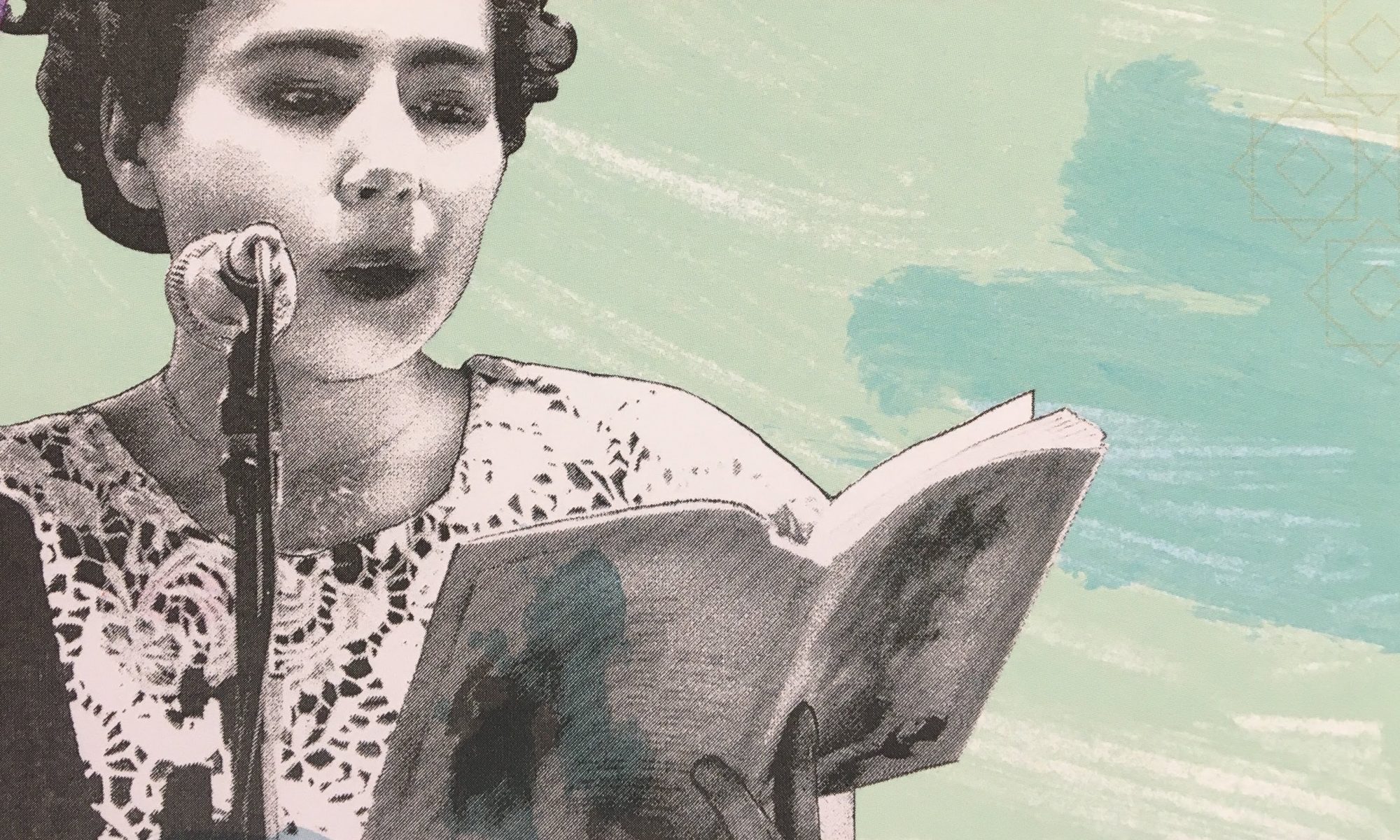
Upcoming Panel: Come join us!

Community & Academic Writing Programs:
A Panel for Emerging Writers

When: 12/06/2009, 2 pm
Where: San Francisco Public Library, Latino Room B (lower level), 100 Larkin at Grove
Free and Open to the public, refreshments will be provided

The California Bay Area houses a diverse array of writing programs, both community-based and academic. For this event, an exciting panel of writers will provide information to emerging writers of color who are thinking of applying to various writing programs and need some guidance. We believe it’s so valuable for writers of color who have gone through community based writing programs and MFA (Masters of Fine Arts) programs to share their knowledge and experiences with others. A question and answer session will follow.

Some questions that will be discussed: Why did you decide to attend a community based writing workshop and/or an MFA program? How did you decide on where to apply? Why did you attend the program you attended? What was the structure of your program? What were the positive and negative aspects of your program?

Panelists include:
Rashaan Alexis Meneses (St Mary’s, Fiction MFA)
Claire Light (San Francisco State University, Fiction MFA)
Vickie Vertiz (VONA, KSW IWL)
Craig Santos Perez (University of San Francisco, Poetry MFA)
Oscar Bermeo (VONA, KSW IWL, louderArts)
Vanessa Huang (VONA, KSW, Kundiman)

More Mixed Race Portraits

From NPR’s “Mixed Race Americans Picture a Blended America” :

The 2000 U.S. census was the first to give Americans the option to check more than one box for race. Nearly 7 million people declared themselves to be multiracial that year, a number that’s expected to shoot up in the 2010 count. As more of the nation’s population identifies itself as of mixed race, the authors of a new book say Americans’ traditional ideas of racial identity are in for a challenge.In the book Blended Nation, photographer Mike Tauber and producer Pamela Singh combine portraits of mixed-race Americans with stories of living beyond the sometimes rigid notions of race. The husband-and-wife team tell host Liane Hansen they wanted to highlight the personal experiences of life between categories.

Read more

Listen to audio archive

'Blended Nation' by Mike Tauber and Pamela Singh
Blended Nation: Portraits and Interviews of Mixed-Race America,
By Mike Tauber and Pamela Singh,
Hardcover, 136 pages
Channel Photographics: $34.95

Powerful Women I’ve Never Heard Of

From The Guardian’s “Sandi Toksvig’s top 10 unsung heroines”:

“When I was a student at Cambridge I remember an anthropology professor holding up a picture of a bone with 28 incisions carved in it. “This is often considered to be man’s first attempt at a calendar” she explained. She paused as we dutifully wrote this down. ‘My question to you is this – what man needs to mark 28 days? I would suggest to you that this is woman’s first attempt at a calendar.’

“It was a moment that changed my life. In that second I stopped to question almost everything I had been taught about the past. How often had I overlooked women’s contributions? How often had I sped past them as I learned of male achievement and men’s place in the history books? Then I read Rosalind Miles’s book The Women’s History of the World (recently republished as Who Cooked the Last Supper?) and I knew I needed to look again. History is full of fabulous females who have been systematically ignored, forgotten or simply written out of the records. They’re not all saints, they’re not all geniuses, but they do deserve remembering.”


1. Hilda Matheson (1888-1940)

If you love Radio 4 you should love Hilda. She was the BBC’s first director of talks and helped shape the programmes we listen to today, founding radio journalism and the notion of quality radio. She was almost solely responsible for the mammoth African Survey for which Lord Hailey took all the credit.


2. Catherine Littlefield Greene (1755-1814)

As a child growing up in the United States I was taught that a man called Eli Whitney changed the face of the American economy with the invention in 1793 of the cotton gin, a machine that mechanised the cleaning of cotton. In fact it was Catherine’s idea but in those days women didn’t take out patents.


3. Princess Khutulun (c1251- ?)

The niece of the great Mongol leader, Kubla Khan, Princess Khutulun was described by Marco Polo as the greatest warrior in Khan’s army. She told her uncle she would marry any man who could wrestle her and win. If they lost they had to give her 100 horses. She died unmarried with 10,000 horses.


4. Queen Vishpla (somewhere between 3500 and 1800 BC)

The ancient sacred text of India, Rig-Veda, includes the story of this queen who led her troops into battle and lost a leg. She had an iron leg fitted and returned to war. The first person known to have a prosthesis.


5. Jerrie Cobb (1931-)

Chosen for the US astronaut programme in 1958, Jerrie Cobb had twice as many flight hours to her name as John Glenn, who became the first American to orbit the earth. She failed to go into space because she hadn’t gone through jet-aircraft testing. She hadn’t because women weren’t allowed to until 1973.


6. Agnodike (Fourth century BC)

Athenian women were not allowed to be doctors so Agnodike disguised herself as a man to study medicine. When she had finished she tried to treat women but they refused, thinking she was male. When she revealed her sex she was arrested but succeeded in having the law against female medics changed.


7. Florence Nightingale (1820-1910)

Nightingale is well known in history as the Lady with the Lamp but this was actually a phrase invented by a Times journalist. The men of the Crimean actually called her the Lady With the Hammer because she was quite happy to break into supply rooms if her patients needed something.


8. Angelika Kauffmann and Mary Moser

In 1768 Angelika and Mary helped found the Royal Academy of Arts in London. When a portrait of the founders was painted, only the men of the Academy were shown gathered in a studio. The women appear as portraits on the wall.


9. Enheduanna (c2285-2250BC)

Probably a princess. Certainly the world’s first known author, male or female. She wrote hymns to the gods in cuneiform.


10. Edmonia Lewis (1843–c1900)

The first black woman to be recognised as a sculptor. At college she was accused of trying to poison two white students. Although she was proved innocent she was not allowed to graduate.

* guardian.co.uk © Guardian News and Media Limited 2009

Deborah Orr points out “Diversity and Equality are not the same thing”

Sure Deborah Orr may be criticizing U.K. society but the words ring true across the Atlantic in her article published in today’s The Guardian, “Diversity and Equality are not the Same Thing”

Here are some of the meatier sections to her astute argument:

…the Conservative leadership has embraced not equality, but diversity.

This is social progress, of course. But it is not the progress that the left once envisaged. On the contrary, in the same time as the argument for diversity has made such strides, the increased equality that was assumed to be part of its goal, has not materialised at all. Instead, inequality in Britain is now much greater than it was prior to the success of its various “equality” campaigns…

Does this matter? Is it important to understand that diversity and equality are different things, and that they are sometimes even at odds with each other? After all, the rooting out of discrimination achieves social justice, whether in the name of diversity or equality…

Yet who in the political mainstream is advancing this argument? Even Barack Obama, the world’s most potent embodiment of the advance of diversity, has trouble setting out, let alone winning, the equality argument.

In the current issue of the London Review of Books, US academic David Bromwich writes about Obama’s difficulties in persuading the nation of the overall benefit of his healthcare reforms. In a stinging phrase, just as applicable in this country, he says: “Equality in the United States in the early 21st century has become a gospel preached by a liberal elite to a populace who feel they have no stake in equality.” Miserably, he’s quite right.

Read more of the article here.

Jane Austen as Gateway Drug (or Must-See BBC)


When Masterpiece Theatre aired their complete series of Jane Austen not only was I reacquainted with an artist who I wholly took for granted in my undergraduate years, but the re-adaptations of such delightful works as Mansfield Park and Persuasion got me hooked, once again, on the period piece dramas I escaped  to in the awkward and unnecessary years of high school. Since MT’s airing, I’ve been chasing the likes of Dickens, Hardy, Eliot, and the Brontes since and am thoroughly enjoying almost every page of these seemingly endless serial works.

I wholeheartedly advocate diving into these wonderful recent adaptations, all of which are deliciously satisfying. I wasn’t a fan of Billie Piper until I saw her in Mansfield Park where she proved she had some acting chops as precocious and shy Fanny Price, who, despite her lowly background, doesn’t hesitate to speak her mind and triumphs over deceit and denial.

Sally Hawkins and Rupert Penny-Jones are wonderfully pensive and draw out a nuanced performance in their awkward and painful dance in Austen’s more serious Persuasion.

I was utterly enthralled and enchanted with Northanger Abbey, which should make a short and delightful read just in time for Halloween. I’m also enamored of JJ Field, who is irresistible in this romp as well as in Phillip Pullman’s The Ruby in the Smoke, a Masterpiece Mystery Classic.

I did not care for the new Sense and Sensibility nor the Emma with Kate Beckinsale, but if you’d allow me to make a plug for my three absolute favorite BBC period productions, which I intend to own someday because they’re just so damn good. Elizabeth Gaskell makes Jane Austen’s drawing room dramas seem tawdry frivolously frilly affairs in her powerhouse critique of Industrialization and Labour in North and South.


Gemma Arerton’s performance in Hardy’s Tess of D’Ubervilles will win you over body and soul. And Hardy blazes a scathing eye to Victorian society and the demented rigors of religion that leaves everyone scarred and profoundly stunned.

Keeley Hawes is also astoundingly amazing as downtrodden but defiant heroine, Lizzie Hexam (one of the rare complex female Dickensian creations to grace his volumes of otherwise two-dimensional women), but you really need to read Our Mutual Friend before being able to enjoy the adaptation. Chuck D is a master writer and no matter where one is in with the craft, we can always learn from him.

With that said, no writer has compared and no piece can withstand the astute clarity and transcendent pathos of Charlotte Bronte. I used to love her sister above all else until I saw Jane Eyre, and then read Jane Eyre twice in a row. Charlotte is a Goddess of Art.

I watched Lost in Austen a couple of months ago and though I loved Jemima Rooper as a lesbian ghost in the macabre BBC occult hit Hex, I found the modern revamped Austen take too silly and therefore unnecessary.

Before watching Becoming Jane I had serious doubts about Anne Hathaway as Austen but was pleasantly surprised by the film and Hathaway’s performance though Miss Austen Regrets is a finer tribute to the writer, and the film attempts to present a truthful portrait of the arduous and lonely journey of a mature writer.

This journey is eased and inspired by all the great works listed above, which are worth visiting and revisiting until the journey’s end, not to mention they’re just great fun and a perfect antidote to rainy weather blues.

Margaret Drabble’s Top Ten Literary Landscapes

From The Guardian, 9/9/09:

“Walking in the footsteps of great writers, and seeing landscapes and buildings through their eyes is one of the most enjoyable and sustaining of pleasures. Years ago, on a lecture tour in Mississippi, I insisted on seeing the land of Huckleberry Finn and William Faulkner. It was a powerful experience, never to be forgotten. But Britain remains my native landscape, and my top 10 are only a sample of the places I like best.”

1. Stonehenge

Stonehenge has inspired innumerable writers, and although it is one of the best known prehistoric sites in the world it is impossible to pass it without a sense of awe. It has a melancholy grandeur that passing traffic cannot diminish. Hardy and Wordsworth were moved by it, and so am I….

5. Tintagel

Tintagel in Cornwall is a dramatic mythical Arthurian site, and its castle and crags inspired both Tennyson and Hardy. It’s both medieval and Victorian, like the Arthurian legend itself…

10. Haworth

I tend to prefer outdoor landscapes to writers’ houses, but make an exception for the Brontë Parsonage at Haworth, a house in which life was experienced with extraordinary intensity. This place and its churchyard and its surrounding moorland are numinous…

to read them all…

From: Andrew Wheeler- Meme: My life according to the books I’ve read this year

Borrowed from Charles Tan’s Blog Bibliophile Stalker. Thanks for the inspiration!

Using only books you have read this year (2009), cleverly answer these questions. Try not to repeat a book title.

Describe Yourself: Against the Machine: Being Human in the Age of the Electronic Mob

How do you feel: A Laodician

Describe where you currently live: Dark Age Ahead

If you could go anywhere, where would you go: Rick Steve’s London

Your favorite form of transport: Gabriel Garcia Marquez’s Collected Stories

Your best friend is: Jane Eyre

You and your friends are: A Thousand Years of Good Prayers

What’s the weather like: The Mayor of Casterbridge

You never go out without wearing: The Moonstone

The best meal you ever sat down to: Eyewitness Top Ten Travel Guide: Munich

Favourite time of day: Moments of Being

If your life was a:  Fiction Writer’s Workshop

What is life to you: Cosmopolitanism: Ethics in a World of Strangers

Your fear: Great Expectations

What is the best advice you have to give: There Will Never Be Another You

Thought for the Day:  Leave it to Me

How I would like to die: Citywalks: London: 50 Adventures on Foot

My soul’s present condition: Graceland

Paradise Found in the City of Angels: Tasty Tips and Sights to See

When Gaspar de Portola, Father Juan Crespi, and their men in 1769 tramped their way through the swamps and wetlands of what we know as Los Angeles, they were greeted with dozens of temblors, fire, and fog. You can find paradise among the urban sprawl in the City of Angels. You just have to know where to look.

Eats:

Figtrees on Venice Boardwalk at Venice Beach
Mimosas and a tasty brunch with the California sun beating down at you while the Pacific breaks on the shore ahead, can life get any better?

At Home in Venice, Los Angeles

Fatburger
So good 2Pac, Ice Cube, and Biggie Smalls have memorialized their burgers. An absolute L.A. gem. To experience the full Angeleno flavor try the West Hollywood spot (7450 Santa Monica Blvd, Los Angeles, CA 90046).

Sawtelle Kitchen in Little Tokyo, West Los Angeles, near UCLA
The best of Japanese meets rustic French cuisine without taxing the wallet. The mussels with linguine in a green curry sauce is unforgettable. They also have a red snapper with an almond crust that I’m still dreaming about. While dining here, you can also check out the original Giant Robot.

giant_robot_1_web

Photo from AmpRadio 97.1 “Shop on the Cheap”

Urth Caffe (original on Melrose in West Hollywood)
Tasty organic fare at the edge of Hollywood. Last visit, while enjoying a savory chicken salad sandwich with Indian curry, a customer who sat nearby, apparently a professional music video dancer, got into a fight on his cell phone with his agent because he didn’t want to share the stage with a famous R&B star. Very low-key LA scene, which can be a really good thing.

Soot Jeep Bull in the heart of Koreatowwn
Hardcore Korean BBQ with charcoal grill! Wear clothes that you won’t mind end up smelling like you’ve come from a campfire. You will want to take a shower after eating here, but the BBQ fare is the best, hands down.

Sights

The Getty Villa off PCH, north of Santa Monica
The museum specializes in antiquities, meaning a little bit of a yawn, but the architecture is breathtaking. Clinging to the Malibu cliffs you feel like you could just float off into the Pacific Ocean. Translation: Elysium at the edge of chaos.


//

Photo from Jaunted: The Pop Culture Travel Guide’s article “Getty Villa One Hot Ticket”

LACMA or Los Angeles County Museum
Fave museum in LA proper featuring old and new work and a Japanese Pavilion styled as a mini Guggenheim.

The Getty, Los Angeles
This Getty’s perched in Beverly Hills, west of the 405 affording a 180- degree vista of La La Land. It’s nice…but its not the Villa.

And, because you just can’t visit a city without enjoying a sip of their potations:

Tiki Ti
A historic drinking hole in Hollywood, you must designate a driver for this spot, and if your DD plans to have a drink, he/she should not finish it! Deliciously sweet and potent tropical concoctions, this dive bar is famous for knocking you off your feet. Huell Howser of PBS’ California’s Gold frequents this joint. Enjoy yourself, but, seriously, drink responsibly here.

P

Photo from the Tiki Ti home page.

1982 “Fresh Air” Interview with John Cage

Terry Gross brings out the wacky genius of John Cage and features a sampling of Cage’s composition. Cage emphasizes “making new” and living a virginal life. What’s most interesting about Cage’s philosophy is his insistence to discard and disregard relationships. He firmly believes in letting the thing in itself stand alone, which is summarily antithetical to the “only connect” aesthetic. The particular is the predominate focus and to relate or connect induces paralysis.

“Apollonian and Dionysian tendencies”

The Dionysian Impulse” from Harper’s Magazine Online, July 25, 2009:

Then came Friedrich Nietzsche. Today he’s known for Zarathustra and Beyond Good and Evil more than his other writings. But his very first book–composed by a 27-year-old university professor, which differs sharply in style from the later writings–actually presents some of Nietzsche’s most radical and novel thinking. And it gives a central role to music. He calls it The Birth of Tragedy from the Spirit of Music and that precisely describes his thesis. He puts forward the idea that the heyday of classic Athenian drama, the age of Aeschylus and Sophocles, was a logical development from Greek traditions of music, song and dance. He breaks this tradition into two tendencies, the Apollonian and the Dionysian. The Apollonian follows Schopenhauer’s principle of individuation, it stresses the gentle reign of reason and intellect, pushing life to a somewhat unnatural ordering. The Dionysian is its exact opposite–it is governed by emotions and particularly passions, sometimes whipped to a self-destructive frenzy of excess. The Dionysian suppresses his intellect to live as one with nature, and wine plays an essential role in his cult. In the quoted passage, Nietzsche looks at the exuberance of the Dionysian spirit and he traces it through history. It is, he says a sort of springtime’s awakening (incidentally, this is the line from which the German-American playwright Frank Wedekind takes the title of his important play–in which youthful sexuality faces the suppression of a rigidly Apollonian school system). The age of Aeschylus marks an important synthesis between these Apollonian and Dionysian tendencies–a synthesis that dissolved with the rise of Euripides and Socrates, with their elevation of the Apollonian over the Dionysian. But Nietzsche understands the totality of European intellectual and artistic tradition as the product of interaction between the Apollonian and Dionysian tendencies–the greater the friction between them, the greater the art which results…Read more

[Image]

Bacchus by Caravaggio (1596)