Where I learned of the badgering hour: June 2013 at Hawthornden Castle, Part I

Hawthornden from the Lady Walk
Hawthornden Castle from the Lady Walk

Forty five minutes outside of Edinburgh, tucked in a hidden pocket of Midlothian, sits a 15th century castle where I spent my June at the Hawthornden International Retreat for Writers. Not even the bus drivers knew of the castle. Kept a secret, deep in a Scottish glen, the ruins, renovated in Victorian-era, were tipped on a crag overlooking the River Esk, and here I continued my ongoing education of reading and writing for a summer month.

But the story doesn’t start here.

If we were to go all the way back, it would have opened two years ago when at a faculty gathering poet and friend Raina León prodded me to apply. Get thee to a writing residency was her imperative, and she clued me in on this gem of a fellowship with a low profile at Hawthornden Castle. Thank you, Raina.

This fellowship is sponsored and run by the great patronage of Drue Heinz of the Heinz company. Publisher of The Paris Review, she established the Drue Heinz Literature Prize and the Drue Heinz Lectures in Pennsylvania. Deepest gratitude goes to Ms. Heinz and her staff.

There is no magic I know of that got me to Scotland for a month of committed writing. Persistence and focus is what I brought to the table. Applications to these residencies are something like gearing up for grad school. Long and involved forms that demand you know who you are, letters of recc to prove you are who you say you are, and a writing sample that speaks to enough people on the committees that matter. I’ve been applying to residencies off and on since grad school, which means I’ve lived in hope for over six years. Let me say again, persistence and focus.

The Pentland Hills and sun
The Pentland Hills in the distance

The plane trip from San Francisco to Edinburgh was another test of patience: ten hours trying to sleep upright, a three hour layover in Charles de Gaulle, where splurging on Lauderée French macaroons was worth every euro, and a final two hours that seemed like forever before touching down in Scotland.

The sun still had a good hour to set when I finally arrived around 10pm, which I would later learn was the badgering hour. Jet-lagged and frazzled, I met two of the writers who I would live with for the next four weeks, one of whom was an East Coaster turned Bay Area based. She happened to know many of my colleagues and writer friends back in California and thankfully made me feel that much closer to home despite being a continent and ocean away.

***
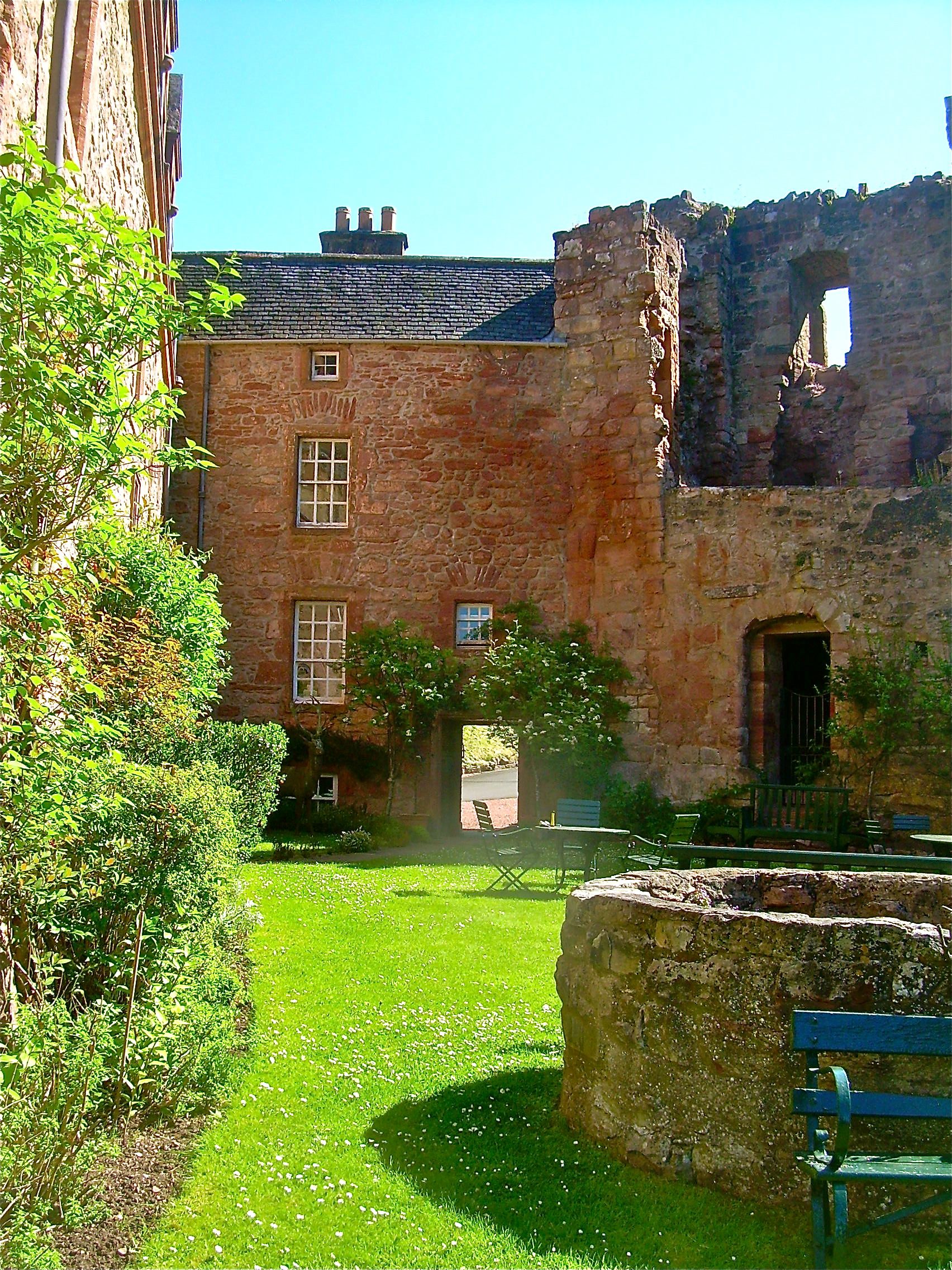
property of the Abernethy family from the 13th century
The castle garden

Born to John Drummond, the first laird at Hawthornden Castle, William Drummond (1585-1649) turned laird of the castle himself at 24 when his father died. A poet and historian, William Drummond read well and widely, tackling the History of Scotland during the Reigns of the Five Jameses as one of his many literary works. Over 400 years later, in his study, a room where he was known to pace between tackling quill to paper, I stared out the window that overlooked the gravel driveway, pulled my hair out rearranging scenes and crossing out swathes of paragraphs, and dragged myself to bed, willing myself to sleep at midnight even as the last sun rays still poked their way through the west-facing window.

Flowers in the sun
On the walk to the bus stop

On the first full day since my arrival, still adjusting to UK time, I woke at 5:30am to metallic squabbling and screeching of what I thought to be baby dinosaurs nesting right outside my western window. One bird would start up and then her siblings, would follow in discordant chorus. Almost every morning, afternoon, and early evening was graced with their shrill choir, and not only did I viscerally experience the scientific fact of how birds are cousin to pterodactyls and triceratops, but I understood how quickly and deeply I’d been thrust into nature. The castle was immersed in all things wondrous.

Evenings made the badgering hour when the lawn in front of the castle became a buffet table for a family of five hungry badgers. Stags, doe, and their fawns were frequently spotted on the road that led to the castle. Peregrines learned to fly just across the river, and we watched them from the castle garden at lunch time as they tested their wings. Spiders insisted rather persistently to claim the sinks and bathtubs as their resting spots. They were known to creep up cozy into our beds on more than one occasion.

***

I never knew I could be so jealous of poets.

The town of Roslin
The town of Roslin

These daily and nightly encounters with all things feathered, eight-legged, doe-eyed, antlered, and winged charged the poets, and they wrote with a sense of immediacy that doesn’t really jibe with long form fiction. One evening, a bat flew into the drawing room, circling over our heads for a good seven minutes. We tried to guide it out the window, but s/he seemed to enjoy our company more. Eventually, tiring of us, s/he took to an open casement and was gone. The next day, all three poets reported writing poems of our vespertine encounter. I hadn’t ever felt so keenly envious of poesie writers up until then. What I would have given to slip out of time for a day or two, to step away from my projekt and write in attendance to the here and now with such urgency? Fictions writers, particularly those noveling are stuck in another time zone and geography that rarely meshes with the present moment. We are caught in a loop of our own making.

***

We were there to write.

And we did. Everyday,  at least six days a week, from eight in the morning to at least five in the evening. Oh, there were mid-day strolls along the castle grounds listening to the songbird soundtrack that ran from sun up to sun down, late afternoon jogs on the Old Railway to Dalkeith, and jaunts to Lasswade’s The Laird & Dog pub, which was the closest and easiest access to Wi-Fi. All sworn to an informal oath of silence while in the castle, Hawthornden’s motto was “Requiescat in Pace,” and from nine in the morning to six in the evening, we maintained relative quiet, so all writers could work in peace and decent ease.
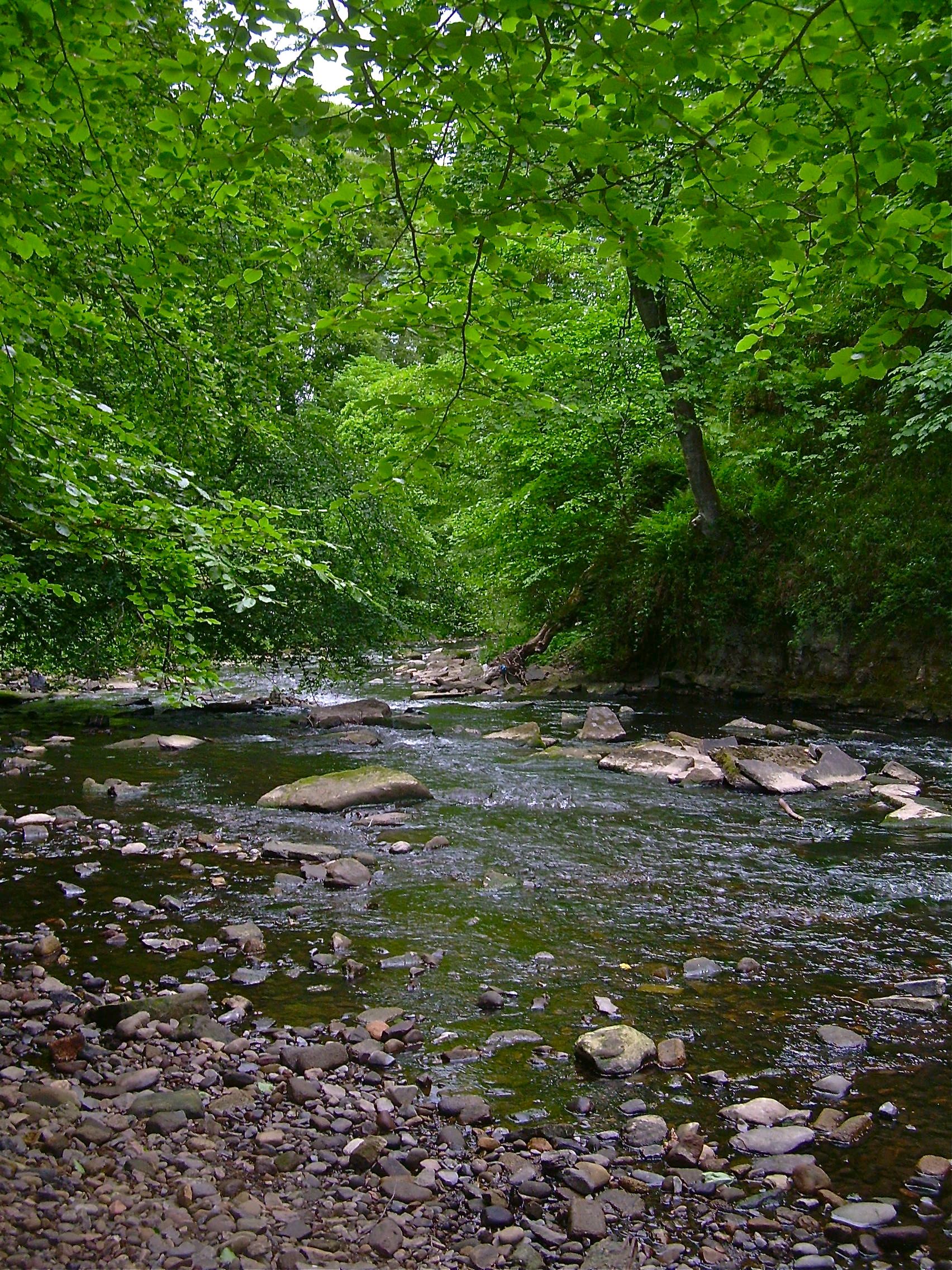
River Esk
The River Esk

With no internet access, limited mobile service, and a vow to abstain from talking, the task of writing wasn’t necessarily easier but the setting secured focus and commitment to both the projekt at hand and the vital art in which all writing thrives, the act of reading. In a recent Guardian article “publicising a novel – the problems,” (Thursday 25 July 2013) Anakana Scholfield speaks to an issue close to this heart:

…why is there so much fuss in the media about how to write a novel – “everyone can become an author” – when the more important thing is how to read one?

There seems to have been a shift from a reading culture to a writing culture, a diminishment of critical space for the contemplation of literature. Writing needs to be discussed and interrogated through reading. If you wish to write well, you need to read well, or at least widely. You certainly need to contemplate reading a book in translation, unlikely to be widely reviewed in newspapers, many of which are too busy wasting space on “how to write” tips and asking about an author’s personal fripperies. It’s a great deal more fulfilling to read and think about a fine book than to attempt to write one.

Six years into the projekt, reading is the through line that keeps this writer grounded as the shape and meaning of the story collapses, condenses, and often over complicates itself, constantly morphing like land shifting under volatile forces. To write is to read. There’s no way around it. But how to keep up the art? How to maintain the necessary strength and focus for such a vital skill? You’d think that as one grows older, reading would become easier, but it doesn’t. Its just as much of a challenge as it ever was. Technology and the ten million distractions aren’t just to blame. The old adage the more I learn, the less I know seems to confound the reading eye. The mind skitters, won’t settle but jumps with expectations, preconceived notions, rather than sitting with words, images, sentences. Slowing down to savor syllables seems a fleeting wish. The reading mind must be taught and re-taught, and taught again. Its a muscle that can easily atrophy.

Reading at Hawthornden was s-l-o-w. As it should be.

Decades into becoming a “professional” reader, its hard to come to literature with an open mind. The more one reads, the more layered the lenses the reading eye gains and cannot shake away. So we must learn to read through prisms, knowing these prisms can be switched, combined, simplified, or complicated.

Prismatic. Requiring constant practice. The conjoined arts of reading and writing remained the main focus, but not the only activities at Hawthornden. There were encounters with Crusties, treks to the Pentland Peaks, and day trips to Edinburgh. But that’s all to come next…

For another a peek at the Hawthornden experience, check out poet and professor Gregory Leadbetter’s post “After Hawthornden” on his site.
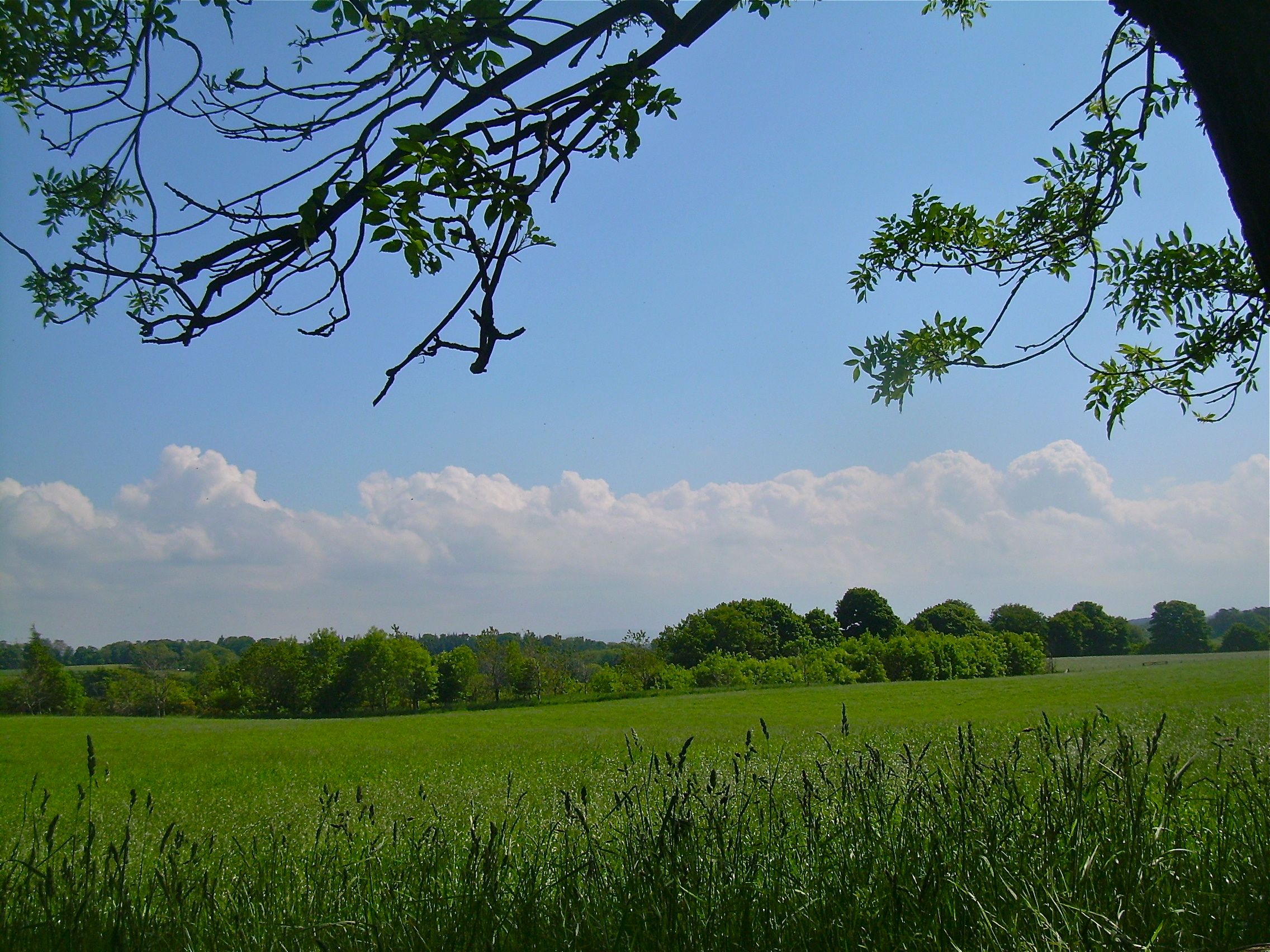
Midlothian wheat
Roslin Glen Park in the distance

San Francisco Wins @ Cantina SF, 2 March 2013, 7:30pm

Let’s not be sad about Sunday’s outcome. San Francisco is still a city to be proud of because it’s home to winning readers & writers, some of whom will be reading their work, myself included, Saturday, March 2, 7:30pm at Cantina SF. Aside from a stellar roster, Cantina SF serves some tasty cocktails. Below are the details. Please consider marking your calendar and forwarding to all interested parties.

Our Spring Reading
Saturday, March 2, 2013, 7:00 PM at Cantina SF (basement)
featuring
Hugo & Nebula award-winning author Terry Bisson 
& Afghan-American author Tamim Ansary 

Also presenting transmedia artist Kate Durbin, novelist and screenwriter Louis B. Jones, author of California’s Over and Radiance, novelist Renee Thompson, author of The Plume Hunter, and essayist and short story writer Rashaan Alexis Meneses.


Terry Bisson is an American science fiction and fantasy author best known for his short stories. Several of his works, including “Bears Discover Fire”, have won top awards in the science fiction community, such as the Hugo and the Nebula.

Tamim Ansary is the author of Destiny Disrupted: A History of the World through Islamic Eyes and West of Kabul, East of New York, among other books. For ten years he wrote a monthly column for Encarta.com, and has published essays and commentary in the San Francisco Chronicle, Salon, Alternet, TomPaine.com, Edutopia, Parade, Los Angeles Times, and elsewhere. Born in Afghanistan in 1948, he moved to the U.S. in 1964. He lives in San Francisco, where he is director of the San Francisco Writers Workshop.

Past the Halfway Point

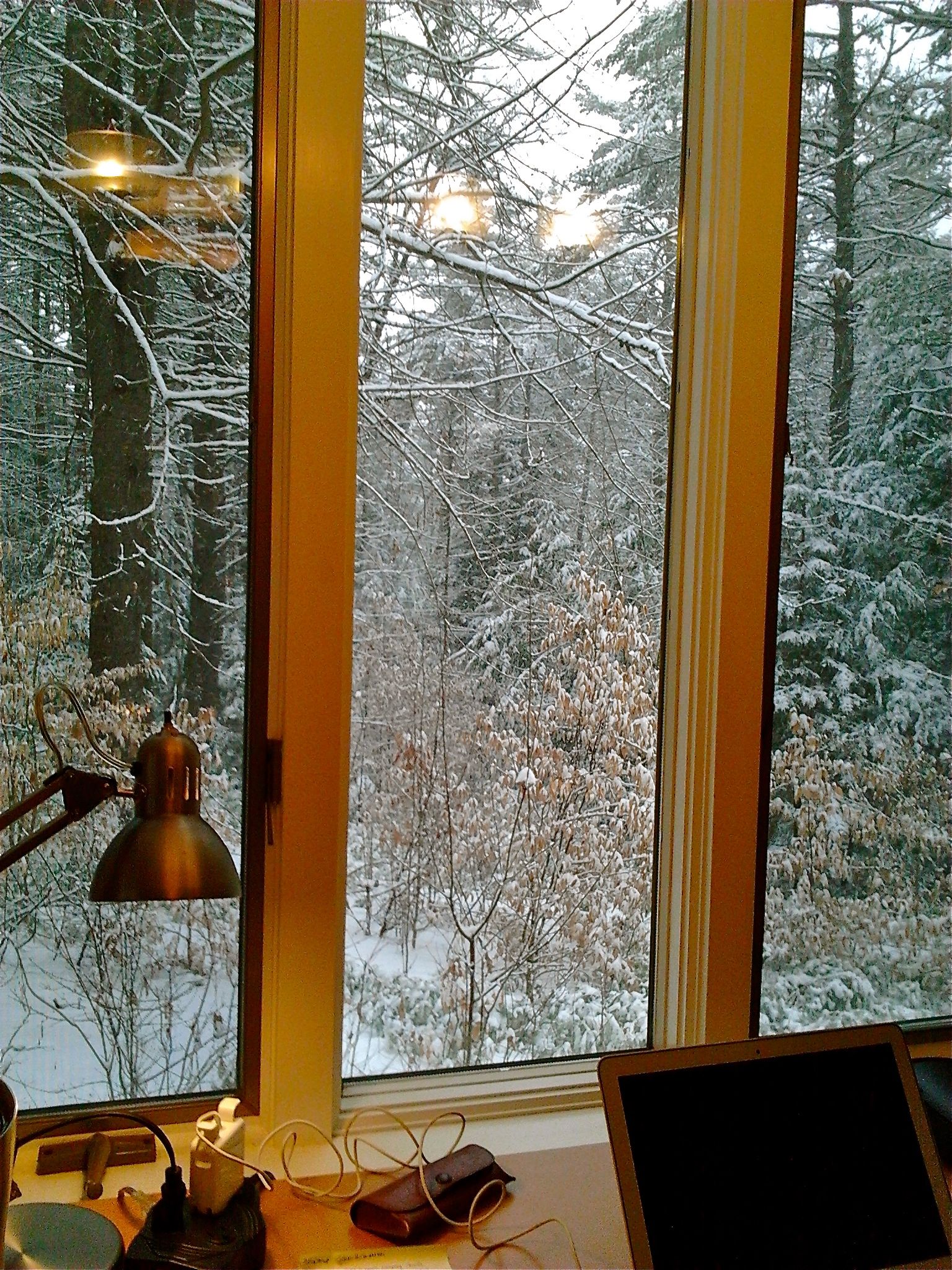
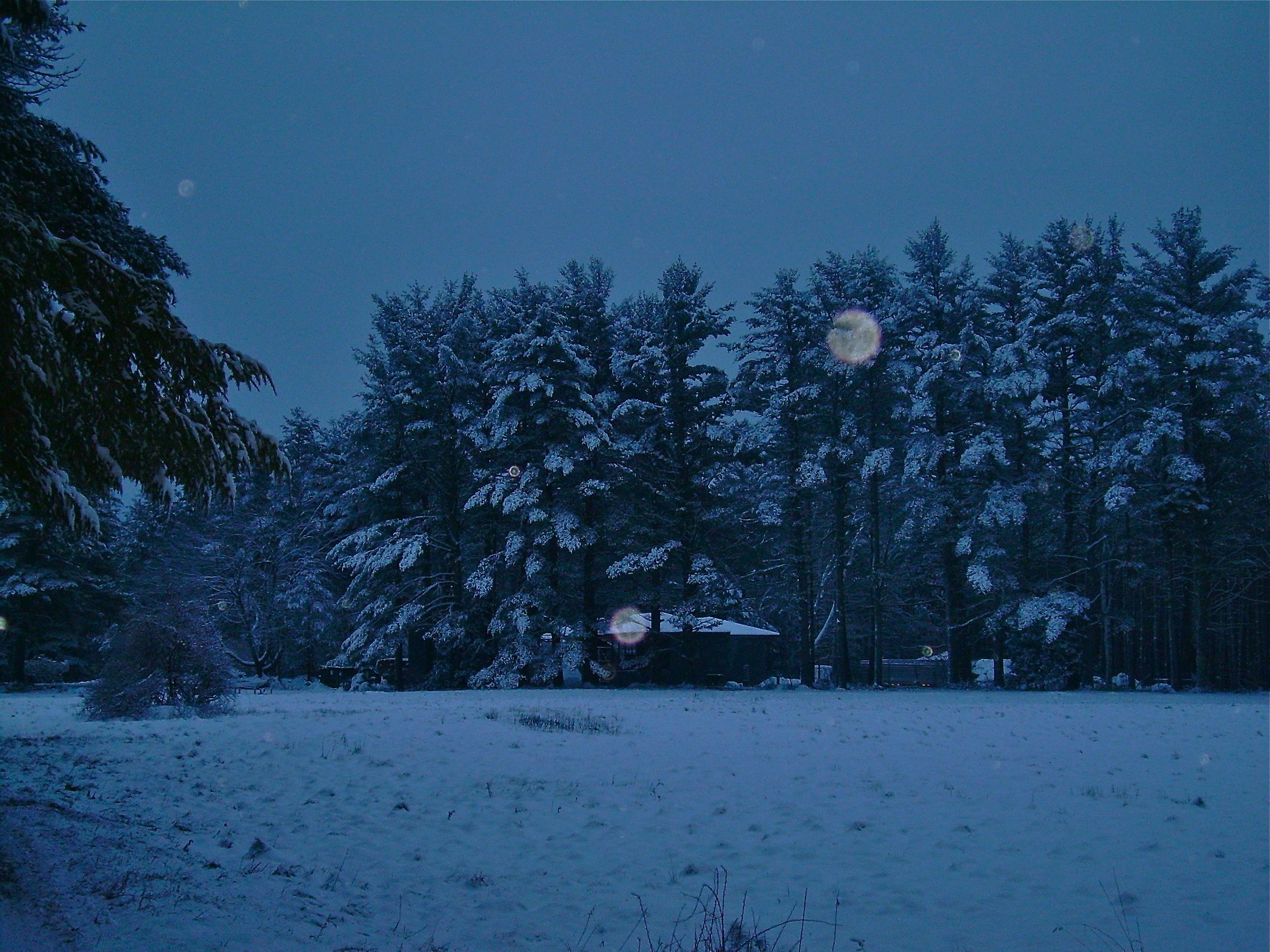
Colony Hall in the snnow
Colony Hall in the snow

Just past the mid-way point at MacDowell, a lot can happen in the space of a week and change. The second week has brought snow, snow plows, a visit with family from Maine, and sightings of one turkey, much bigger, blacker and more shy than California turkeys, a squirrel, which are fuzzier and have white bellies, and finally an interlude of birdsong during a freezing truncated walk through the woods.

It snowed the third night, and the next morning they were plowing the road with such industriousness that yours truly

Eaves Dormitory
Eaves Dormitory

could only think how grateful I am not to live in Russia. Witnessing such hard labor in contrast to the virtually immobile exertion committed in my studio made me consider the usefulness and practicality of this skill I’ve been bent on honing at MacDowell, but that worry was struck down pretty quickly when I turned back to the projekt at hand, and I have no doubt about the urgency of this piece. For a small moment of time, I almost compared the work between plowing snow to revision, trying to clear the path, for others to journey is arduous, sweaty, nerve-wracking, labor, and there is always plenty to plow.

a snowy day in the studio

One of the many traditions practiced at the Colony is for fellows, or colonists as they’re called here, to give presentations of their work, whether it be a reading or an open studio, you’re encouraged to share your artistic endeavors. The idea wasn’t that appealing, really, until a fellow explained that its best to present earlier rather than later during residency so that other fellows will have much needed context in terms of why you’re here and what you’re doing. This context cements a substantive foundation to conversations at dinner, breakfast, random encounters on the hallway or on the way to the studio. The whole purpose of the colony is not just for individual, solitary work but to be a part of the community, and being a part of a community means sharing. So, yes, there was a reading, and it was gratifying. In explaining my work to this crowd, I have a better grasp on how to explain what I’m doing, which not only helps keep me on track but also helps clarify the concept, so I can share with other communities as well.

Prometheus up in here

I’ve heard it said that the artists who step through MacDowell are the “cultural matrix” of U.S. Arts & Culture. A fellow colonist, over dinner, urged us to imagine all the different figures who have stepped through the doors and walked these grounds. The idea is over-whelming, frankly, and something I will have to sit and live with long after my time here is said and done.

If its possible, the projekt seems to be instructing me on what needs to happen next with revision. Its as if the manuskript is teaching me how to write. How is that?

With ten more days left, I’m trying to prepare myself for the return to someone else’s fantasy that I participate in, which I refuse to call “reality” because, as far as I’m concerned, living in this artistic mind and physical space is my reality.

More to come on the last week. For now, its steady and deliberate work on writing. Though I haven’t nearly gotten as much reading done as I had hoped, which is something I would like to work on, the art of reading, but there’s still time. One can always try.

snowy night at the colony

How it went down at this year’s ACTC 2012: “Preparing for and Living in the Real World through Core Texts”

This year’s 18th Annual Associated Core Texts & Courses Conference, in Milwaukee, Wisconsin, sponsored by Carthage College, and focusing on the theme: “Liberal Arts Education and the World: Inquiring into, Preparing for, and Living in the Real World through Core Texts” took place 29 March through 1 April at The Hilton Milwaukee City Center Hotel, where I presented with the following panel

“Conrad, Ellison, and Narrative Structure:

Blending Critical Thought and Student Engagement”

Aaron P. Smith, Marian University of Fond du Lac, “Authentic Self-Existence for the Visibly Marginalized;” Lamiaa Youssef, Norfolk State University, “Narrative Lenses and the Journey toward Self-Knowledge;” Justin Ponder, Marian University, “A Walking Personification of the Negative: Listening to Stories in Invisible Man;” Rashaan Meneses, Saint Mary’s College of California, “We’re All ‘Others’ Now: Revisiting Joseph Conrad’s Heart of Darkness in the Age of Post-post-colonialism.”

Chair: Jean-Marie Kauth, Benedictine University

Some of the speakers and panels that caught my attention were the following:

Robert Gurval, Department of Classics, University of California, Los Angeles: “Harmony and Homer on the Pearl River Delta: The Foundations of a New Liberal Arts in China”-

  • China is looking at Western liberal arts colleges to help shape their higher education though instead of calling their undergraduate core curriculum “general education” they’ve opted to use the term “gateway education” to indicate that students are beginning the path to learning
  • self in search of self
  • self as social institutions
  • Liberal Studies as training for life
  • introduce poetry first as foundation to politics, which is the gateway to political and economic theory

From the panel, “The Function of Core Texts and Their Programs,” Nicholas D. Leither, Saint Mary’s College of California, “Skepticism Destroyed Their Paradise: Generative Thinking and and ‘Believing’ in the Text”-

  • argues that students lose innocence in college when they’re taught to become the skeptic
  • more often than not in the classroom creative thinking isn’t valued, nor seeing several POV’s simultaneously
  • Rational thinking limits
  • “When we take a critical approach, we forget to believe.”
  • Critical versus generative, students need to take a leap of faith

From the panel, “Concepts of the Self in East and West,” Yaqun Zhang, Xiamen University “Confucius’ Gentleman Personality and Its Influence on Academic Education”

  • education as a cultural mission
  • educating students to let them know they are part of a a social and civic commitment
  • seeking harmony not sameness
  • having a sense of appropriate conduct

From my own panel on Conrad and Ellison, Aaron P. Smith Marian University of Fond du Lac, “Authentic Self-Existence for the Visibly Marginalized” (concerning Ellison’s Invisible Man)

  • one must have existence to become authentic, meta-alienation
  • alienation requires confrontation
  • those who create new values need an audience to receive

This year’s conference not only emphasized true and vigorous cultural exchange between the U.S. and China since ACTC has been collaborating with Chinese universities to help shape their curriculum, but another important theme emphasized again and again was inter-disciplinary exchange and pairing texts that weren’t so obvious on the surface, but in comparing say Machiavelli to Lao Tzu, professors made profound connections and demonstrated an exchange of ideas and values that spanned time and geography.

Speaking on Love & Labor for Barbara Jane Reyes’ class “Filipina Lives and Voices in Literature” at USF

Thanks to professor and poet Barbara Jane Reyes and the sponsorship of the Yuchengco Philippine Studies Program and Asian Studies Program, I was able to guest lecture for Reyes’ Spring 2012 course “YPSP 195-01/ANST 195-02: Filipina Lives and Voices in Literature” at the University of San Francisco on Tuesday, April 3, 2012. Before my presentation, sixteen savvy students read my short personal essay “Barbie’s Gotta Work,” published in Doveglion. The essay was included in the course’s unit on “Work and Domesticity.”

Reyes recently discussed this very same class and its inception in her recent post on the Poetry Foundation’s Harriet The Blog:

One day, I’d casually asked our program chair whether he was interested in an all Filipina/Pinay (Filipino women) literature course, and he said, yes, draft a syllabus, and we’ll get it approved by the curriculum committee. It was approved. It was quickly filled. This is the first semester I am teaching the course, and I’m still in disbelief. All Pinay Literature. I always think, wow, where was this class when I was young, and when I needed it most. It seems a lot of people have been asking this question too, as I have been asked by more people than I can count, for my syllabus and reading lists. So, in this space, I will be talking a bit about some of the items from my syllabus, in the hopes that it will prompt readers further.

Read entire post here.

For my guest lecture, after giving a brief power point presentation, featuring pictures of my family, my maternal and paternal grandparents at work and at play in their youth, the students asked challenging questions about the superficiality of Barbie and how that was complicated in the essay and what it was like to be a professor of color. Another student broached the gap between generations, wondering how to relate with family members who might not share the same  educational experiences. This brought on the idea of exploring the roots that hold us together and the stories family members share no matter where their paths in life take them.

We discussed looking at life and literature through a prism of lenses, much like looking through a kaleidoscope; we can shift the angles. We also talked about family memories that shape who we are. Some of the students shared their own experiences, remembering the work of their mothers, fathers, and grandparents.

Below is a sneak peek at the writing exercise students worked on, sifting through their past and their parents’ and grandparents’ pasts to uncover half-forgotten memories concerning love and labor, two themes that I keep coming back to with my own writing.

Love & Labor Writing Exercise

  • How do your parents and/or grandparents use their body at work?
  • How did work define your parents and/or grandparents?
  • What sense of self and purpose did they find through their labor?
  • Describe one of your parents or grandparents at work: What is the setting? What are their hands doing? Explain the actions of the body and mind.
  • How are they interacting with their setting? With other people at work?

Teaching two brand spanking new courses for L&CS this spring semester

Reading the likes of Azedah Moaveni’s Lipstick Jihad, Fareed Zakaria’s Post-American World, Jared Diamond’s Collapse, and revisiting Michael Pollan’s Omnivore’s Dilemma for two new classes I’m teaching within Saint Mary’s College’s Liberal & Civic Studies Program. Students are coming to me in class proud about how conversant they’re getting concerning world politics, global matters, and environmental issues. I must confess, I have a hard time keeping my mouth shut during class discussions. Its hard to keep silent when the readings and subjects are so stimulating.

122 Environmental Responsibility in a Global Community 

Taken the semester immediately following L&CS 121 whenever possible, this courses focuses on the natural world in which we lie, and the complex interrelationship between human activities, the values which determine these activities and their consequences for the environment. Different societies’ belief systems along with their responsibilities and attitudes toward the environment are examined. Students are required to devote time each week to a service-learning project, write essays, intellectual integrations and a self-assessment. Class sessions are supplemented by a biweekly activity lab. Prerequisites: L&CS 121, English 5, Collegiate Seminar 20/110. 

123 Modern Global Issues

The purpose of this course is to gain broad-based exposure to some of the cultural, political and economic issues related to and arising from the processes of globalization. Students will study recent critical dialogues and philosophies of globalization, including issues of ethnicity/race, gender, identity, urban culture, post-nationalism, multiculturalism and post-colonial studies. Students are require to participate in class, lead discussion, write essays and news articles responses, give an oral presentation and complete a midterm exam.   Prerequisite:L&CS 121 or permission of instructor.

We’ve watched some of the following videos to supplement subjects and texts recently covered:

Slajov Zizek on “Cultural Capitalism:

Hans Rosling on “The Magic Washing Machine”

Saving the Bay Documentary

Now that we’ve woken from colonial dreams and post-colonial nightmares of imagined communities,what comes after post-colonial theory?

   Heart of Darkness.jpg

Excited and honored to be presenting at the 18th Annual Conference of ACTC: Association for Core Texts and Courses. This year’s theme is “Liberal Arts Education and the World: Inquiring into, Preparing for and Living in the Real World Through Core Texts,” taking place in Milwaukee, Wisconsin.

Yours truly will be presenting the paper: “We’re All Others Now: Revisiting Joseph Conrad’s Heart of Darkness in the Age of Post-post-colonialism.”

Abstract:

In 1977, Chinua Achebe, through his essay, “An Image of Africa” tried and sentenced Joseph Conrad for being a “bloody racist,” charging that his novel, Heart of Darkness, captured Western imagination at its worst. In light of post-colonial theory, every culture and nation affected by Empire, both colonized and colonizer, was then shackled to a shared and brutal past. Post-colonial theorists like Achebe sought retribution and used discourse as a means of justice. Now that we’ve woken from colonial dreams and post-colonial nightmares of imagined communities, how do we read and critique a text like Conrad’s Heart of Darkness? And, if “multiculturalism has failed,” or if we believe it is possible to “transcend race,” what comes after post-colonial theory?

For more info on post-post-colonialism, check out the following source:

Guest Lecturing for Interpersonal Communication at Ohlone College

On Wednesday, 16 November 2011, I had the pleasure of guest lecturing for an evening session of Interpersonal Communication at Ohlone College. The students prepared for our class by reading the previously published post “Digital Citizenship: Cultivating an Online Presence, Part I.” After a quick introduction, they broke into small groups to review the text and come up with discussion questions where we dived into what it means to be a digital citizen, how and why we use social media sites. For reference to digital citizenry check out the NY Times recent article “Protestors Look for Ways to Feed the Web,” which is about social media’s role with the Occupy Movement where Jennifer Preston writes:

The movement counts more than 400 Facebook pages with 2.7 million fans around the world. On Tumblr.com, the “We Are the 99 Percent” blog continues to publish the personal stories of hundreds of people struggling with student debt, health care costs and foreclosure. There are also dozens of new wikis and Web pages, including OccupyWallSt.org and HowToOccupy.org.

Interpersonal Communication is the study of how we communicate with self and others. Relationships remain an essential component of human existence. We must ask ourselves: How well do we function in our relationships, and how might we improve our relational competencies? The class was wonderfully diverse, with students from all over the world sharing  insights about their experiences with social media. We discussed the following topics:

  • citizenship vs. consumerism
  • digital community vs. face-to-face community
  • what’s expected of citizens online
  • what’s expected of digital communities
  • how do different digital communities interact. For instance, Tumblr is for showcasing individual work and Facebook is for catching up with friends and family

The students then drafted group contracts between online users and online communities to determine what the community can do for digital citizens and what digital citizens can do for their community. Some of the policies they wished to implement included:

  • no kids ten-years or younger should be on Facebook because they don’t have much to contribute to the community
  • need to have expectations on what people can and should post
  • users need to understand that sites like Facebook are not games
  • time limits to ensure productivity at work and in school
  • cut unlawful browsing

We concluded the evening with two writing exercises to help students become more conscious of how they present themselves online and how they interact with others:

1. Self- Evaluation from the Point of View of a Friend or Family Member

(This proves highly relevant to course content as the class discussed ‘Significant Others’ and how the relationship(s) affects our perception of ourselves. ‘Perceived Self’  / ‘Presenting Self’, Ego Boosters and Ego Busters along with Perspective Taking.) 

For this freewrite you will want to assume the point of view of a friend or family member who knows you well. You will be writing from their perspective to give a critical evaluation of yourself. Imagine that they’ve been asked to give an honest and thoughtful assessment about your self. Your friend or family member must give a truthful evaluation about your character, your motivation, and your ability to follow through with action. In addition, they are required to support their opinion with concrete experiences, memories and events that illustrate their assessment.

To assist with this exercise you may want to answer some of these questions, again from the POV of a friend or family member who is evaluating you:

  1. How would you describe your personality?
  2. What motivates or inspires you?
  3. Who has influenced you and why?
  4. What past events demonstrate your strongest skills and traits?
  5. What are your weaknesses?
  6. How do you handle your weaknesses?
  7. If you could make changes to your life, your drive, your behavior, what kind of changes and why?
  8. When are you at your best? When are you at your worst?
  9. How well do you work with others?
  10. How well do you take direction?
  11. What kind of a leader are you?
  12. How do you inspire others?
  13. Other questions???

2. Personal Ad for Dating Agency

(This proves highly relevant to course content since the class addressed both mediated (digital) communication and the dynamics of ‘self-concept‘.)

 Where did you grow up?

Basics:

Appearance:

Background/Values:

Lifestyle:

Interests:

Get To Know Me:

About My Date (Describe who you’re ideal date is):

In My Own Words (give a paragraph description to entice potential dates):

===================================

If you could draw up a contract between digital citizens and digital communities what would be the roles each play for what purposes, and what policies would regulate the relationships?

For kicks, here’s a take on the internet from two favorite digital citizens:

Quick Recap of SMC’s Parents & Family Weekend Session “Classroom as Kitchen Table” with a shout out by author Mitali Perkins

On Saturday, October 22, at SMC’s Parent & Family Weekend, “Classes Without Quizzes,” I got to meet 25 parents and family members who were eager “to see Saint Mary’s through their kids’ eyes.” In my session, titled “Classroom as Kitchen Table: Education Through Conversation and Feeding Hungry Minds,” we read aloud Sandra Cisneros’ deceptively simple short short “Eleven.” As always this bittersweet narrative got the packed classroom buzzing and was the perfect inspiration for us to dive into our own childhood memories for a little creative writing exercise of our own. Here’s a quick review from one of the parents I met at the session, author Mitali Perkins:

I’m back from parents’ weekend at Saint Mary’s College of California where we attended classes without quizzes. I, of course, signed up for a writing class taught by Rashaan Meneses, who led us through a brilliant workshop on enhancing voice with detail.

You can read the rest of her recap along with her creative exercise from our class session in her post “Writing the Empty Nest at Parents’ Weekend” at her blog Mitali’s Fire Escape.

Presenting “The Classroom as Kitchen Table” at SMC’s Parent & Family Weekend’s “Classes Without Quizzes”

Along with my fellow SMC colleagues, I’ll be presenting my class without quiz, “The Classroom as Kitchen Table: Education Through Conversation and Feeding Hungry Minds” where we’ll be reading Sandra Cisneros “Eleven” discussing and analyzing the text, and, if there’s time, we’ll do some creative writing of our own. Should be fun!

Parent and Family Weekend 2011

NOTE: Schedule subject to change

Saturday, October 22nd

8:30am                        Parent and Family Check in

9:00 – 10:00am         Breakfast

10:15 – 11:15am      Classes without Quizze- Families take 1hr long classes from
various academic disciplines

11:20am – 12:20pm Student Support Mini Seminars – Staff share ways to support your student                                          regardless of class standing

12:30 – 1:30pm         Lunch

1:30pm                        Day in the Bay – Enjoy your afternoon with your students!