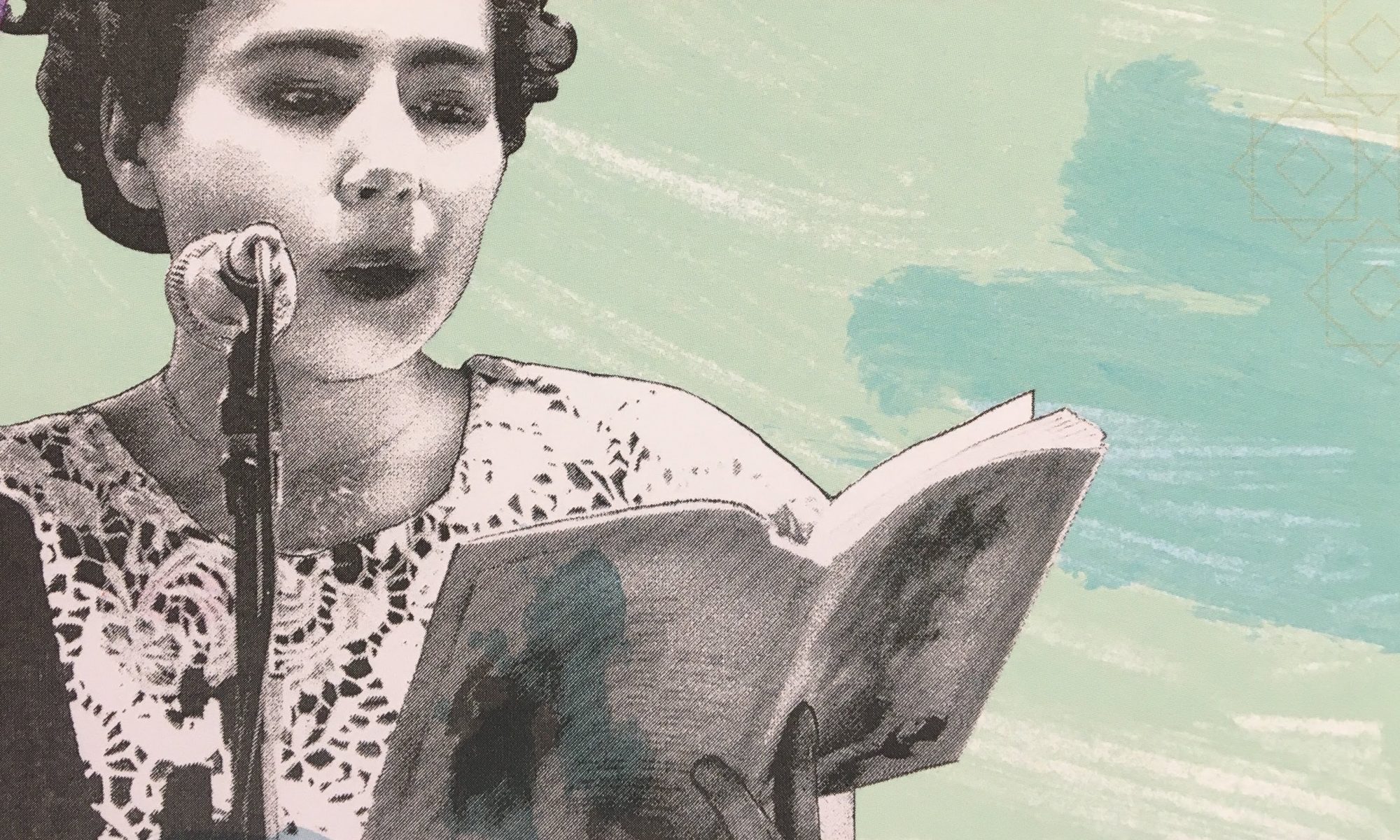
“Growing Up Filipino II: More Stories for Young Adults” now available

Please excuse me while I celebrate. I’m privileged to announce my latest short story “Here in the States” is included in the PALH anthology, Growing Up Filipino II: More Stories for Young Adults, edited by Cecilia Manguerra Brainard. Please consider this wonderful collection as a holiday treat for yourself, your family, any friends who love good stories, and any teachers or librarians who might be interested. You can get your copy through Amazon.com, or Barnes & Noble. I’d greatly appreciate if you’d please spread the word and would love to hear your reviews.

The San Francisco book launch takes place January 16, 2010. More information will be forthcoming or you can follow the updates on the PALH blog or this blog.

Thanks so much for all your support and encouragement!

LISTED IN AMAZON.COM GROWING UP FILIPINO II: More Stories for Young Adults

DISTRIBUTED BY: Ingram, Baker & Taylor, Amazon.com, Barnes and Noble, among others
PUBLISHED BY:
PALH
P. O. Box 5099
S.M., CA 90409
Tel/fax: 310-452-1195; email:palh@aol.com; palhbooks@gmail.com;http://www.palhbooks.com

BOOK DESCRIPTION: Growing Up Filipino II: More Stories for Young Adults is the second volume of the Growing Up Filipino series by PALH. In this collection of 27 short stories, Filipino and Filipino American writers explore the universal challenges and experiences of Filipino teens after the historic events of 9/11. The modern demands do not hinder Filipino youth from dealing with the universal concerns of growing up: family, friends, love, home, budding sexuality, leaving home. The delightful stories are written by well known as well as emerging writers. While the target audience of this fine anthology is young adults, the stories can be enjoyed by adult readers as well. There is a scarcity of Filipino American literature and this book is a welcome addition.

CONTRIBUTORS: Dean Francis Alfar, Katrina Ramos Atienza, Maria Victoria Beltran, M.G. Bertulfo, Cecilia Manguerra Brainard, Amalia B. Bueno, Max Gutierrez, Leslieann Hobayan, Jaime An Lim, Paulino Lim Jr., Rebecca Mabanglo-Mayor, Dolores de Manuel, Rashaan Alexis Meneses, Veronica Montes, Charlson Ong, Marily Ysip Orosa, Kannika Claudine D. Peña, Oscar Peñaranda, Edgar Poma, Tony Robles, Brian Ascalon Roley, Jonathan Jimena Siason, Aileen Suzara, Geronimo G. Tagatac, Marianne Villanueva

BIO OF EDITOR: Cecilia Manguerra Brainard is the award-winning author and editor of over a dozen books, including the internationally-acclaimed novel, When the Rainbow Goddess Wept, Magdalena and Acapulco at Sunset and Other Stories. She edited Growing Up Filipino: Stories for Young Adults, Fiction by Filipinos in America, and Contemporary Fiction by Filipinos in America, and co-edited four other books. Cecilia also wrote Fundamentals of Creative Writing (2009) for classroom use. She teaches at UCLA-Extension’s Writers Program.

Jane Austen as Gateway Drug (or Must-See BBC)


When Masterpiece Theatre aired their complete series of Jane Austen not only was I reacquainted with an artist who I wholly took for granted in my undergraduate years, but the re-adaptations of such delightful works as Mansfield Park and Persuasion got me hooked, once again, on the period piece dramas I escaped  to in the awkward and unnecessary years of high school. Since MT’s airing, I’ve been chasing the likes of Dickens, Hardy, Eliot, and the Brontes since and am thoroughly enjoying almost every page of these seemingly endless serial works.

I wholeheartedly advocate diving into these wonderful recent adaptations, all of which are deliciously satisfying. I wasn’t a fan of Billie Piper until I saw her in Mansfield Park where she proved she had some acting chops as precocious and shy Fanny Price, who, despite her lowly background, doesn’t hesitate to speak her mind and triumphs over deceit and denial.

Sally Hawkins and Rupert Penny-Jones are wonderfully pensive and draw out a nuanced performance in their awkward and painful dance in Austen’s more serious Persuasion.

I was utterly enthralled and enchanted with Northanger Abbey, which should make a short and delightful read just in time for Halloween. I’m also enamored of JJ Field, who is irresistible in this romp as well as in Phillip Pullman’s The Ruby in the Smoke, a Masterpiece Mystery Classic.

I did not care for the new Sense and Sensibility nor the Emma with Kate Beckinsale, but if you’d allow me to make a plug for my three absolute favorite BBC period productions, which I intend to own someday because they’re just so damn good. Elizabeth Gaskell makes Jane Austen’s drawing room dramas seem tawdry frivolously frilly affairs in her powerhouse critique of Industrialization and Labour in North and South.


Gemma Arerton’s performance in Hardy’s Tess of D’Ubervilles will win you over body and soul. And Hardy blazes a scathing eye to Victorian society and the demented rigors of religion that leaves everyone scarred and profoundly stunned.

Keeley Hawes is also astoundingly amazing as downtrodden but defiant heroine, Lizzie Hexam (one of the rare complex female Dickensian creations to grace his volumes of otherwise two-dimensional women), but you really need to read Our Mutual Friend before being able to enjoy the adaptation. Chuck D is a master writer and no matter where one is in with the craft, we can always learn from him.

With that said, no writer has compared and no piece can withstand the astute clarity and transcendent pathos of Charlotte Bronte. I used to love her sister above all else until I saw Jane Eyre, and then read Jane Eyre twice in a row. Charlotte is a Goddess of Art.

I watched Lost in Austen a couple of months ago and though I loved Jemima Rooper as a lesbian ghost in the macabre BBC occult hit Hex, I found the modern revamped Austen take too silly and therefore unnecessary.

Before watching Becoming Jane I had serious doubts about Anne Hathaway as Austen but was pleasantly surprised by the film and Hathaway’s performance though Miss Austen Regrets is a finer tribute to the writer, and the film attempts to present a truthful portrait of the arduous and lonely journey of a mature writer.

This journey is eased and inspired by all the great works listed above, which are worth visiting and revisiting until the journey’s end, not to mention they’re just great fun and a perfect antidote to rainy weather blues.

From: Andrew Wheeler- Meme: My life according to the books I’ve read this year

Borrowed from Charles Tan’s Blog Bibliophile Stalker. Thanks for the inspiration!

Using only books you have read this year (2009), cleverly answer these questions. Try not to repeat a book title.

Describe Yourself: Against the Machine: Being Human in the Age of the Electronic Mob

How do you feel: A Laodician

Describe where you currently live: Dark Age Ahead

If you could go anywhere, where would you go: Rick Steve’s London

Your favorite form of transport: Gabriel Garcia Marquez’s Collected Stories

Your best friend is: Jane Eyre

You and your friends are: A Thousand Years of Good Prayers

What’s the weather like: The Mayor of Casterbridge

You never go out without wearing: The Moonstone

The best meal you ever sat down to: Eyewitness Top Ten Travel Guide: Munich

Favourite time of day: Moments of Being

If your life was a:  Fiction Writer’s Workshop

What is life to you: Cosmopolitanism: Ethics in a World of Strangers

Your fear: Great Expectations

What is the best advice you have to give: There Will Never Be Another You

Thought for the Day:  Leave it to Me

How I would like to die: Citywalks: London: 50 Adventures on Foot

My soul’s present condition: Graceland

“Apollonian and Dionysian tendencies”

The Dionysian Impulse” from Harper’s Magazine Online, July 25, 2009:

Then came Friedrich Nietzsche. Today he’s known for Zarathustra and Beyond Good and Evil more than his other writings. But his very first book–composed by a 27-year-old university professor, which differs sharply in style from the later writings–actually presents some of Nietzsche’s most radical and novel thinking. And it gives a central role to music. He calls it The Birth of Tragedy from the Spirit of Music and that precisely describes his thesis. He puts forward the idea that the heyday of classic Athenian drama, the age of Aeschylus and Sophocles, was a logical development from Greek traditions of music, song and dance. He breaks this tradition into two tendencies, the Apollonian and the Dionysian. The Apollonian follows Schopenhauer’s principle of individuation, it stresses the gentle reign of reason and intellect, pushing life to a somewhat unnatural ordering. The Dionysian is its exact opposite–it is governed by emotions and particularly passions, sometimes whipped to a self-destructive frenzy of excess. The Dionysian suppresses his intellect to live as one with nature, and wine plays an essential role in his cult. In the quoted passage, Nietzsche looks at the exuberance of the Dionysian spirit and he traces it through history. It is, he says a sort of springtime’s awakening (incidentally, this is the line from which the German-American playwright Frank Wedekind takes the title of his important play–in which youthful sexuality faces the suppression of a rigidly Apollonian school system). The age of Aeschylus marks an important synthesis between these Apollonian and Dionysian tendencies–a synthesis that dissolved with the rise of Euripides and Socrates, with their elevation of the Apollonian over the Dionysian. But Nietzsche understands the totality of European intellectual and artistic tradition as the product of interaction between the Apollonian and Dionysian tendencies–the greater the friction between them, the greater the art which results…Read more

[Image]

Bacchus by Caravaggio (1596)

GoodReads Review: Marquez’s Collected Stories

Collected Stories

Reading Gabriel Garcia Marquez is like coming home, a home crammed with the most wondrous oddities. Birds of wild plumage. Winds that scrape against sanity. Seas that overcome and drown you. But there’s not a trace of cold heart-stopping fear. Marquez’s realms are Sublime.

The first two stories of this collection, Eyes of a Blue Dog, are preoccupied with death. Though highly abstract, and, at the same time, visceral, the details twitch and flitter, making the skin crawl. Death elicits unease, yet this macabre obsession shows hints more toward a writer’s meager canvas. The characters embody smallness of mind. An ego coddling itself? Much of the first collection is filled with amorphous plots and insulated characters. As the stories progress, and, as we move from one collection to another, we see Marquez step outside of his own neuroses and evolve as artist. His maturation is one of literature’s greatest treasures. As the writer strengthens his style, the tales grow sophisticated…

GoodReads Review: Mukherjee’s dance between Casteneda and Conrad

Leave It to Me (Ballantine Reader's Circle) Leave It to Me by Bharati Mukherjee

My review


rating: 3 of 5 stars
Being citizen of the world is crazy-making. You belong to nowhere and every where claims you. You could be Egyptian, Thai, Fijian, Spanish or Persian, and strangers with a downright rudeness will marvel at your hair, dissect your skin color, and speak brazenly about the otherness of you. Mixed race, multi-culturals must learn to straddle borders and serve as ambassador to a crowd that only pretends to be homogenized. Members of the “rainbow tribe” learn to belong to multiple worlds and become schizophrenic in the process. Bharati Mukherjee’s rambunctious and mythic novel, Leave It To Me is a fast-paced tale that lassos and wrestles the mixed race experience to the ground. Her writing, as in Jasmine and Middlemen & Other Stories, scintillates. She cuts through all the B.S. and morass to get to the beating, bleeding heart of our racially complex world.

Debby DiMartino, or the reinvented and reincarnated Devi, is a force of a nature. What makes her a great main character is that we don’t know what she’s capable of and neither does she. The best literary characters instill just enough fear in their readers, so that we’re surprised, almost aghast, at their potency. Half Indian and half American, Devi raises a path of destruction and retribution as she seeks her birth parents. Born and raised in Schenectady by her adoptive Italian American parents, the family that cared for and loved her throughout childhood, adolescent, and teenage years gets tossed aside, while Devi follows a thin line between sanity and insanity, stalking her heritage to the Bay Area of California, a bastion for changelings and shape-shifters. Circuiting the cracked out Haight, berserk Berkeley, and even an off-road jaunt through the Caldicott Tunnel for an evening of suburban madness in Lafayette, Devi meets soul-searchers and cosmonauts who are more lost and more confused than her own orphaned and jumbled self. With psychic and transcripted transmissions from Rajasthan, Mukherjee alights the Pacific Rim with a burning tale of explosive souls enmeshed in a Vietnam love versus war saga. Devi’s origin is the twisted tale of a hippie American mother, who romanticizes the East, bowing to her Oriental lover and lo! a hapless baby with a hunger for revenge is borne. Leave It to Me, is a perverse dance of both classic and contemporary themes, when Casteneda meets Conrad.

View all my reviews.

GoodReads Review: Answering to Charlotte Bronte

Jane Eyre (Penguin Classics) Jane Eyre by Charlotte Brontë

My review


rating: 5 of 5 stars
Jane Eyre, at fifteen she seemed entirely too cerebral, almost to the point of pretension. Too downtrodden and bound to earthly matters, certainly no match for the metaphysical and passionate likes of her literary sister, Catherine Earnshaw. I was not a fan of Charlotte Bronte in high school. I much preferred the transcendental and other-worldly spiritedness of Cathy and Heathcliff. Charlotte and Jane were just too drab and dreary.

Some fifteen years later, most of my adolescent ardor has tempered. I no longer think The Doors are the end all be all, and I cringe at my idolisation of Jim Morrison. I see the gaping faults in Cathy and can’t forgive Heathcliff. And Jane, dear, wise, level-headed, answer-to-her-own-will and stick-to-her-own-principles, Jane Eyre is an end all be all in Charlotte’s profound and unsettling universe. I recently re-read Jane Eyre this past month and was so swept away with awe and inspiration, I read it again. That’s right, twice, in a row. Jane Eyre is as complicated, keen, and perceptive as any philosophical protagonist. Move over Stephen Daedalus, watch out Raskolnikov, shut your pipes, Pip, and stuff it Hans Castrop.

I am no bird; and no net ensnares me; I am a free human being with an independent will, which I now exert to leave you.

Jane is as strong willed and autonomous as any man. A critique of the Biblical story of woman as temptress, in Bronte’s world, men are weak and tempt damnation. Rochester urges Jane to live in sin with him, but Jane is too upstanding and moral, not in a cloying and nauseating way as Esther Summerson or any other Victorian female do-gooder, think Eliot’s Romola and take your pick of Dickens’ heroines. Jane stands apart because we see from the beginning that she holds firmly to her own principles. And, at most, we share her credo. We want her to leave Rochester, we hail her for rebelling against Mrs. Reed, and we hold the same caution as she does against Helen Burns’ extreme piety. The brilliance of Bronte’s first person narrator, is that we see exactly why and how Jane acts on her decisions, and we follow her every step and struggle with heart and reason. Throughout all the trails and turbulent tribulations, and even in the advent of marriage, Jane doesn’t lose her autonomy but gains only more agency and wisdom for herself while Rochester pays for his transgressions through his body and soul. He literally becomes a broken man by his own doing.

Such is the imperfect nature of man! Such spots are there on the disc of the clearest planet; and eyes like Miss Scatherd’s can only see those minute defects, and are blind to fill brightness of the orb.

The Brontes revel in flaws. Their characters are glorified by humanly fatal flaws. Jane is too headstrong. Rochester, prideful. There’s dogmatic Helen, the statuesque and too evangelical St. John, and Adele, who’s just too French. Bronte had just a smidge of the xenophobe in her. That’s sarcasm for you. Because, of course, there’s Bertha, the inner animal, the monstrous Other, who, despite her foreign origins, lives in each and everyone of us. Bertha is kin to Heathcliff. Without either the world would be a very cold, barren desert. Each character’s fault shapes them and makes them who they are, an Achilles Heel that makes them larger than life. Bronte magnifies each defect, and, in doing so, rejects perfection and purity. The only absolute is there are no absolutes. Absolutes are sent to the sweltering heat of India to wither and die. St. John, the model of perfection and piety, is a Greek god of beauty and has the morals to uphold his handsomeness. Yet his perfection is grotesque. And Rochester’s grotesqueness is not perfection, but we definitely prefer him over the maniacal rigidness of St. John who both repels and attracts women.

From the start, Eyre wants nothing more than earthly love. Burns says to her “Hush, Jane, you think too much of the love of human beings; you are too impulsive, too vehement.” Yet, Jane is extremely hardy and adaptable. She can grow without love. In darkness and solitude, she’ll survive and be better for it. She is capable of finding her inner strengths without outside support, and this makes her divine, god-like. Resilient and resourceful, as formidable a hero as Dante or Odysseus. Jane Eyre defines the heroine’s journey. Heroine as opposed to hero in that Jane thrives best in her relationships to those she loves and those who reciprocate equal care and compassion. “Only connect,” Jane embodies the mantra and shows us the truer and greater path, more significant than any trail a hero might trek. Our heroine happily and proudly commits herself to serve others, not in the service of god, not in any submissive or subservient manner but out of a deep sense of duty to simply care for those she loves. This is true nobility, truly heroic. To be of use, to have purpose, to fulfill duty, and uphold virtue in the Classical sense. Jane knows where she stands among the Cosmos. She knows the station to which she was born and does not seek to transcend her place, in terms of shirking from duties and responsibilities, but should anyone transgress against her rights to equality, free speech, or free thought, should anyone violate her own humanity, they will have to answer to Charlotte Bronte.

View all my reviews.

Vince Gotera deconstructs a favorite poem on YouTube

This poem has haunted me since first encountering ee cummings. Vince Gotera provides an elegant and simple deconstruction via YouTube on his blog post “ee cummings l(a) deconstructed”:

If you’re like me, after reading cummings, you’ll perceive magic every time a leaf falls.

…What cummings uncovers for us here is how many times the number one (as suggested by the letter l) appears in the word loneliness: four times. And of course there’s also the letter l/number one in the word leaf…

Check out Gotera’s post here.

GoodReads Review on Chris Abani

Graceland Graceland by Abani, Chris

My review


rating: 3 of 5 stars
“Writers are dangerous,” so says A.S. Byatt, and when you read Chris Abani you see exactly how the truth can kill. Abani’s stories show us life balanced on the blade of a knife. His novel, Graceland, chronicles a dark page of Nigeria’s history as we follow a young boy learning to live and love in the turbulent eighties. Graceland opens with a nod to Langston Hughes’ “A Dream Deferred.” Elvis, our young Nigerian protagonist, desperately wants to be a dancer, and in the midst of war and political revolution, this dream dries up, festers like a sore, and decays with the death that surrounds him.

Graceland, like Jessica Hagedorn’s novels Dogeaters or Dream Jungle, crams fistfuls of characters into bustling Third World nightmares. Whether its Manila or Lagos, each soul, for better or for worse, is forced to angle their own path to survival. Graceland is an Inferno on earth, and Abani’s hero, Elvis, follows the footsteps of Florentine pilgrim, Dante. As Elvis matures from self indulgent and naive boy to awakened man, he’s initiated into the sinful ways of his world, and, like Dante, he sees firsthand how degrees of sin match degrees of survival. Though unlike our Tuscan journeyman, Elvis is granted two guides, Redemption and the King of Beggars. Each play tug-o-war with Elvis’ conscience. Redemption, who entangles Elvis into a life of crime, lifts the veil of innocence for us and our hero when he asks, “So are you telling me dat stealing bread from bakery to feed yourself and killing some boy is de same? Everything got degree.”

As in Inferno, the one pure source of light, our pilgrim’s enduring star, is Beatrice, Elvis’ mother. Though Elvis strays from his path and is lost in the dark wood of his country in strife, his mother through her written notes on Igbo culture and her record of recipes for sustenance and medicine, reading more like prophecies, keep Elvis sane and compassionate.

What’s disturbing and therefore powerful about Graceland is knowing that Abani’s novel is most likely true. Though the characters are make believe, anyone who reads the newspapers or watches the BBC news knows that Elvis’ journey happens everyday. Pick a country, any country, whether it be Thailand, Sri Lanka, Somalia, Zimbabwe, Brazil, or Mexico, Abani’s work serves as live wire transmissions of today’s “urban anonymity” from all the dark nooks of our global metropolises. In that respect, we also see the over-reach of American and Western culture and ideals. As Barthelme’s writing reveals, no part of our life is left unadulterated by the media, and, in Abani’s novel, we also find that no corner of the earth is left untainted by Western influences. The consequences of this is a protagonist who is hyper self-conscious. His dreams and hopes feed off movies and music, which are then appropriated and made new by his Nigerian culture. The media is constantly recycling and transforming itself, as the lives it influences actively transform and reinvent new identities as new modes of survival.

Graceland is a testament to the shock and awe practice of today’s geopolitics. Abani doesn’t flinch to bring these stories to light. His writing is dangerous only in that he holds a mirror up to us and asks us to take a hard look at ourselves.

View all my reviews.

Latest GoodReads Review on Lee Siegel’s “Against the Machine”

Against the Machine: Being Human in the Age of the Electronic Mob Against the Machine: Being Human in the Age of the Electronic Mob by Lee Siegel


My review

rating: 3 of 5 stars
Lee Siegel raises excellent critical theories about our latest and greatest tool, though much of the text seems to veer into personal rant. Some of his finer points include:

Like the car, the Internet has been made out to be a miracle of social and personal transformation when it is really a marvel of convenience–and in this case of the Internet, a marvel of convenience that has caused a social and personal upheaval. As with the car, the highly arbitrary way in which the Internet has evolved has been portrayed as inevitable and inexorable.

Including scathing critiques against the rampant “self expression” that he insists tyrannize the web:

But self-expression is not the same thing as imagination. ‘Self expression’ is one of those big, baggy terms bulging with lots of cultural change and cultural history to the point where it gestures toward a kind of general meaning without expressing a particular one.

Siegel steps in as Cassandra warning us of the dangers of an insulated “Youniverse” where personal instant gratification is the rule of the day. His most enlightening observation, how digital technology is currently changing our language and perception of the world:

We have undergone a complete ‘transvaluation of values,’ the phrase that the German philosopher Fredrich Nietzsche used to describe the process by which a new way of looking at the world slops into our familiar outlook. Nietzsche believed that Christianity, for example, had ‘transvalued’ earlier pagan and aristocratic values of heroism, power, and fame into meekness, humility, and eternal life. The early Christians did this while retaining pagan vocabulary, so that Jesus was still a “prince” and God as “mighty” as any Roman emperor; God’s realm was as much a ‘kingdom’ as that of Nero. But although the former vocabulary remained, the new values had an entirely different meaning.

In this digital revolution, at the dawn of the Informization Age, as Mike Davis noted in a recent interview with Bill Moyers, like Obama, we can’t see the Grand Canyon. Davis recalls the first Western explorers were unable to comprehend the magnitude of America’s vast earthly chasm, at the time of its Western discovery, we simply did not have the technology to measure it and certainly could not fathom the grandness of it.

http://www.pbs.org/moyers/journal/032020…
Today, we use capitalist terms and concepts to conceive this new digital horizon before us. We scramble to gain perspective as the landscape transforms underneath our feet.

My Composition students appreciated turning the technology on its head. Most of my freshman were weaned on digital waves, so they appreciated hearing his skepticism, though many complained that Siegel’s argument inclined towards repetition and, like most literary arguments, he leads us to a solution-less, and therefore, anti-climactic conclusion. Which makes me wonder why we, as writers, can’t do more than pose great critical ideas. Must we always linger in the haze of abstraction? If we’re going to pose a problem, shouldn’t we bother to conceive a viable solution? Nevertheless, the text generated excellent and engaged discussions–what more can a teacher ask for?

View all my reviews.