How it went down at this year’s ACTC 2012: “Preparing for and Living in the Real World through Core Texts”

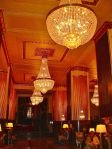
This year’s 18th Annual Associated Core Texts & Courses Conference, in Milwaukee, Wisconsin, sponsored by Carthage College, and focusing on the theme: “Liberal Arts Education and the World: Inquiring into, Preparing for, and Living in the Real World through Core Texts” took place 29 March through 1 April at The Hilton Milwaukee City Center Hotel, where I presented with the following panel

“Conrad, Ellison, and Narrative Structure:

Blending Critical Thought and Student Engagement”

Aaron P. Smith, Marian University of Fond du Lac, “Authentic Self-Existence for the Visibly Marginalized;” Lamiaa Youssef, Norfolk State University, “Narrative Lenses and the Journey toward Self-Knowledge;” Justin Ponder, Marian University, “A Walking Personification of the Negative: Listening to Stories in Invisible Man;” Rashaan Meneses, Saint Mary’s College of California, “We’re All ‘Others’ Now: Revisiting Joseph Conrad’s Heart of Darkness in the Age of Post-post-colonialism.”

Chair: Jean-Marie Kauth, Benedictine University

Some of the speakers and panels that caught my attention were the following:

Robert Gurval, Department of Classics, University of California, Los Angeles: “Harmony and Homer on the Pearl River Delta: The Foundations of a New Liberal Arts in China”-

  • China is looking at Western liberal arts colleges to help shape their higher education though instead of calling their undergraduate core curriculum “general education” they’ve opted to use the term “gateway education” to indicate that students are beginning the path to learning
  • self in search of self
  • self as social institutions
  • Liberal Studies as training for life
  • introduce poetry first as foundation to politics, which is the gateway to political and economic theory

From the panel, “The Function of Core Texts and Their Programs,” Nicholas D. Leither, Saint Mary’s College of California, “Skepticism Destroyed Their Paradise: Generative Thinking and and ‘Believing’ in the Text”-

  • argues that students lose innocence in college when they’re taught to become the skeptic
  • more often than not in the classroom creative thinking isn’t valued, nor seeing several POV’s simultaneously
  • Rational thinking limits
  • “When we take a critical approach, we forget to believe.”
  • Critical versus generative, students need to take a leap of faith

From the panel, “Concepts of the Self in East and West,” Yaqun Zhang, Xiamen University “Confucius’ Gentleman Personality and Its Influence on Academic Education”

  • education as a cultural mission
  • educating students to let them know they are part of a a social and civic commitment
  • seeking harmony not sameness
  • having a sense of appropriate conduct

From my own panel on Conrad and Ellison, Aaron P. Smith Marian University of Fond du Lac, “Authentic Self-Existence for the Visibly Marginalized” (concerning Ellison’s Invisible Man)

  • one must have existence to become authentic, meta-alienation
  • alienation requires confrontation
  • those who create new values need an audience to receive

This year’s conference not only emphasized true and vigorous cultural exchange between the U.S. and China since ACTC has been collaborating with Chinese universities to help shape their curriculum, but another important theme emphasized again and again was inter-disciplinary exchange and pairing texts that weren’t so obvious on the surface, but in comparing say Machiavelli to Lao Tzu, professors made profound connections and demonstrated an exchange of ideas and values that spanned time and geography.

Speaking on Love & Labor for Barbara Jane Reyes’ class “Filipina Lives and Voices in Literature” at USF

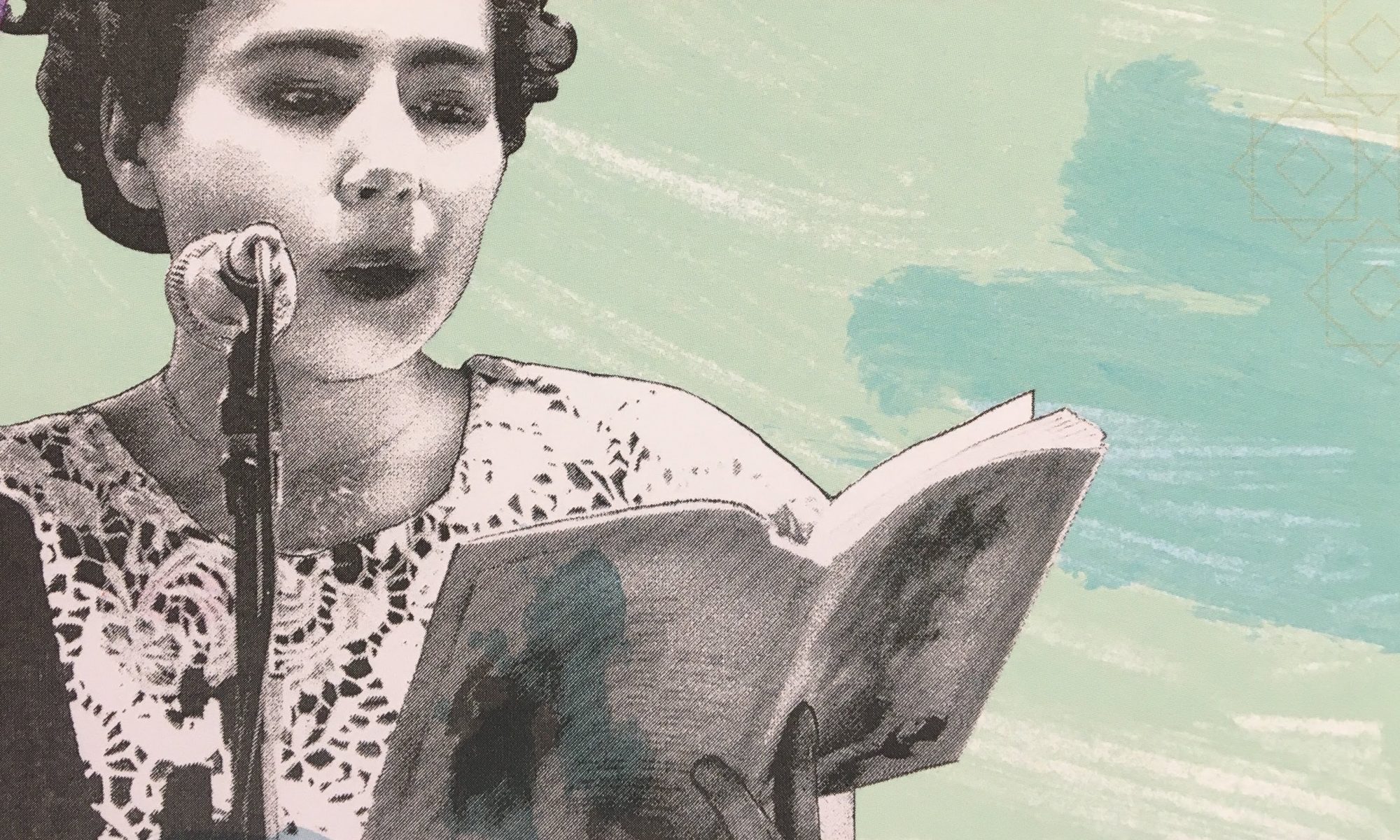
Thanks to professor and poet Barbara Jane Reyes and the sponsorship of the Yuchengco Philippine Studies Program and Asian Studies Program, I was able to guest lecture for Reyes’ Spring 2012 course “YPSP 195-01/ANST 195-02: Filipina Lives and Voices in Literature” at the University of San Francisco on Tuesday, April 3, 2012. Before my presentation, sixteen savvy students read my short personal essay “Barbie’s Gotta Work,” published in Doveglion. The essay was included in the course’s unit on “Work and Domesticity.”

Reyes recently discussed this very same class and its inception in her recent post on the Poetry Foundation’s Harriet The Blog:

One day, I’d casually asked our program chair whether he was interested in an all Filipina/Pinay (Filipino women) literature course, and he said, yes, draft a syllabus, and we’ll get it approved by the curriculum committee. It was approved. It was quickly filled. This is the first semester I am teaching the course, and I’m still in disbelief. All Pinay Literature. I always think, wow, where was this class when I was young, and when I needed it most. It seems a lot of people have been asking this question too, as I have been asked by more people than I can count, for my syllabus and reading lists. So, in this space, I will be talking a bit about some of the items from my syllabus, in the hopes that it will prompt readers further.

Read entire post here.

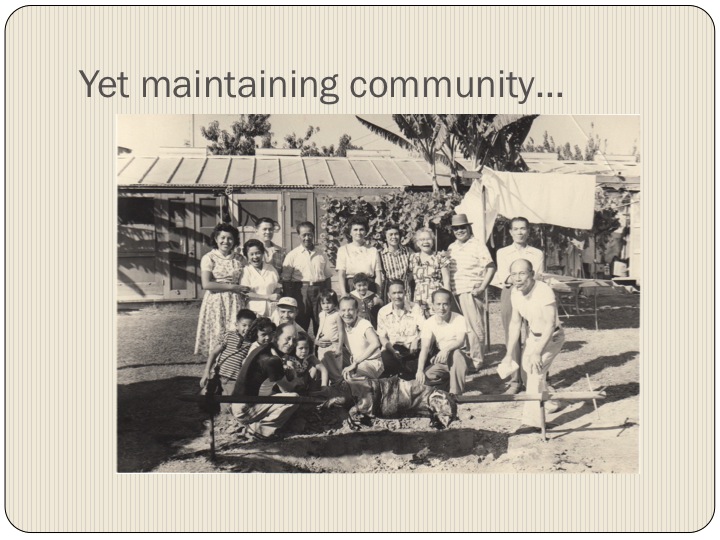
For my guest lecture, after giving a brief power point presentation, featuring pictures of my family, my maternal and paternal grandparents at work and at play in their youth, the students asked challenging questions about the superficiality of Barbie and how that was complicated in the essay and what it was like to be a professor of color. Another student broached the gap between generations, wondering how to relate with family members who might not share the same  educational experiences. This brought on the idea of exploring the roots that hold us together and the stories family members share no matter where their paths in life take them.

We discussed looking at life and literature through a prism of lenses, much like looking through a kaleidoscope; we can shift the angles. We also talked about family memories that shape who we are. Some of the students shared their own experiences, remembering the work of their mothers, fathers, and grandparents.

Below is a sneak peek at the writing exercise students worked on, sifting through their past and their parents’ and grandparents’ pasts to uncover half-forgotten memories concerning love and labor, two themes that I keep coming back to with my own writing.

Love & Labor Writing Exercise

  • How do your parents and/or grandparents use their body at work?
  • How did work define your parents and/or grandparents?
  • What sense of self and purpose did they find through their labor?
  • Describe one of your parents or grandparents at work: What is the setting? What are their hands doing? Explain the actions of the body and mind.
  • How are they interacting with their setting? With other people at work?

Spring 2012 starts with an homage to love, labor, family, and Mattel

There’s a first for everything and this spring’s first is a personal essay published in Doveglion Press. “Barbie’s Gotta Work” is about love, labor, and ironing underwear for golf fanatics in east county San Diego.

Here’s an excerpt:

Barbie’s Gotta Work
By Rashaan Alexis Meneses

Under the most surprising contexts, I’m constantly reminded of the efforts my parents and grandparents, aunts, uncles, and cousins have contributed for the sake of our family. In 1930, my maternal grandfather arrived from Limisawa, a small island in the Gulf of Leyte where Magellan landed and held the first Filipino mass. With nothing but a pail of adobo in his hand and in serious need of a warm coat, no sea breeze or monsoon could have prepared him for the San Francisco chill that greeted him in his new home. Before arriving, he had raised and supported his brothers and sisters by managing their small family farm in the Phillippines. With my grandmother working at his side as well in the States, my grandfather juggled three jobs while raising his children.

Born in California, my paternal grandmother shuttled across the Central Valley following the harvests as many Mexican migrant families do. She doesn’t count her adolescent days picking tomatoes and prunes as official jobs because every kid in her family and in the surrounding neighborhoods worked the fields. For my grandma, hop-picking was the perfect excuse to get out of the house and meet the young, military-rated 4F men who committed backbreaking labor on the hopyards…

Read the entire piece here.

Image from Jemboy’s World

“Tropical Island Fun with Barbie and Miko” January 26, 2009

The Barbie Travel Agent Set was a surprise gift from Santa who, ironically, had designs to usher and initiate me into Third Wave Feminism:

Image from The Henry Ford Museum, “Happy 50th Birthday, Barbie!” March 2009

Teaching two brand spanking new courses for L&CS this spring semester

Reading the likes of Azedah Moaveni’s Lipstick Jihad, Fareed Zakaria’s Post-American World, Jared Diamond’s Collapse, and revisiting Michael Pollan’s Omnivore’s Dilemma for two new classes I’m teaching within Saint Mary’s College’s Liberal & Civic Studies Program. Students are coming to me in class proud about how conversant they’re getting concerning world politics, global matters, and environmental issues. I must confess, I have a hard time keeping my mouth shut during class discussions. Its hard to keep silent when the readings and subjects are so stimulating.

122 Environmental Responsibility in a Global Community 

Taken the semester immediately following L&CS 121 whenever possible, this courses focuses on the natural world in which we lie, and the complex interrelationship between human activities, the values which determine these activities and their consequences for the environment. Different societies’ belief systems along with their responsibilities and attitudes toward the environment are examined. Students are required to devote time each week to a service-learning project, write essays, intellectual integrations and a self-assessment. Class sessions are supplemented by a biweekly activity lab. Prerequisites: L&CS 121, English 5, Collegiate Seminar 20/110. 

123 Modern Global Issues

The purpose of this course is to gain broad-based exposure to some of the cultural, political and economic issues related to and arising from the processes of globalization. Students will study recent critical dialogues and philosophies of globalization, including issues of ethnicity/race, gender, identity, urban culture, post-nationalism, multiculturalism and post-colonial studies. Students are require to participate in class, lead discussion, write essays and news articles responses, give an oral presentation and complete a midterm exam.   Prerequisite:L&CS 121 or permission of instructor.

We’ve watched some of the following videos to supplement subjects and texts recently covered:

Slajov Zizek on “Cultural Capitalism:

Hans Rosling on “The Magic Washing Machine”

Saving the Bay Documentary

Former student helps his community and shares his story in the magazine “Against the Current”

A former student of mine, Antonio Venegas, shares his story and lends inspiration with a recently published article in the magazine Against the Current. His piece, titled “Where to Occupy Next?” covers the Occupy Movement and his community engagement.
Here’s an excerpt:

Where to Occupy Next?
— Antonio Venegas

I TRULY DON’T want to be another sob story. But when the rare opportunity comes along to tell my story and affect many, like a stone cast into the water, it is necessary to at least attempt to grab the hearts of people who will listen.

As I constructed the presentation that I was going to show my social justice organizing class at St. Mary’s College about my experience with the organization Causa Justa (Just Cause), I ran across something that froze me. I searched for “foreclosure” on Wikipedia in hopes of finding a comprehensive definition, and like most articles on that site, its words were displayed accompanied by an image.

Read the entire article here.

Now that we’ve woken from colonial dreams and post-colonial nightmares of imagined communities,what comes after post-colonial theory?

   Heart of Darkness.jpg

Excited and honored to be presenting at the 18th Annual Conference of ACTC: Association for Core Texts and Courses. This year’s theme is “Liberal Arts Education and the World: Inquiring into, Preparing for and Living in the Real World Through Core Texts,” taking place in Milwaukee, Wisconsin.

Yours truly will be presenting the paper: “We’re All Others Now: Revisiting Joseph Conrad’s Heart of Darkness in the Age of Post-post-colonialism.”

Abstract:

In 1977, Chinua Achebe, through his essay, “An Image of Africa” tried and sentenced Joseph Conrad for being a “bloody racist,” charging that his novel, Heart of Darkness, captured Western imagination at its worst. In light of post-colonial theory, every culture and nation affected by Empire, both colonized and colonizer, was then shackled to a shared and brutal past. Post-colonial theorists like Achebe sought retribution and used discourse as a means of justice. Now that we’ve woken from colonial dreams and post-colonial nightmares of imagined communities, how do we read and critique a text like Conrad’s Heart of Darkness? And, if “multiculturalism has failed,” or if we believe it is possible to “transcend race,” what comes after post-colonial theory?

For more info on post-post-colonialism, check out the following source:

Professor Dawn Bohulano Mabalon Honors Visayan Roots

Professor Dawn Bohulano Mabalon from San Francisco State University shares family stories and a Visayan favorite, binangkal, which my grandma and grandpa loved to make and share for breakfast with a nice cup of coffee. Just because the holidays are over doesn’t mean we can’t keep sharing good times with family & food.

From Our Own Voice, published December 2011, “Bohulano Family Binangkal”:

Several friends, many of them second and third generation with roots in the Visayas, reacted quickly and rapturously to my binangkal photo, thrilled that Facebook love had been given to an obscure regional treat beloved across the Visayas and wherever in the world Visayans settled. My writer friend Rashaan Alexis Meneses posted: “My grandpa used to make these! Sob.”…Binangkal is a sesame-covered baking powder donut, deep fried until crisp and brown on the outside and pillowy on the inside. When made well, its surface is craggy, brown and caramelized from the hot oil, its insides moist and fluffy. A popular snack in Cebu and the Visayas, it has look-alikes in Chinese dim sum restaurants and bakeries, which is a clue that binangkal may have some Chinese influence.

Read entire article here and have a go at the recipe to bring a taste of sweet memories into your kitchen.

Barbara Jane Reyes shares developments on her latest work “Chorus,” a colloborative piece from Pinay writers, including yours truly

The laughing poet
Image from Oakland Local

Chorus: A Poetry Manuscript in Progress is writer and professor Barbara Jane Reyes most current work in development, tentatively titled, and she shares her process as well as acknowledges fellow writers for their contributions in her post “Manuscript Process Notes” :

So much of my poetry to date has been an assumption of a Filipina American or Pinay voice, an academic assumption of Pinay concerns. The demand for me to be some kind of Pinay spokesperson has come to fill me with ambivalence, and so I needed to ask, to pass the mic, to step aside and let other Pinays speak, to listen to what they have to say, how they speak, write, and make art about what is important to them…

…A debt of gratitude to my collaborators: Kimberly Alidio, Olivia Ayes, Terry Bautista, Richie Biluan, Caroline Calderon, Rachelle Cruz, Niki Escobar, Diana Q. Halog, Rebecca Mabanglo-Mayor, Rashaan Alexis Meneses, Camille Ikalina Robles, Leny Mendoza Strobel, for lending me their words and stories. Maraming salamat, at Diyos ti agngina.

Looking forward to poring over the finished manuscript. Read Reyes’ entire post at her site.

Nominated for a Sundress Best of the Net Prize by Coachella Review

Honored and humbled to have my short story, “Like Fish to Ginger” nominated for a Sundress Best of the Net Prize by The Coachella Review, who published the piece in Fall 2010. What a wonderful way to close the year!

Check out The Coachella Review’s full list of nominations from their blog post:

Award Season

Written By: Lindsey – Dec• 01•11

Our Best of the Net nominations are:

Elephant” by Perrin Carrell

What He Did with the Moon Tonight” by Lindsay Illich

Hubcaps” by Carol Ellis

I Loved Saying My Father’s Name” by John McKernan

This is This” by Jaydn DeWald

Contemp Rural” by Benjamin Evans

Zoo” by Corey Campbell

Like Fish to Ginger” by Rashaan Meneses

Masha” by Marcia DeSanctis

And, if you haven’t read the piece, here’s a taste:

Like Fish to Ginger

By Rashaan Meneses
Before I set out to make my mark in Los Angeles, I chased Sunee. We met in a steamy noodle house in the Dusit District of Bangkok where I elbowed my way from dishwasher to sous chef. Sunee worked as hostess. Both seventeen, she knew exactly what she wanted, and it wasn’t me. Like with a delicate soup, I had to know when to stir and when to let the ingredients meld on their own. For seven months I coaxed her to me, savoring every minute of it, the taste of falling in love. This was all ages ago when cooking was like breathing.

Read the entire story here.

Guest Lecturing for Interpersonal Communication at Ohlone College

On Wednesday, 16 November 2011, I had the pleasure of guest lecturing for an evening session of Interpersonal Communication at Ohlone College. The students prepared for our class by reading the previously published post “Digital Citizenship: Cultivating an Online Presence, Part I.” After a quick introduction, they broke into small groups to review the text and come up with discussion questions where we dived into what it means to be a digital citizen, how and why we use social media sites. For reference to digital citizenry check out the NY Times recent article “Protestors Look for Ways to Feed the Web,” which is about social media’s role with the Occupy Movement where Jennifer Preston writes:

The movement counts more than 400 Facebook pages with 2.7 million fans around the world. On Tumblr.com, the “We Are the 99 Percent” blog continues to publish the personal stories of hundreds of people struggling with student debt, health care costs and foreclosure. There are also dozens of new wikis and Web pages, including OccupyWallSt.org and HowToOccupy.org.

Interpersonal Communication is the study of how we communicate with self and others. Relationships remain an essential component of human existence. We must ask ourselves: How well do we function in our relationships, and how might we improve our relational competencies? The class was wonderfully diverse, with students from all over the world sharing  insights about their experiences with social media. We discussed the following topics:

  • citizenship vs. consumerism
  • digital community vs. face-to-face community
  • what’s expected of citizens online
  • what’s expected of digital communities
  • how do different digital communities interact. For instance, Tumblr is for showcasing individual work and Facebook is for catching up with friends and family

The students then drafted group contracts between online users and online communities to determine what the community can do for digital citizens and what digital citizens can do for their community. Some of the policies they wished to implement included:

  • no kids ten-years or younger should be on Facebook because they don’t have much to contribute to the community
  • need to have expectations on what people can and should post
  • users need to understand that sites like Facebook are not games
  • time limits to ensure productivity at work and in school
  • cut unlawful browsing

We concluded the evening with two writing exercises to help students become more conscious of how they present themselves online and how they interact with others:

1. Self- Evaluation from the Point of View of a Friend or Family Member

(This proves highly relevant to course content as the class discussed ‘Significant Others’ and how the relationship(s) affects our perception of ourselves. ‘Perceived Self’  / ‘Presenting Self’, Ego Boosters and Ego Busters along with Perspective Taking.) 

For this freewrite you will want to assume the point of view of a friend or family member who knows you well. You will be writing from their perspective to give a critical evaluation of yourself. Imagine that they’ve been asked to give an honest and thoughtful assessment about your self. Your friend or family member must give a truthful evaluation about your character, your motivation, and your ability to follow through with action. In addition, they are required to support their opinion with concrete experiences, memories and events that illustrate their assessment.

To assist with this exercise you may want to answer some of these questions, again from the POV of a friend or family member who is evaluating you:

  1. How would you describe your personality?
  2. What motivates or inspires you?
  3. Who has influenced you and why?
  4. What past events demonstrate your strongest skills and traits?
  5. What are your weaknesses?
  6. How do you handle your weaknesses?
  7. If you could make changes to your life, your drive, your behavior, what kind of changes and why?
  8. When are you at your best? When are you at your worst?
  9. How well do you work with others?
  10. How well do you take direction?
  11. What kind of a leader are you?
  12. How do you inspire others?
  13. Other questions???

2. Personal Ad for Dating Agency

(This proves highly relevant to course content since the class addressed both mediated (digital) communication and the dynamics of ‘self-concept‘.)

 Where did you grow up?

Basics:

Appearance:

Background/Values:

Lifestyle:

Interests:

Get To Know Me:

About My Date (Describe who you’re ideal date is):

In My Own Words (give a paragraph description to entice potential dates):

===================================

If you could draw up a contract between digital citizens and digital communities what would be the roles each play for what purposes, and what policies would regulate the relationships?

For kicks, here’s a take on the internet from two favorite digital citizens: