A friend and new California transplant asked about beaches in the Bay Area. Though the coastline doesn’t compare to the sunny, warm, and fog-free paradise of Southern Cali, here in the northerly reaches of the golden state, sun-worshipping on the coast is hard to come by but the views are gob-smacking gorgeous. From Morro Bay all the way up to the national border, the land literally falls off steep jagged cliffs. Cypress pines or towering redwoods cling to the last bit of earth before the Pacific comes roaring in with constant crashes and booms. Though the sea-scape is breath-taking, there’s only a certain window of time, where an admirer can gape at the horizon before the wind kicks up and chases you away.
Be warned, because of the cold clime, rough rip currents, a shelf that drops away suddenly, and the threat of great whites, make swimming a dare devil act. With that said, here’s a list of rough and ragged corners of heaven on earth:
San Francisco (these beaches are likely to be foggy and cold year round save for autumn)
This year’s 18th Annual Associated Core Texts & Courses Conference, in Milwaukee, Wisconsin, sponsored by Carthage College, and focusing on the theme: “Liberal Arts Education and the World: Inquiring into, Preparing for, and Living in the Real World through Core Texts” took place 29 March through 1 April at The Hilton Milwaukee City Center Hotel, where I presented with the following panel
“Conrad, Ellison, and Narrative Structure:
Blending Critical Thought and Student Engagement”
Aaron P. Smith, Marian University of Fond du Lac, “Authentic Self-Existence for the Visibly Marginalized;” Lamiaa Youssef, Norfolk State University, “Narrative Lenses and the Journey toward Self-Knowledge;” Justin Ponder, Marian University, “A Walking Personification of the Negative: Listening to Stories in Invisible Man;” Rashaan Meneses, Saint Mary’s College of California, “We’re All ‘Others’ Now: Revisiting Joseph Conrad’s Heart of Darkness in the Age of Post-post-colonialism.”
Chair: Jean-Marie Kauth, Benedictine University
Some of the speakers and panels that caught my attention were the following:
Robert Gurval, Department of Classics, University of California, Los Angeles: “Harmony and Homer on the Pearl River Delta: The Foundations of a New Liberal Arts in China”-
China is looking at Western liberal arts colleges to help shape their higher education though instead of calling their undergraduate core curriculum “general education” they’ve opted to use the term “gateway education” to indicate that students are beginning the path to learning
self in search of self
self as social institutions
Liberal Studies as training for life
introduce poetry first as foundation to politics, which is the gateway to political and economic theory
From the panel, “The Function of Core Texts and Their Programs,” Nicholas D. Leither, Saint Mary’s College of California, “Skepticism Destroyed Their Paradise: Generative Thinking and and ‘Believing’ in the Text”-
argues that students lose innocence in college when they’re taught to become the skeptic
more often than not in the classroom creative thinking isn’t valued, nor seeing several POV’s simultaneously
Rational thinking limits
“When we take a critical approach, we forget to believe.”
Critical versus generative, students need to take a leap of faith
From the panel, “Concepts of the Self in East and West,” Yaqun Zhang, Xiamen University “Confucius’ Gentleman Personality and Its Influence on Academic Education”
education as a cultural mission
educating students to let them know they are part of a a social and civic commitment
seeking harmony not sameness
having a sense of appropriate conduct
From my own panel on Conrad and Ellison, Aaron P. Smith Marian University of Fond du Lac, “Authentic Self-Existence for the Visibly Marginalized” (concerning Ellison’s Invisible Man)
one must have existence to become authentic, meta-alienation
alienation requires confrontation
those who create new values need an audience to receive
This year’s conference not only emphasized true and vigorous cultural exchange between the U.S. and China since ACTC has been collaborating with Chinese universities to help shape their curriculum, but another important theme emphasized again and again was inter-disciplinary exchange and pairing texts that weren’t so obvious on the surface, but in comparing say Machiavelli to Lao Tzu, professors made profound connections and demonstrated an exchange of ideas and values that spanned time and geography.
Finally picking up the thread from 2011’s literary pilgrimage to England, Wales, and Ireland, on July 15, we had paid homage to Thomas Hardy in Dorset County, (south England) and trekked through the Isle of Purbeck from the parish of Worth Matravers to St. Aldhelm’s Head and back again. The hike along the Jurassic Coast was a dream come true since I’d imagined these places when I first read Tess of D’Ubervilles and Return of the Native back in Mr. Thurston’s Honors English class at Monte Vista High.
We stayed at the following bed & breakfast that earned strong reviews for their tasty full English breakfasts, and the meals stood up to critiques.
Ashmira Guest House
3 Westerhall Road
Weymouth, Dorset DT4 7SZ
United Kingdom
Phone: 44 (1305) 786584
Our itinerary included the following and was crafted with the assistance of PDFs from the Lonely Planet’s chapter on Dorset and Project Mapping.
Below is an epistles sent to family and friends tracking our journey:
15 July 2011
We’ve left Lymington behind and pushed on southwest to Weymouth. Lymington was a sleepy little coastal town, famous for its yacht regattas. Phil and I walked around town yesterday, met Heather’s colleagues at her two jobs on the main street. I took a very peaceful nap in the graveyard, and then we met with Andrew and Heather after their work shifts ended and sloshed a few drinks.
We took the train to Weymouth and, soon as we arrive, were greeted by the
characteristic cry of the gulls, just like in the TV and films. It is the quintessential British seaside town. We’re now settled at what’s been a highly rated bed and breakfast in Weymouth. We went immediately to the Dorset County Museum, so I could pay homage to Thomas Hardy. They had quite an impressive room of curios and memorabilia, even part of his original writing study set up in the museum. I cried as I read a poem he penned in his own handwriting dedicated to Keats.
The weather was too gorgeous yesterday, unbelievably sunny and warm, and we soaked it up with a seven hour hike through Thomas Hardy country. We were right in the thick of farmland and everywhere we trekked, sheep were bleating, cows mooing, chickens clucking, birds chirping, and horses trotting. We lost our way as we tried to get to Corfe Castle and got trapped in a jungle of brambles along a muddy creek, so by the time we got to the castle ruins, the park was closed. We’re going to make our way back to the castle by bus today instead of hiking and try to take it easy since yesterday wiped me out, and we need to recharge for Mt. Snowdon.
Where Linear walk along the South Hams coast from Torcross to East Portlemouth
Start/End East Portlemouth (SX744387)
The finest coastline of south Devon is to be found in the South Hams, which extends southwards from Dartmoor, stretching from the Tamar in the west to the Dart in the east. There are five estuaries that have to be crossed if you’re walking the South West Coast Path, but not all are served by ferries throughout the year. Fortunately, on one of the very best day’s walks along this coast – from Torcross to East Portlemouth – there’s a year-round ferry across the Salcombe estuary. The walk takes in the headlands of Start and Prawle Points and boasts superb scenery all the way.
• Download a detailed route card at the Walk Magazine website: walkmag.co.uk
Where Circular walk from Abbotsbury via Abbotsbury Castle, West Bexington and Chesil beach
Start/End Car park in Abbotsbury, next to church (SY578853)
Situated amidst gently rolling downland behind the great Chesil beach, Abbotsbury is one of the most picturesque and historically interesting villages in Dorset. Its 970-year-old Swannery is the only place in the world where you are able to walk through the heart of a colony of nesting mute swans. This route should be within the capabilities of most, except the very young, with shorter options available. The outward leg leads along a ridge-top path to the north-west of the village via Abbotsbury Castle, an Iron-Age hill fort, with excellent views all the way. It then heads down to the coast and returns alongside Chesil beach. A short detour at the end to climb Chapel Hill to St Catherine’s chapel affords one of the loveliest viewpoints around.
Alfriston, East Sussex, Countryside around Alfriston
Distance 8 miles
Time 4 hours
Type Downland and valley
Where Circular walk from Alfriston via South Downs Way, High and Over, and Cuckmere Valley
Start/End Main car park, North Street, Alfriston (TQ523034)
Situated in the Cuckmere valley at the eastern end of the South Downs is the picturesque old village of Alfriston. Despite its popularity, the village has lost none of its charm, and remains thankfully unspoilt. Alfriston makes an excellent base for exploring the delightful Sussex countryside, with a variety of fine walks to be enjoyed. This route combines downland and valley walking, with some lovely views along the way.
July 2011 hails as a month to remember with the trip of a lifetime, a literary pilgrimage honoring favorite writers from England, Wales, and Ireland.
London served as the first leg, where we pilgrims discovered that parachute pants have made a fashion comeback and the streets of the English capital are laced with joggers who prefer to sprint with small backpacks hitched to them. What was that about? A friend from Southampton explained that many Londoners jog to work. Could this be the reason?
Soon as we arrived, we dropped off our bags, and, without even taking time for a quick shower after flying in from California, we dashed over to the British Library (open: Tues-Sat 9.30am-5pm, closed Sun). I broke into tears gaping over Charlotte Bronte’s handwritten manuscript of Jane Eyre, listened to an original recording of Yeats’ “Wild Swans at Coole” and bowed down before original manuscripts by Woolf, Beethoven, Conrad, Wilde, and so many more greats. Too bad no pics are allowed in the archives.
Day 2 in Londonium took us north on a Thames River Cruise to Kew Garden (earliest departure from Westminster:10.30, last boat from Kew: 16.00) accompanied by the Miss Marple crew. Apparently, our interests coincide with silver Centrum-aged travelers.
George Eliot lived in one of the pastel buildingsCruising up Thames River
Sodden with rain, Day 3 was a perfect chance to soak up the sites at Highgate Cemetery (open 10 am weekdays, 11am weekends closes 5pm, last admission 4.30pm, $L3 )where I found myself empty-handed for any offerings to leave at George Eliot’s gravestone. We also chanced upon a headstone that had been blackened with tar. I’d love to know the story behind that defacement. Winding our way through the tombstones and markers, at every turn, I felt like I saw dark presences lingering in the corner of my eye.
The best scotch egg, and the only scotch egg I’ve tasted yet, was enjoyed at the swank pub The Bull and Last tucked on Highgate Road in the posh neighborhood of Hampstead Heath, Keats’ old haunt. Wonder if he’s ever had a scotch egg, which is a soft-boiled egg wrapped in sausage which is then breaded. Its the Brits hand-held version of moco loco, and this one was perfection rolled into a beautiful oval. The sauteed greens were incredible as well. London knows how to treat their vegetables now. No longer boiled and tasteless, they give just enough heat to let produce stand on its own naked savoriness.
Before meeting up with our traveling companions, K&C on Day 4, we strolled through Portobello Market (Sat ONLY 5:30a-5p, shops open M-Sa. Tube: Ladbroke Grove or Notting Hill Gate, Pembridge Rd), which we missed on our first trip to London. After divulging in some retail therapy, we connected with K&C at Leighton’s House in Holland Park (10-5.30 closed Tu, $L5, 12 Holland Park Road, W14 8LZ, Tube High Street Kensington) , which preserves the breathtaking abode of Victorian artist Lord Frederic Leighton. Highly decadent and sumptuous in its design and decor, the architect George Atchinson makes use of all the four life-giving elements. A Byzantine pool of water greets visitors in the foyer, decked with mosaic tiles collected from Leighton’s travels to the East. His library/study, paneled with wood, elicits contemplation, and his dining room is feted in fiery rich reds and a plush wallpaper made of fabric. Light floods the stairwell that boasts paintings from artists who gifted Leighton with their own work. The second floor opens to a carved out Turkish bed that overlooks the water fountain foyer. To the right of the bed is his studio, which includes a special door wide and long enough to move huge canvas paintings in and out of the room. Leighton had two studios, including a winter studio, overlooking a lush green landscape. The winter studio avoids the obscurity of fog and smog which hindered the seasonal skies.
After Leighton’s house, we found ourselves in London’s Chinatown, which is a small section of neighborhood that doesn’t quite meet the boisterousness of San Francisco’s Chinatown or the serene history of Vancouver’s.
Day 4 started with all 841 steps up to the dome of St. Paul’s Cathedral (doors open for sightseeing 8:30, 11:30 last entry. Cafe 9-5, Afternoon Tea 2:30-4pm M-Sa; Cafe 10-4 S, Evensong daily 5pm). The fourth largest church in the world turned out to be one giant tomb for Britain’s military personnel, where the Suffragettes planted a bomb in 1913. The views from the top rival the London Eye.
During our stay, we also stopped at the Emirates Stadium for a peek of the Gunner’s home. Our traveling companions, K&C stayed at the The Rookery (Peter’s Lane, Cowcross Street, EC1M 6DS – Tel +44(0)20 7336 0931, Tube: Farringdon), and they visited the following sites:
Victoria and Albert Museum (Cromwell Road, SW7, 10.00 to 17.45 daily, 10.00 to 22.00 Fridays). Special tickets had to be purchased for the exhibit The Cult of Beauty: The Aesthetic Movement 1860-1900(open 2 April – 17 July 2011 ($L12, timed tickets)
Battersea Park – (Tube: Sloan Square, walk 1km south, via Lower Sloane Street and Chelsea Bridge Rd. Loop Albert Bridge, Oakley St, Kings Rd.)
All told, we sipped and dined in at least 21 pubs throughout the three weeks traveling, which included some of these London spots, but not all: The Harp, Covent Garden, The Seven Stars, The Old Cheshire, The Jerusalem Tavern, and The Bull and Last. Our pub research came from the following sources, The Guardian’s Ten of the Best Pubs in London and View London’s Pub & Bars
We hoped to make the following but there’s only so much time in the day, so these little hot spots may just have to wait for the next trip:
Brick Lane – Sunday market til 2. Tube Shoreditch or Aldgate
Tate Britain, Millbank, Westminster, London SW1P with the show, Romantics Dates: 9th August 2010 to 31st July 2011, including paintings by Henry Fuseli, JMW Turner, John Constable, Samuel Palmer and William Blake, exploring the origins, influence and legacies of Romantic art in Britain
Much Ado About Nothing (16th May 2011 to 3rd September 2011) at Wyndhams Theatre with David Tennant and Catherine Tate.
For more writerly musings on this trip, check out the post “Writer as Traveler” at the salon and for more pics of the places above click on the following:
My aunt asked for camping suggestions between Los Angeles and San Francisco, preferably along the coast, and, for now, California is under no short supply of beautiful spots to pitch a tent however at least seventy state parks are currently under threat of being shuttered permanently.
Though summer may not feel as fierce and fiery as we’d wish, there’s no time like the present to soak up all the golden state has to offer. Below is a list of the parks that I’ve been hankering to visit or enjoyed the pleasure of their beauty during past jaunts.
Central Coast
Big Basin, Santa Cruz, everyone says this is the place to go, but we’ve yet to visit.
Henry Cowell, Santa Cruz, we stayed here two years ago. Very nice facility with trails right next to the campsites
Henry Coe State Park– haven’t camped here but have hiked. Huge park, great trails, a relative short drive off the 5, near Gilroy. I’d love to go back and trek the wilderness here.
Pfieffer State Park– on the eastern side of the highway, so all beach access requires a car, huge park that runs alongside a creek. Great facility. We stayed here three years ago and are going back this September.
Riverside Campground- We stayed here last year, park runs along the Big Sur river and they provide tubes if you want to go tubing down the river. No trails from the park, so you have to drive, and the site is right off the highway, so you can hear cars drive by, but the traffic stops by 10pm.
Limekiln and Kirk Creek– right on the headlands next to the Pacific, these sites are at the very southern foot of Big Sur. We went hiking on some of the trails last year, its relatively flat but absolutely gorgeous views of the ocean.
Bay Area
Samuel P. Taylor, Central Marin- inland park in the middle of redwoods with a creek throughout.
**Some of these parks may be closing by this fall. Check the California State Park Foundation for a complete list of closures and consider taking some action to keep our gems open to the public.
For kicks, take a virtual tour of our favorite haunt, our home away from home, Big Sur:
A walk down memory lane with an overview of spring 2011 East Coast trip:
NEW HAVEN, CONNECTICUT
Yale University Art Gallery– featured new exhibitions on Old Javanese Gold and an outstanding show titled “Embodied: Black Identities in American Art from the Yale University Art Gallery,” February 18–June 26, 2011.
Atticus Bookstore and Cafe became a favorite stop to tuck in. They had a delicious assortment of sandwiches and sweets, and I can imagine spending all day there.
Any visit to the Big Apple demands at least three hours perusing The Strand.
Discovery Times Square – Harry Potter: The Exhibition where you can step into Hagrid’s Hut and sit in his chair, or gape at the Ron’s dressing gowns for the Yule Ball. Check out the Half Blood Prince’s potions book, oh and ah over the Goblet of Fire, and these are just a few of the countless curios they had on display.
Step into Edith Wharton’s New York at the Neue Galerie, which featured Secessionist work, post Bauhaus in “Vienna 1900: Style and Identity” through June 27. Neue Galerie, 1048 Fifth Avenue, at 86th Street. (212) 628-6200.
Tasty concoctions in a swanky intimate setting at Death + Co. in the East Village.
Vermouth on tap at Amor y Amargo where they specialize in bitters.
Sights missed this time ’round but hope to see on next visit:
Apotheke though the NYT had once reported that this joint was shut down because of fire hazards.
Still reeling from the intense four-day conference of Associated Core Texts and Courses 17th Annual gathering at New Haven, Connecticut, held on April 14-17, one of the panels that stands out in my mind, and which I immediately want to integrate into my own curriculum was “Writing, Drawing, Producing: Students Response to Core Texts.”
Arundhati Sanyal and Nancy Enright from Seton Hall University presented their best teaching practices in their “Re-Telling Personal Narrative: The Digital Short in a University Core Class.” In their classes, they encourage students to consider their own transformative experiences and personal journeys influenced by the core texts they read. Their assignments allow students to explore and explain how a core text “speaks” to them. Students will gather a collage of family photos and images and set these images in synch with a song that illustrates their inspired experience with a particular text. They work on their project for a half hour in each class session. A lot of the students’ projects focus on decision-making and crossroads. Sanyal and Enright report that there’s a new dynamism in class when students get to work on their laptops. They also storyboard the narrative before creating the whole piece, which forces students to understand pace and determine where do they tighten the flow or when can they expand.
From St. Bonaventure University, Professor Anne Foerst covers the Eight Step Bonaventure Intellectual Education, and focuses on step 3, which covers “Who am I as an individual?” Professor Foerst has freshman students write a self portrait that both self-praises and self-critiques. The students reflect over their intellectual journey over the course of their first semester in college and they model their reflections off of Montaigne’s essays. She uses this assignment as a mid-term project; five pages about myself, which is about becoming your own friend. Students become less self-indulgent and more analytical. Foerst uses a quote to direct and inspire students, “I am my own public. My book has made me as much as I have made my own book.”
At the beginning of the semester, she has freshman write down three adjectives to describe themselves. Foerst doesn’t read the adjectives but puts them away until six weeks later when she has them perform the same exercise, but, this time, she breaks out the past adjectives and has them compare their self-perception. Students get to see how they have fundamentally changed over the short course of six weeks. This assignment helps give them a foundation to write their self reflection. In their reflective essay, students use quotes from texts they’ve read in Foerst’s class, and the essay focuses on personal transformation, exploring such inquiries as the following.
(I’ve added some questions and prompts of my own to try and tailor this assignment to some of my courses)
(My addition) Consider the core values or ideas of two authors you’ve read in this seminar. Summarize and evaluate these values or ideas by exploring how they might have influenced or inspired you by answering the following questions in reflection of these new values and ideas you’ve learned:
Where are you now after reading your chosen authors?
How has your sense of self changed?
How has your outlook on the world changed?
How have your opinions about a specific topic or idea changed?
Who am I in society?
How have I transformed intellectually?
How do I see others differently? Specify what you mean by “others” whether its classmates, roommates, professors, teammates, etc.
Analyze how your relationships to others (i.e. classmates, professors, siblings, parents, lovers, co-workers and cousins) have changed since you’ve read these texts.
How have your core values changed, if at all, after reading your chosen texts?
Foerst explains how students come to evaluate their own construction of “otherness” and how artificial their constructions can be. She asks her class often if they think race is real, and they have a hard time wrestling with this but slowly come to learn that they’re not isolated individuals. “If they embrace their own ambiguity, they can learn to embrace the ambiguity in others,” she urges, and then warns us, “There can be a dark side to the adjectives used” since students come to see their own faults. With this exercise they learn ambiguity and empathy. They can see themselves as a character. These assignments help make the core texts less scary and less daunting. As professors, we’re constantly trying to find ways to help students engage with the texts in the most immediate and urgent ways, and these best practices are wonderful opportunities for both students and faculty to connect with the authors and with one another.
The San Francisco War Memorial Opera House gives monthly guided tours for a small fee of 25 clams per person. On these tours, visitors get a sneak peek at the current production as a work-in-progress, and, we’ve heard from several sources, that, depending on the docent, you get to see different parts of the house, meaning each tour is uniquely different. Here’s a quick rundown from our visit on October 2, 2010 when the house was preparing for Verdi’s Aida:
The Lobby
The light fixtures were made in Oakland.
The marble, on the walls, columns, and stairwell is from Tennessee.
The House
The stage extends 84 feet back.
Center stage, there was a small desk with a table light plugged into an extension cord where one of the staff. oversaw the crew. The desk was covered with binders full of paperwork.
72 pipes hold the drapes (curtain).
A lot of the sets and scenery from past productions are housed in a separate warehouse.
The original design of the house was supposed to incorporate pipe organs though not a lot of operas require pipe organs.
Crew can run a bridge from orchestra to stage to move instruments and equipment.
There’s a catwalk to the chandelier to change lighting.
All the gold on the fixtures is gold leaf.
The orchestra pit has a moveable floor to transport pianos and harps.
The house also has a wind machine, which is turned by hand.
The curtains are made of silk and have a historical significance. So any remodeling or renovation needs to go through strict policies.
The curtains weigh 3,000 lbs.
Production Crew
Another crew member stands in the middle of the stage calling scene numbers.
All crew members have walkie talkies, two-way radios.
The prompter has to speak seven different languages only twenty people in the country who can do this. They have a nook behind the stage.
There are three video monitors on everybody acting.
Can’t really see the maestro.
Monitors are available for performers as well so they can see their maestro.
Supertitles are controlled by computer.
Lighting is all cued in advance.
The crew needs to synchronize everything, lighting and supertitles, with a principal to match whether she sings slow or fast.
Behind the Stage
The green room is at the back entrance, where guests can leave notes for talent.
Credentials only sign in front of green room.
Console monitor has three screens
Women’s principal dressing room has a full bathroom, a piano, a fan, a hair dryer, and is fully stocked with honey, curlers, makeup brushes, and bottles of rubbing alcohol everywhere.
Women are on one side of the stage and men on the other.
Clothes and wardrobe is equipped from across the stage.
In the women’s dressing room, the dresser is piled high with hair product, cotton, tea cups, bobby pins and safety pins.
Music stands are tucked everywhere behind the stage.
Lockers in the hallway.
Under stage is the rest of the cast’s dressing rooms and one level below is for supernumeries.
Gated audio equipment that is locked with warning signs all over it, including this sign: “LAPDANCE”, which stands for “Line Access Panel Digital Audio Network Control Enclosure. Death to those who arrange equipment.”
Black cables running everywhere.
Need to climb up to the prompter’s roost, where there’s a chair, monitor, libretto, a fan up there.
Prompters are there for hours, which can get claustrophobic.
Notices are posted to the walls every place that has main traffic so the cast and crew get updated notices.
They also receive text messages for updates.
Sub-basement where supernumeries change, the extras all have one shared room.
Call sheets are posted everywhere along with a schedule of productions.
Ladders also clutter the backstage.
There’s a lounge for wardrobe and makeup with posters of past productions.
The chorus has their own quiet room where there’s no food allowed.
Practice rooms are sound proof. No private lessons are allowed.
One of the rehearsal rooms is equipped with a computer that can simulate the performance environment, so the singer knows what she may sound like in huge halls, resound back, know how to project voice. Need to keep the architectural integrity of the house.
The music library holds all the music for all instruments.
Everyone has to have proper music on their stand.
There’s also a musical dictionary.
Musicians better not have the wrong score sheet, so for every rehearsal and performance, the staff need to have the correct number of copies. Someone has to keep all of this straight.
Costumes
All wardrobe for the next show is fitted well in advance, so the costumers need all measurements up front.
The rest of the costumes are stored at 9th and Howard.
Everything is labeled with names to it.
Clothes basket, laundry room.
Again, monitors are everywhere.
Everything gets laundered for the next day.
Plastic sheets with the costume changes listed inside of them along with times/cues as well as instructions on how to wear and fix makeup.
All costumes are in alphabetical order and order of changes.
The laundry room is packed with dryers, steamers and magnets are on all the appliances.
Six days a week the laundry room is busy.
The San Francisco chorus live here, so they’re always working.
International guests can sometimes stink up the clothes because they don’t use perfume.
25 piles of laundry on average are cleaned a day.
With Aida, there’s 500 lbs of laundry.
Whatever is worn next to skin has to get washed.
Each cast member gets three towels as well: a hand, face, and wash cloth which also has to get washed.
Each cast has different colors for chorus, principals, but the towels are not monogrammed.
Most other opera houses don’t provide towels.
We also supply water for our maestros, which is a bonus.
Rolling carts above.
6 months out of the year the ballet shares the facility.
Spend $3,000 on soap.
Run the machines three to four times a day.
Costs $75 for dry cleaning per costume.
Costumes that come from other productions smell differently because different companies use different detergents.
Cotton can get ripe pretty quickly.
The launderers also need to clean during dress rehearsals.
Vodka spritz can take away smells, just vodka, cheap vodka and water in a spray bottle saves the day.
One of the singers always comes and smells bad. The staff feels like they have to wear a gas mask.
28 dressers are employed because it takes about 500 people to put on a show.
The laundry room is equipped with a dinosaur of a PC.
Makeup
Nametag with each assigned costume.
Each cast member has their own drawers for each person
The makeup room has a bulletin board and map.
Make up and wigs, provide drawings on how the eyes should be made up.
Everyone is assigned a makeup box for economic reasons.
Everyone does their own makeup, but then someone comes around to touch them up.
Principals are the only ones who get makeup artists. Big bottles of makeup remover in the makeup room.
Charts for each hair scene.
All the wigs are made of human hair though sometimes have to use yak hair for gray hair.
Wigs are hand-tied and hand-knitted.
There are 2,000 wigs housed at the SF Opera house to fit different time periods.
There’s a monitor in almost every room to keep check on the cues.
A cabinet at each chair.
More visits and more tidbits on the SF opera are forthcoming. Stop by and see what new discoveries have been made.
Finally, just for kicks, here’s the beautiful aria, “O Mia Patria” sung by Leontyne Price from Aida:
Still scrambling for holiday gifts? Tis the season to celebrate family, friends and community by supporting local businesses. Consider shopping with head, heart, and hands with some of these favorite local purveyors:
BOOKS
Anvil Publishing – Just released Angelica’s Daughter, “A Dugtungan Novel, a collaborative work written by five established Filipino and Filipino American women writers. The five authors came from different countries during the creation of the novel: Cecilia Manguerra Brainard and Veronica Montes lived in California; Susan Evangelista and Erma Cuizon were in the Philippines, and Nadine Sarreal was in Singapore.” This publisher has a wide range of Pin@y literary selections that should be in every savvy reader’s library.
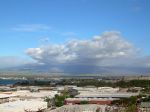
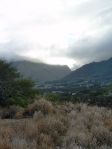
Wrapping up the visit to Maui, which can’t be concluded without a nod to our favorite Maui finds:
At Mana Foods of Pai’a, we seemed to stop here daily for groceries. They carried an exceptional brand of Maui made smoked paprika hummus. Both local and organic, the prices are decent and the fare exceptionally delicious.
Cane and Taro in Lahaina’s Whaler’s Village was surprisingly tasty for such a popular tourist spot. The Hawaiian Swordfish was perfectly cooked, dressed with a simple ginger butter sauce that left the fish naked enough to stand up on its own flavor and meatiness.
CJ’s offered the best mixed plate in Kaanapali, including mango-glazed short ribs, outstanding kalua pork and mahi mahi, as well as deliciously sweet and sour pineapple coleslaw.
In Haiku, Hana Hou’s chop steak, sauteed with garlic and onions, served with a side of macaroni salad and steamed rice, featured Maui Cattle Company’s tasty and local beef. Elegant yet casual with slightly upscale local fare, banana groves and roaming chicken make a perfectly authentic upcountry dining spot.
Our favorite eats by far was Pai’a’s Fish Market. Their ahi burger, washed down with Maui Brewing Company’s Coconut Porter, so absolutely divine, makes me want to cry because I don’t know when I can taste paradise again.
This trip couldn’t have been possible without the savvy advice from Vince and Vangie Meneses, Jake Sanders, and Andrew Doughty’s indispensable Maui Revealed: The Ultimate Guidebook.
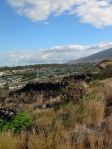
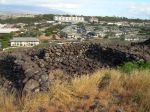
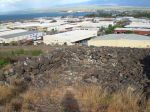
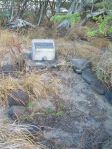
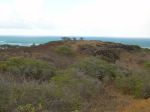
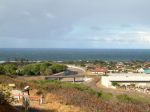
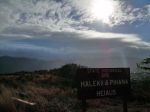
The last hours of Maui were spent on sacred grounds at the Haleki’i and Pihana Heiau State Monuments, just outside of Wailuku, which served as religious ceremonial site and home to Hawaii’s chiefs and high-ranking officers. The following information on the sites are referenced from Hawaii Web and Maui’s Historical Society writer Lyons Kapi’ioho Naone III, who is highly respected as a Hawaiian healing practitioner. The hallowed land featured below offered the perfect chance to contemplate our visit in silence and beauty. Until next time, Maui. Mahalo!

 A friend and new California transplant asked about beaches in the Bay Area. Though the coastline doesn’t compare to the sunny, warm, and fog-free paradise of Southern Cali, here in the northerly reaches of the golden state, sun-worshipping on the coast is hard to come by but the views are gob-smacking gorgeous. From Morro Bay all the way up to the national border, the land literally falls off steep jagged cliffs. Cypress pines or towering redwoods cling to the last bit of earth before the Pacific comes roaring in with constant crashes and booms. Though the sea-scape is breath-taking, there’s only a certain window of time, where an admirer can gape at the horizon before the wind kicks up and chases you away.







 Step into Edith Wharton’s New York at the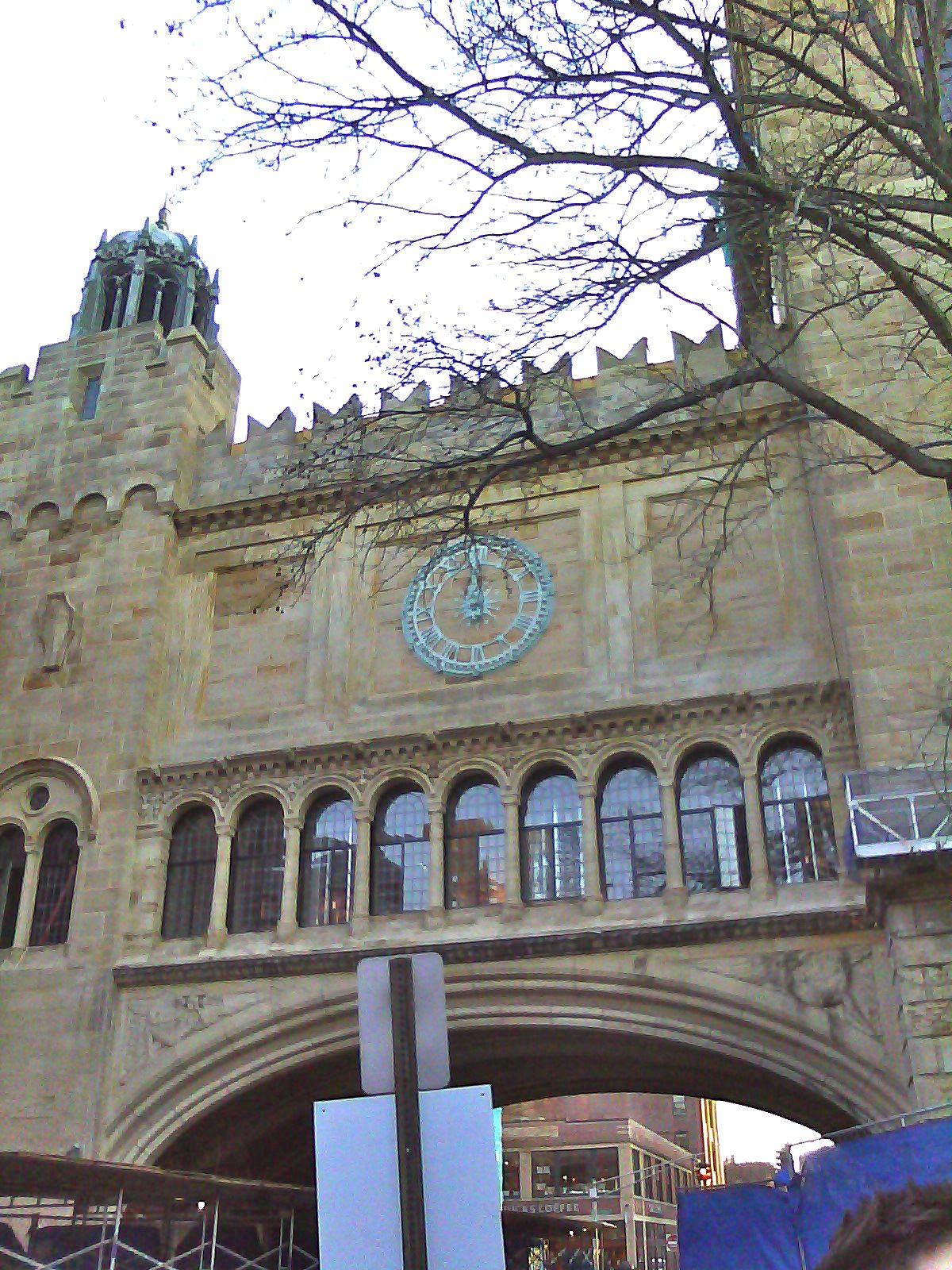
















 Rashaan Alexis Meneses