Literary Pilgrimage 2011: Londonium, 5-12 July

July 2011 hails as a month to remember with the trip of a lifetime, a literary pilgrimage honoring favorite writers from England, Wales, and Ireland.

London served as the first leg, where we pilgrims discovered that parachute pants have made a fashion comeback and the streets of the English capital are laced with joggers who prefer to sprint with small backpacks hitched to them. What was that about? A friend from Southampton explained that many Londoners jog to work. Could this be the reason?

Nestled between the Lords Cricket Ground, the Central London Mosque, and the London Zoo, in St. John’s Wood, we lodged at the Danubius Hotel Regents Park ( 18 Lodge Road, NW8 7JT, 020 7722 7722 Subway: Edgware Road), which was seated right next to a shisha bar, known in the States as a hookah lounge. Every time we neared, the lane was filled with the scent of cherry tobacco.

Leaving most of our time to whimsy, we sketched a rough itinerary using some of the following online sources as guides:

Soon as we arrived, we dropped off our bags, and, without even taking time for a quick shower after flying in from California, we dashed over to the British Library (open: Tues-Sat 9.30am-5pm, closed Sun). I broke into tears gaping over Charlotte Bronte’s handwritten manuscript of Jane Eyre, listened to an original recording of Yeats’ “Wild Swans at Coole” and bowed down before original manuscripts by Woolf, Beethoven, Conrad, Wilde, and so many more greats. Too bad no pics are allowed in the archives.

After wiping the tears, we stumbled onto an overwhelming collection of sci-fi from its European incarnation at the gob-smacking exhibit “Out of This World: Science Fiction But Not as You Know It” Talk about over-stimulation.

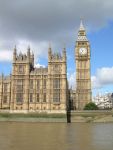
Day 2 in Londonium took us north on a Thames River Cruise to Kew Garden (earliest departure from Westminster:10.30, last boat from Kew: 16.00) accompanied by the Miss Marple crew. Apparently, our interests coincide with silver Centrum-aged travelers.

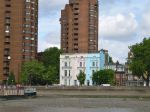
George Eliot lived in one of the pastel buildings
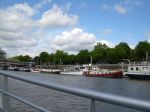
Cruising up Thames River

Sodden with rain, Day 3 was a perfect chance to soak up the sites at Highgate Cemetery (open 10 am weekdays, 11am weekends closes 5pm, last admission 4.30pm, $L3 )where I found myself empty-handed for any offerings to leave at George Eliot’s gravestone. We also chanced upon a headstone that had been blackened with tar. I’d love to know the story behind that defacement. Winding our way through the tombstones and markers, at every turn, I felt like I saw dark presences lingering in the corner of my eye.

The best scotch egg, and the only scotch egg I’ve tasted yet, was enjoyed at the swank pub The Bull and Last tucked on Highgate Road in the posh neighborhood of Hampstead Heath, Keats’ old haunt. Wonder if he’s ever had a scotch egg, which is a soft-boiled egg wrapped in sausage which is then breaded. Its the Brits hand-held version of moco loco, and this one was perfection rolled into a beautiful oval. The sauteed greens were incredible as well. London knows how to treat their vegetables now. No longer boiled and tasteless, they give just enough heat to let produce stand on its own naked savoriness.

Before meeting up with our traveling companions, K&C on Day 4, we strolled through Portobello Market (Sat ONLY 5:30a-5p, shops open M-Sa. Tube: Ladbroke Grove or Notting Hill Gate, Pembridge Rd), which we missed on our first trip to London. After divulging in some retail therapy, we connected with K&C at Leighton’s House in Holland Park (10-5.30 closed Tu, $L5, 12 Holland Park Road, W14 8LZ, Tube High Street Kensington) , which preserves the breathtaking abode of Victorian artist Lord Frederic Leighton. Highly decadent and sumptuous in its design and decor, the architect George Atchinson makes use of all the four life-giving elements. A Byzantine pool of water greets visitors in the foyer, decked with mosaic tiles collected from Leighton’s travels to the East. His library/study, paneled with wood, elicits contemplation, and his dining room is feted in fiery rich reds and a plush wallpaper made of fabric. Light floods the stairwell that boasts paintings from artists who gifted Leighton with their own work. The second floor opens to a carved out Turkish bed that overlooks the water fountain foyer. To the right of the bed is his studio, which includes a special door wide and long enough to move huge canvas paintings in and out of the room. Leighton had two studios, including a winter studio, overlooking a lush green landscape. The winter studio avoids the obscurity of fog and smog which hindered the seasonal skies.

After Leighton’s house, we found ourselves in London’s Chinatown, which is a small section of neighborhood that doesn’t quite meet the boisterousness of San Francisco’s Chinatown or the serene history of Vancouver’s.

Day 4 started with all 841 steps up to the dome of St. Paul’s Cathedral (doors open for sightseeing 8:30, 11:30 last entry. Cafe 9-5, Afternoon Tea 2:30-4pm M-Sa; Cafe 10-4 S, Evensong daily 5pm). The fourth largest church in the world turned out to be one giant tomb for Britain’s military personnel, where the Suffragettes planted a bomb in 1913. The views from the top rival the London Eye.

During our stay, we also stopped at the Emirates Stadium for a peek of the Gunner’s home. Our traveling companions, K&C stayed at the The Rookery (Peter’s Lane, Cowcross Street, EC1M 6DS – Tel +44(0)20 7336 0931, Tube: Farringdon), and they visited the following sites:

All told, we sipped and dined in at least 21 pubs throughout the three weeks traveling, which included some of these London spots, but not all: The Harp, Covent Garden, The Seven Stars, The Old Cheshire, The Jerusalem Tavern, and The Bull and Last.  Our pub research came from the following sources, The Guardian’s Ten of the Best Pubs in London and View London’s Pub & Bars

We hoped to make the following but there’s only so much time in the day, so these little hot spots may just have to wait for the next trip:

  • Brick Lane – Sunday market til 2. Tube Shoreditch or Aldgate
  • Chelsea & Nottinghill Shopping
  • Camden
  • Grovsner Square
  • The Guardian’s List of “Top 10 London Outdoor Activities”
  • Tate Britain, Millbank, Westminster, London SW1P with the show, Romantics Dates: 9th August 2010 to 31st July 2011, including paintings by Henry Fuseli, JMW Turner, John Constable, Samuel Palmer and William Blake, exploring the origins, influence    and legacies of Romantic art in Britain
  • Much Ado About Nothing  (16th May 2011 to 3rd September 2011) at Wyndhams Theatre with David Tennant and Catherine Tate.

For more writerly musings on this trip, check out the post “Writer as Traveler” at the salon and for more pics of the places above click on the following:

British Library

Thames River Cruise

Kew Garden

Mentoring Faculty

Spring 2011, I had the privilege of mentoring two colleagues for Collegiate Seminar at Saint Mary’s College of California. So quickly had I jumped for being a mentee myself, suddenly I found the tables turned. Reflecting on the experience, which I hope to share again, here’s suggestions on what I learned that might prove helpful for others:

MENTEES:

-Arrange to meet with your mentor and prepare a list of questions.
-Submit syllabus and course calendar to mentor by second week of classes for review.
-Schedule time to observe your mentor’s seminar.

MENTORS:

-Request syllabus and course calendar from mentees and have them submit by the second week of classes for your review.
-Schedule time to observe mentee’s class and be sure to meet directly after observation to cover questions and concerns your mentor might have.
-Provide contact information and consider following up before the end of the semester to cover any more questions or concerns your mentee has.
-Discuss participation about program activities such as retreats and the informal curriculum.

An end of the semester reflection seems an incredibly useful and invaluable tool for mentors, mentees, and the program. Below are questions, which could be prefaced with: "Mentoring support which is meant to be collegial and non-judgmental. Therefore, mentors are not evaluators."

In your reflection, you may want to respond to these questions:

  • What date and which text was your class discussing when you were you observed?
  • When did you have your follow up meeting after your observation? Please give a brief summary 3-4 sentences on what was covered during your meeting.
  • What expectations did you have as a mentor/mentee?
  • How were your expectations met?
  • Were any expectations not covered?
  • What suggestions do you have for future mentors/mentees?

Summertime Rolling with Central and Nor Cal Camping

My aunt asked for camping suggestions between Los Angeles and San Francisco, preferably along the coast, and, for now, California is under no short supply of beautiful spots to pitch a tent however at least seventy state parks are currently under threat of being shuttered permanently.

Though summer may not feel as fierce and fiery as we’d wish, there’s no time like the present to soak up all the golden state has to offer. Below is a list of the parks that I’ve been hankering to visit or enjoyed the pleasure of their beauty during past jaunts.

Central Coast

Big Basin, Santa Cruz, everyone says this is the place to go, but we’ve yet to visit.

Henry Cowell, Santa Cruz, we stayed here two years ago. Very nice facility with trails right next to the campsites

Half Moon Bay State Beach

Henry Coe State Park– haven’t camped here but have hiked. Huge park, great trails, a relative short drive off the 5, near Gilroy. I’d love to go back and trek the wilderness here.

San Simeon State Park

Morro State Park

Morro Strand State Beach– we stayed here ages ago. It’s right on the beach. Beautiful area.

Lake Nacimiento


Big Sur

Pfieffer State Park– on the eastern side of the highway, so all beach access requires a car, huge park that runs alongside a creek. Great facility. We stayed here three years ago and are going back this September.

Riverside Campground- We stayed here last year, park runs along the Big Sur river and they provide tubes if you want to go tubing down the river. No trails from the park, so you have to drive, and the site is right off the highway, so you can hear cars drive by, but the traffic stops by 10pm.

Limekiln and Kirk Creek– right on the headlands next to the Pacific, these sites are at the very southern foot of Big Sur. We went hiking on some of the trails last year, its relatively flat but absolutely gorgeous views of the ocean.

Bay Area

Samuel P. Taylor, Central Marin- inland park in the middle of redwoods with a creek throughout.

**Some of these parks may be closing by this fall. Check the California State Park Foundation for a complete list of closures and consider taking some action to keep our gems open to the public.

For kicks, take a virtual tour of our favorite haunt, our home away from home, Big Sur:

This slideshow requires JavaScript.

Radio, podcasts, and interviews on Art, Culture, History, Science, Politics, and more

Recently my Pa asked suggestions for good radio shows about Art. Here are some of my favorite go-to sites. These links always inspire my writing and teaching. Let me know what you think and help us add to the list.

In Our Time with Melvyn Bragg– he brings in top scholars and academics to discuss art, literature, science, and history. There’s an undeniable Western slant, but the discussions are always riveting and the participants often argue, which is entertaining.
http://www.bbc.co.uk/radio4/features/in-our-time/

Simon Schama on BBC 4– art historian who’s endlessly fascinating
http://www.bbc.co.uk/radio4/programmes/people/VGVmL25hbWUvc2NoYW1hLCBzaW1vbiAoaGlzdG9yaWFuKQ

Terrence McNally– he doesn’t really cover art but his guest speakers are the leading thinkers and writers on politics, culture, environmental studies, global issues, etc, and the topics are always urgent.
http://temcnally.podomatic.com/

logo

Image from Web TV Hub

FORATV– I make my students watch videos of authors we’re reading on this site, looks like they have some good art interviews
http://fora.tv/subtopic/arts

TED talks– Hands down the most comprehensive site for interviews with all the leading international and national thinkers, movers, and shakers. This is an incredibly comprehensive and popular site. I subscribe to their weekly newsletter, which is worth it cause you can see what the latest talks are and click on any that you want to hear. This is an essential resource that I check regularly. Very, very inspiring.
http://www.ted.com/talks

And, just for kicks, here’s a clip on RSA animate, which I’m currently addicted to, with Slavoj Zizek’s First as Tragedy, Then as Farce:

New Haven & NYC

A walk down memory lane with an overview of spring 2011 East Coast trip:

NEW HAVEN, CONNECTICUT

Yale University Art Gallery– featured new exhibitions on Old Javanese Gold and an outstanding show titled “Embodied: Black Identities in American Art from the Yale University Art Gallery,” February 18–June 26, 2011.

Atticus Bookstore and Cafe became a favorite stop to tuck in. They had a delicious assortment of sandwiches and sweets, and I can imagine spending all day there.

NEW YORK CITY

  • The Strand Bookstore is a must with its eighteen miles of books.

    Any visit to the Big Apple demands at least three hours perusing The Strand.

  • Discovery Times Square – Harry Potter: The Exhibition where you can step into Hagrid’s Hut and sit in his chair, or gape at the Ron’s dressing gowns for the Yule Ball. Check out the Half Blood Prince’s potions book, oh and ah over the Goblet of Fire, and these are just a few of the countless curios they had on display.
  • Step into Edith Wharton’s New York at the Neue Galerie, which featured Secessionist work, post Bauhaus in “Vienna 1900: Style and Identity” through June 27. Neue Galerie, 1048 Fifth Avenue, at 86th Street. (212) 628-6200.
  • Tasty concoctions in a swanky intimate setting at Death + Co. in the East Village.
  • Vermouth on tap at Amor y Amargo where they specialize in bitters.

Sights missed this time ’round but hope to see on next visit:

  • Apotheke though the NYT had once reported that this joint was shut down because of fire hazards.
  • The Highline

This slideshow requires JavaScript.

Post Keynote Speech Write-up for Saint Mary’s College APASA Graduation Celebration

APASA Graduates

On Saturday, May 14, I had the honor and pleasure of delivering the keynote speech for the Asian Pacific American Student Associaion Graduation Celebration at Saint Mary’s College. Upon arrival, Hagerty Lounge was transformed into an elegant venue dressed in gold and purple with red and white table cloths laid out in the back for some fine dining that would take place after the speeches and ceremonies. An undergrad named Craig, immediately welcomed me and got me situated. Organized by Joan Iva C. Fawcett, the Director of the Intercultural Center, which sponsored the event, the celebration opened with an address from Jef Aquino, the MC. Alex Carbonel, a talented musician, singer, and basketball player performed throughout the celebration, and her beautiful music really added to the ceremony.

Trying to hold my own, I gave my speech, included below. Three awards were soon presented: the Student Scholar Award, the Student Leader Award, and the Dean Grace Cardenas-Tolentino Award then Brother Camillus Chavez gave the candle blessing, after which all attendees were invited to taste some delicious dishes from James Na and Jim Fawcett’s catering company as well as listen to the beautiful ukulele played by Eileen Lindley, a former student of mine.

This was a happy, tear-filled event, which I am very grateful to have shared, and I hope to attend more since these students are so wonderfully inspiring.

Here’s the keynote speech, a tribute to my family, speaking of inspiration:

APASA 2011 Graduation Ceremony Speech

Thirteen years ago, I sat in uncomfortable folding seats, just like you. Tipsy from excitement, thrilled to be sharing this moment of arrival with family and friends, eager to finally be an independent adult. With all frankness, I don’t remember the graduation speeches. I couldn’t tell you which prominent speaker said what, but I remember feeling like I could catch air and fly. I also distinctly remember hitting ground after graduation and crashing into the reality of life after college. There were the student loans, the string of jobs to pay the rent. I floundered between careers and learned more about what I didn’t want to do rather than coming to some instant grand destiny. Life after college was a process of elimination. Messy and confusing. What kept me sane, tethered to my dreams, and confident in my sense of self were my friends from college and my family.

https://i0.wp.com/www.rtspecialties.com/tobar/conex1/hedy4.jpg
Hedy Lamarr

Every once in a while, like today, we get to step back and survey what we’ve accomplished, celebrate the distance we’ve covered, and chart the new heights we hope to achieve. We are always arriving. In 1947, a newly married Filipino bride and groom, my grandparents, arrived in the U.S for the first time. Traveling by ship, they crossed the Pacific from Leyte, Philippines. You’ve probably heard similar tales such as theirs. Between the bride and groom they had two ten-dollar bills to serve as a nest egg for their new life in the States. The young woman carried a smile that could rival sunlight. She admired the ideals and beauty America stood for so much that she decided she wanted to be just as pretty and fair as the Hollywood actress, Hedy Lemarr. So my grandma got it in her head to turn her dark Pilipina skin to lily-white just. She basked on the rocks next to the river where she washed and dried her family’s laundry, thinking she could bleach herself the same way her brothers’ shirts and sisters’ linens were whitened in the heat of the sun. When she got home, she found herself darker than the earth she walked on. She learned an early lesson to just be yourself.

My grandpa had been encouraged at age eleven by his mother to make a living in the States. She told him that if he ever wanted to be someone he had to go to America because the tiny island of Limisawa didn’t offer the same opportunities he would find in the States. And, after she died, he went to California, all alone, at sixteen-years old to discover himself and a world that he’d make his home.

After serving in the Navy during World War II, he returned to the Philippines to marry his sweetheart and they sailed back to California. On their journey they met another Filipino who had no money but hefted a load of responsibility and promises that he also made to his family back home. This fellow Pinoy, asked my grandparents, if they could lend him some money, and my grandpa, being the overly generous soul he was gave the man one of his ten-dollar bills. Of course, grandma was furious. “Why did you do that?” she asked.

“Don’t worry, dear, we’ll be all right,” he answered.

Felipe & Ramona Napala, my maternal grandparents

My grandpa always knew whatever adversity he and my grandma would face they’d succeed. He hadn’t the smallest doubt that they’d find their way and be able to share their fortune, so he always took great lengths to help others. I look to each of you today, and I see you doing the same. You’re honoring community and family, supporting your brothers and sisters who journey into the unknown alongside you. I know that by your commitment to APASA, you each have stayed true to who you are and where you’ve come from.

With no safety net aside for their love for each other, my grandparents embarked on one of the scariest endeavors we could ever take, daring to make their way in a new country, living a foreign life among strangers. Imagine if they had Facebook, Twitter, or Skype to keep them connected to home and to warn them of the dangers they might come across.

Today you have so many tools and means to keep you informed and stay linked to your family and friends. My grandparents had only the relationships they’d make along the way and the ambitions their families inspired within them. Still, you’re every bit the pioneers my grandparents were. They, like you, embraced a new world, unsure of the next step or the step that would follow after the first one. Faith, hard work, and commitment  to family, friends, and their heritage kept their nerves steeled, helped them grit their teeth, and hold fast to their dreams. I have every confidence you’ll be doing the same on your journey.

You’ve navigated some deep and choppy waters in the different classes you’ve taken at Saint Mary’s, and the different activities you’ve participated in. I’m thinking now of Collegiate Seminar which has given you the rare opportunity to reflect honestly and deeply about some of life’s most important ideas. Rarely will you get a chance to just sit and discuss some of our most muddiest concerns.

At the same time that you’re drawing upon your college education as a foundation for what’s ahead be sure to also remember the stories, experiences, and advice that your family and friends have shared. Think of all the challenges your grandparents, aunties, uncles and cousins, and parents have faced to help you get where you are now. Keep learning and shaping your own wisdom, which rests on the wisdom of your loved ones. Honor their words and memories.

Delivering the keynote speech, can you tell my hands are shaking?

I’ll leave you with a couple life’s lessons and you can do with them as you will. Firstly, try with all your might to avoid debt or try not to get into any more debt. Credit cards are bad. Stay away. I learned that the hard way. Don’t be me.

Secondly, stay hungry and keep your thirst for knowledge and experience. Read everyday of your life. Always be inquisitive. Try to see the world from someone else’s eyes and walk in their shoes.

Thirdly, and lastly, keep engaged and connected to your communities. Don’t forget about us here at Saint Mary’s because we’ll miss you and we want to chart your success. Stay close to family and friends as you scale your ambitions and make your way in this world. Keep your communities close to heart because each of you inspire us.

Let’s take a moment to thank and congratulate one another for arriving here, celebrating all that we have accomplished and wishing only success and good fortune for what’s to come. Today is your day, and I wish you many successes. Peace and blessings!

Wishing all the grads many successes!

Big thanks to APASA for including me in such a grand event!

All photos, except the pic of Hedy Lamarr, are courtesy of PJ Sanders.

Revving up for the APASA Keynote Graduation Speech at Saint Mary’s College

Honored to be delivering the keynote speech at Saint Mary’s College of California’s for the following ceremony:

Asian Pacific American Graduate Celebration
Saturday, May 14th
2-4 p.m.
Hagerty Lounge (Please note the change in location; it was originally scheduled in LeFevre Theater.)

Here’s a taste of the speech, an excerpt from an essay written in response to a call for Fil-Am literature:

“Barbie’s Gotta Work”

Unlike my mother who grew up in an old Army barrack tacked to the dusty farmlands of the San Joaquin Valley or my father who sometimes had to sleep in the chicken coop because his family’s house off of Franklin Boulevard in Sacramento was over-crowded with six other siblings, not only did I enjoy a spacious suburban room of my own, but I also had full governship of a pink and white miniature estate. At four feet, the Barbie Townhouse towered over my seven-year old frame. First released in 1975, my three-story edition boasted a blush bedroom suite with a lace canopied bed and matching pink armoire on the top floor. The second level living room afforded Barbie and her friends a cozy space to converse and enjoy tea while lounging on white wicker furniture. On the bottom floor, Barbie hosted small dinner parties and cooked in a cramped kitchen that lacked a stove, an oven, and a sink but offered instead a mini-refrigerator. The townhouse also featured a canary-colored pull-string elevator, which ended up stalling dramatic storylines. Between unspooling the pulley and positioning Barbie just right so her limbs wouldn’t catch as she was towed between floors, she eventually bypassed the elevator, so she could continue her arguments or flirtations uninterrupted.

***

Inspiration for this particular essay was partly borne out of that plastic pink dream we call Barbie. Before I fell hopelessly in love with Louise Erdrich’s tales or stumbled trying to follow the footsteps of Woolf, I wove stories and created characters using the most pink and most traditional of mainstream narrative tools.

Image from Celebrity Baby Blog

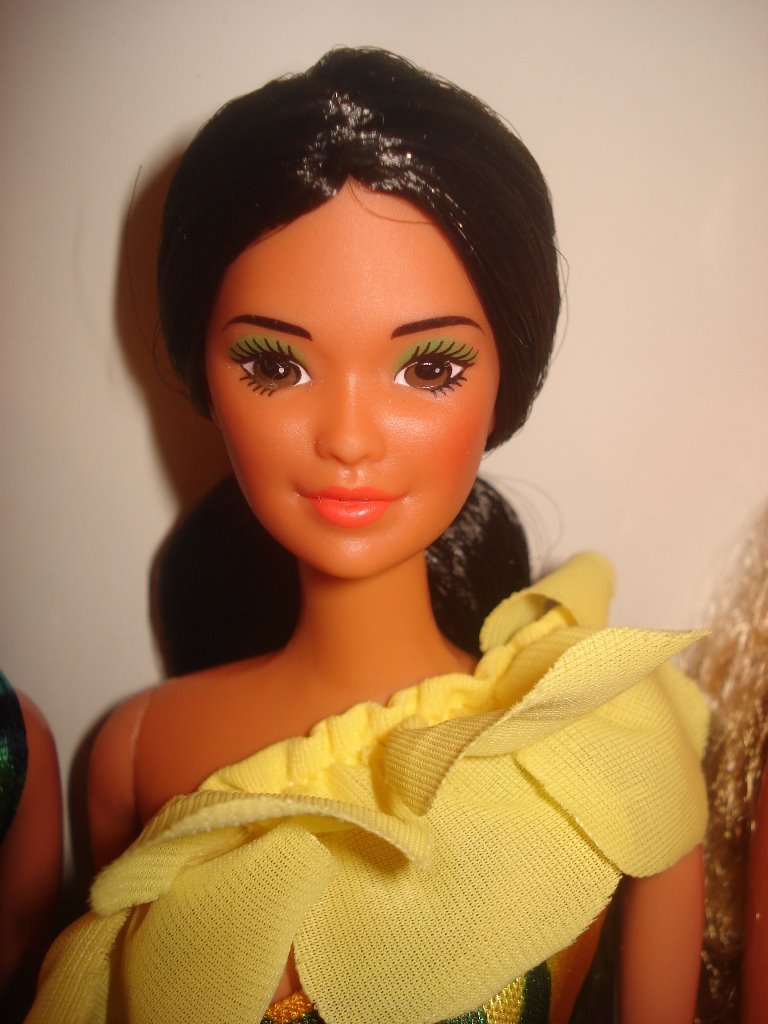
The Barbie Townhouse circa 1970’s release was my cardboard and plastic play-stage where I could re-enact and revise plot-lines from One Life To Live and All My Children with an ethnic twist. Instead of Barbie as the lead her friend, Island Fun Miko, was lady of the house and the center of all my Barbie narratives.

Image from Jemboy’s World

“Tropical Island Fun with Barbie and Miko” January 26, 2009

The Barbie Travel Agent Set was a surprise gift from Santa who, ironically, had designs to usher and initiate me into Third Wave Feminism:

Image from The Henry Ford Museum, “Happy 50th Birthday, Barbie!” March 2009

Re-cap of Alumni Reading at Saint Mary’s with Rosemary Graham (excerpt)

Originally posted at Ruelle Electrique:

Rosemary & I, photo by PJ Sanders

Spring 2011 has been nothing but high octane action and on Wednesday, April 27 at Saint Mary’s College’s Soda Center, your salonniere was pushed into full throttle for the Alumni Reading, as part of the Creative Writing Reading Series, which featured Professor and writer Rosemary Graham who’s books include Thou Shalt Not Dump the Skater Dude and her new novel Stalker Girl. Marilyn Abildskov, the program’s director, deemed this annual event a homecoming that, thankfully, doesn’t require football matches or awkward school dances. The SMC Alumni reading is that rare occasion when former students gather together after years apart, to celebrate one another’s accomplishments, and the list of accolades and publications for 2011 was quite impressive.

Many of your salonniere’s students came out in full force support, and I couldn’t be more grateful to see their radiant faces in the audience. Much appreciated!

Elizabeth Stark, current visiting faculty and author of Shy Girl, published by FSG, introduced the reading, and your Salonniere read from her story “Like Fish to Ginger” published in UC Riverside’s The Coachella Review Fall 2010 issue.

For more on the event, stop by the salon.

And! Check out the write-up covered by fellow alum, fiction writer, and English professor, Emily Bruenig on her site, Notes from a Writing Life. Here’s an excerpt on her response:

The reading was wonderful. Most readings are wonderful, really, if you ask me. Just the act of sitting in a literary audience with a notebook will make my evening, and, I must confess, when it’s a poetry reading, the rhythm of the words often becomes the best kind of trance-inducing background music, leading me to my own surreptitious writing, rather than constant attentive listening. But I didn’t get anywhere close to that this particular evening, and not due to any lack of poetics; both Rashaan and Rosemary write beautifully, but they also each write gripping plots and extremely compelling characters. Rashaan joked that you might have to try kind of hard to imagine her as the middle aged Thai restauranteur who narrates “Like Fish to Ginger,” but I’m sorry, Rashaan, you were wrong. It didn’t take any imagination at all. Your story does all the work.

For the full review, click here.

Examining Constructions of Otherness: More Reflections on ACTC’s 17th Annual Conference

Still reeling from the intense four-day conference of Associated Core Texts and Courses 17th Annual gathering at New Haven, Connecticut, held on April 14-17, one of the panels that stands out in my mind, and which I immediately want to integrate into my own curriculum was “Writing, Drawing, Producing: Students Response to Core Texts.”

Arundhati Sanyal and Nancy Enright from Seton Hall University presented their best teaching practices in their “Re-Telling Personal Narrative: The Digital Short in a University Core Class.” In their classes, they encourage students to consider their own transformative experiences and personal journeys influenced by the core texts they read. Their assignments allow students to explore and explain how a core text “speaks” to them. Students will gather a collage of family photos and images and set these images in synch with a song that illustrates their inspired experience with a particular text. They work on their project for a half hour in each class session. A lot of the students’ projects focus on decision-making and crossroads. Sanyal and Enright report that there’s a new dynamism in class when students get to work on their laptops. They also storyboard the narrative before creating the whole piece, which forces students to understand pace and determine where do they tighten the flow or when can they expand.

From St. Bonaventure University, Professor Anne Foerst covers the Eight Step Bonaventure Intellectual Education, and focuses on step 3, which covers “Who am I as an individual?” Professor Foerst has freshman students write a self portrait that both self-praises and self-critiques. The students reflect over their intellectual journey over the course of their first semester in college and they model their reflections off of Montaigne’s essays. She uses this assignment as a mid-term project; five pages about myself, which is about becoming your own friend. Students become less self-indulgent and more analytical. Foerst uses a quote to direct and inspire students, “I am my own public. My book has made me as much as I have made my own book.”

At the beginning of the semester, she has freshman write down three adjectives to describe themselves. Foerst doesn’t read the adjectives but puts them away until six weeks later when she has them perform the same exercise, but, this time, she breaks out the past adjectives and has them compare their self-perception. Students get to see how they have fundamentally changed over the short course of six weeks. This assignment helps give them a foundation to write their self reflection. In their reflective essay, students use quotes from texts they’ve read in Foerst’s class, and the essay focuses on personal transformation, exploring such inquiries as the following.

(I’ve added some questions and prompts of my own to try and tailor this assignment to some of my courses)

(My addition) Consider the core values or ideas of two authors you’ve read in this seminar. Summarize and evaluate these values or ideas by exploring how they might have influenced or inspired you by answering the following questions in reflection of these new values and ideas you’ve learned:

  • Where are you now after reading your chosen authors?
  • How has your sense of self changed?
  • How has your outlook on the world changed?
  • How have your opinions about a specific topic or idea changed?
  • Who am I in society?
  • How have I transformed intellectually?
  • How do I see others differently? Specify what you mean by “others” whether its classmates, roommates, professors, teammates, etc.
  • Analyze how your relationships to others (i.e. classmates, professors, siblings, parents, lovers, co-workers and cousins) have changed since you’ve read these texts.
  • How have your core values changed, if at all, after reading your chosen texts?

Foerst explains how students come to evaluate their own construction of “otherness” and how artificial their constructions can be. She asks her class often if they think race is real, and they have a hard time wrestling with this but slowly come to learn that they’re not isolated individuals. “If they embrace their own ambiguity, they can learn to embrace the ambiguity in others,” she urges, and then warns us, “There can be a dark side to the adjectives used” since students come to see their own faults. With this exercise they learn ambiguity and empathy. They can see themselves as a character. These assignments help make the core texts less scary and less daunting. As professors, we’re constantly trying to find ways to help students engage with the texts in the most immediate and urgent ways, and these best practices are wonderful opportunities for both students and faculty to connect with the authors and with one another.

Write-up on ACTC’s 17th Annual Conference sponsored by Yale in New Haven, CT

From April 14 through April 17, 2011, I had the honor and pleasure of presenting at the 17th Annual Conference for the Association for Core Texts and Courses, sponsored by Yale University, and co-sponsored by Augustana College, Boston College, and College of the Holy Cross, hosted at The Omni Hotel in New Haven, Connecticut. This year’s theme was “The Quest for Excellence: Liberal Arts and Core Texts.”

One of the plenary speakers argued for the spirituality of 19th century French poetry focusing on a particular piece by Mallarme, and two scientists, a quantum physicist and a chemist, responded with genuine enthusiasm about the connections they’d made to the poem presented and how the poem demonstrated the fragmentation in quantum physics and solvation of chemistry. The engagement from the scientists was wonderfully inspiring, and I truly hope to see more reaching out across the disciplines.

Thankfully the last speaker for the plenary sessions called for more cross-disciplinary collaboration and criticized the institutions for making such collaborations impossible. ACTC focuses more on critical and scholarly work though some of the panels centered on best practices and pedagogy. The panel “Core Images, Part II: Learning, Examples, Practice” brought together art historians and art professors who urged the use of art as a vital source for discussion and inquiry. Tatiana Klacsman from Augusta State University and her presentation “The Iliad in Teaching Art History within a Humanities Framework” covered how culture and values can be analyzed and evaluated through Greek artifacts. Mona Holmlund from University of Saskatchewan discussed approaches to indigenous art, especially in contrast to the Western canon with her presentation “The Challenges of Integrating Indigenous Knowledge with the Western Canon.”

Another literature scholar posed the worry of art replacing the written word, and an attendee followed up by asking how much time should faculty dedicate to art versus text. I had to counter that time is a measure of value, and everything discussed on that panel came down to values whether we’re comparing Indigenous art to Western or text versus image. As Socrates lamented the rise of the written word claiming that text would corrupt the rich oral culture of his time, everything comes down to values, which is determined by culture. We need to keep this in mind anytime we weigh one thing against another. As scholars we should constantly be checking our values and be wary of how our values factor into our curriculum, especially considering how those values may be servicing our goals for diverse student populations.

My own paper certainly evolved out of this consideration of values, which I presented for the panel “Contemplating Critique: How Far Back in Time is It Used?” Here’s an excerpt:

Engaging First-generation Students with Jean Jacques Rousseau’s Discourse on Inequality

Through his Discourse on Inequality, Rousseau draws in First-generation students through affective means, modeling an essential method of critique and analysis that demonstrates an individual’s agency of power based on reason, observation, and imagination. Rousseau provides a critical point of connection for students who may not be traditionally accustomed to the culture and privilege of higher education, and, through his narrative and argument, students can discover a means for engagement within their communities.

Nicole, we’ll call her, was a student who had yet to find her footing, academically. By simplest definition, she is a first-generation student. Neither of her parents had earned their undergraduate degree, and the college experience was all together uncharted waters for her and her family. She floated through Greek Thought and listlessly wandered through the likes of Dante, Augustine, and Chaucer in Roman/Christian, consistently feeling estranged by authors who looked and sounded nothing like her, describing cultures and concepts that seemed completely foreign, and irrelevant to her immediate experience.

By the time she came to my class as a sophomore, she had found her niche on campus and was part of a strong social network, but, academically, she was still unanchored and her displacement seriously affected her GPA. Still, Nicole was hungry for intellectual nourishment, knowing she lacked purpose in her studies, which inhibited her from realizing her full potential. By mid-semester, she was barely treading the choppy waters of Cervantes, Hobbes, and Locke, until, suddenly, to both her surprise and my own, Nicole reached terra firma with Jean Jacques Rousseau.

More coverage and reflection post-conference is forth coming.