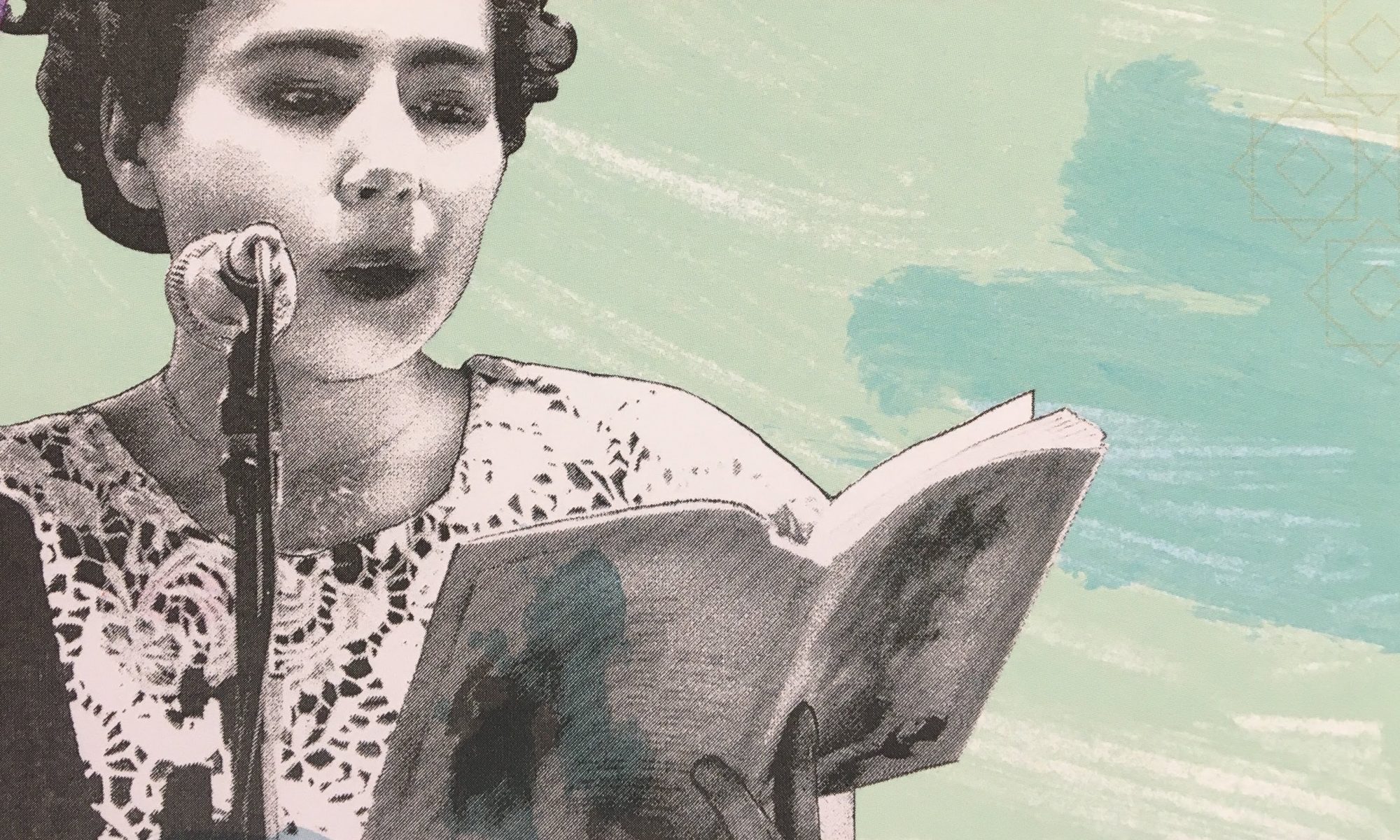
“Growing Up Filipino II: More Stories for Young Adults” now available

Please excuse me while I celebrate. I’m privileged to announce my latest short story “Here in the States” is included in the PALH anthology, Growing Up Filipino II: More Stories for Young Adults, edited by Cecilia Manguerra Brainard. Please consider this wonderful collection as a holiday treat for yourself, your family, any friends who love good stories, and any teachers or librarians who might be interested. You can get your copy through Amazon.com, or Barnes & Noble. I’d greatly appreciate if you’d please spread the word and would love to hear your reviews.

The San Francisco book launch takes place January 16, 2010. More information will be forthcoming or you can follow the updates on the PALH blog or this blog.

Thanks so much for all your support and encouragement!

LISTED IN AMAZON.COM GROWING UP FILIPINO II: More Stories for Young Adults

DISTRIBUTED BY: Ingram, Baker & Taylor, Amazon.com, Barnes and Noble, among others
PUBLISHED BY:
PALH
P. O. Box 5099
S.M., CA 90409
Tel/fax: 310-452-1195; email:palh@aol.com; palhbooks@gmail.com;http://www.palhbooks.com

BOOK DESCRIPTION: Growing Up Filipino II: More Stories for Young Adults is the second volume of the Growing Up Filipino series by PALH. In this collection of 27 short stories, Filipino and Filipino American writers explore the universal challenges and experiences of Filipino teens after the historic events of 9/11. The modern demands do not hinder Filipino youth from dealing with the universal concerns of growing up: family, friends, love, home, budding sexuality, leaving home. The delightful stories are written by well known as well as emerging writers. While the target audience of this fine anthology is young adults, the stories can be enjoyed by adult readers as well. There is a scarcity of Filipino American literature and this book is a welcome addition.

CONTRIBUTORS: Dean Francis Alfar, Katrina Ramos Atienza, Maria Victoria Beltran, M.G. Bertulfo, Cecilia Manguerra Brainard, Amalia B. Bueno, Max Gutierrez, Leslieann Hobayan, Jaime An Lim, Paulino Lim Jr., Rebecca Mabanglo-Mayor, Dolores de Manuel, Rashaan Alexis Meneses, Veronica Montes, Charlson Ong, Marily Ysip Orosa, Kannika Claudine D. Peña, Oscar Peñaranda, Edgar Poma, Tony Robles, Brian Ascalon Roley, Jonathan Jimena Siason, Aileen Suzara, Geronimo G. Tagatac, Marianne Villanueva

BIO OF EDITOR: Cecilia Manguerra Brainard is the award-winning author and editor of over a dozen books, including the internationally-acclaimed novel, When the Rainbow Goddess Wept, Magdalena and Acapulco at Sunset and Other Stories. She edited Growing Up Filipino: Stories for Young Adults, Fiction by Filipinos in America, and Contemporary Fiction by Filipinos in America, and co-edited four other books. Cecilia also wrote Fundamentals of Creative Writing (2009) for classroom use. She teaches at UCLA-Extension’s Writers Program.

More Mixed Race Portraits

From NPR’s “Mixed Race Americans Picture a Blended America” :

The 2000 U.S. census was the first to give Americans the option to check more than one box for race. Nearly 7 million people declared themselves to be multiracial that year, a number that’s expected to shoot up in the 2010 count. As more of the nation’s population identifies itself as of mixed race, the authors of a new book say Americans’ traditional ideas of racial identity are in for a challenge.In the book Blended Nation, photographer Mike Tauber and producer Pamela Singh combine portraits of mixed-race Americans with stories of living beyond the sometimes rigid notions of race. The husband-and-wife team tell host Liane Hansen they wanted to highlight the personal experiences of life between categories.

Read more

Listen to audio archive

'Blended Nation' by Mike Tauber and Pamela Singh
Blended Nation: Portraits and Interviews of Mixed-Race America,
By Mike Tauber and Pamela Singh,
Hardcover, 136 pages
Channel Photographics: $34.95

Powerful Women I’ve Never Heard Of

From The Guardian’s “Sandi Toksvig’s top 10 unsung heroines”:

“When I was a student at Cambridge I remember an anthropology professor holding up a picture of a bone with 28 incisions carved in it. “This is often considered to be man’s first attempt at a calendar” she explained. She paused as we dutifully wrote this down. ‘My question to you is this – what man needs to mark 28 days? I would suggest to you that this is woman’s first attempt at a calendar.’

“It was a moment that changed my life. In that second I stopped to question almost everything I had been taught about the past. How often had I overlooked women’s contributions? How often had I sped past them as I learned of male achievement and men’s place in the history books? Then I read Rosalind Miles’s book The Women’s History of the World (recently republished as Who Cooked the Last Supper?) and I knew I needed to look again. History is full of fabulous females who have been systematically ignored, forgotten or simply written out of the records. They’re not all saints, they’re not all geniuses, but they do deserve remembering.”


1. Hilda Matheson (1888-1940)

If you love Radio 4 you should love Hilda. She was the BBC’s first director of talks and helped shape the programmes we listen to today, founding radio journalism and the notion of quality radio. She was almost solely responsible for the mammoth African Survey for which Lord Hailey took all the credit.


2. Catherine Littlefield Greene (1755-1814)

As a child growing up in the United States I was taught that a man called Eli Whitney changed the face of the American economy with the invention in 1793 of the cotton gin, a machine that mechanised the cleaning of cotton. In fact it was Catherine’s idea but in those days women didn’t take out patents.


3. Princess Khutulun (c1251- ?)

The niece of the great Mongol leader, Kubla Khan, Princess Khutulun was described by Marco Polo as the greatest warrior in Khan’s army. She told her uncle she would marry any man who could wrestle her and win. If they lost they had to give her 100 horses. She died unmarried with 10,000 horses.


4. Queen Vishpla (somewhere between 3500 and 1800 BC)

The ancient sacred text of India, Rig-Veda, includes the story of this queen who led her troops into battle and lost a leg. She had an iron leg fitted and returned to war. The first person known to have a prosthesis.


5. Jerrie Cobb (1931-)

Chosen for the US astronaut programme in 1958, Jerrie Cobb had twice as many flight hours to her name as John Glenn, who became the first American to orbit the earth. She failed to go into space because she hadn’t gone through jet-aircraft testing. She hadn’t because women weren’t allowed to until 1973.


6. Agnodike (Fourth century BC)

Athenian women were not allowed to be doctors so Agnodike disguised herself as a man to study medicine. When she had finished she tried to treat women but they refused, thinking she was male. When she revealed her sex she was arrested but succeeded in having the law against female medics changed.


7. Florence Nightingale (1820-1910)

Nightingale is well known in history as the Lady with the Lamp but this was actually a phrase invented by a Times journalist. The men of the Crimean actually called her the Lady With the Hammer because she was quite happy to break into supply rooms if her patients needed something.


8. Angelika Kauffmann and Mary Moser

In 1768 Angelika and Mary helped found the Royal Academy of Arts in London. When a portrait of the founders was painted, only the men of the Academy were shown gathered in a studio. The women appear as portraits on the wall.


9. Enheduanna (c2285-2250BC)

Probably a princess. Certainly the world’s first known author, male or female. She wrote hymns to the gods in cuneiform.


10. Edmonia Lewis (1843–c1900)

The first black woman to be recognised as a sculptor. At college she was accused of trying to poison two white students. Although she was proved innocent she was not allowed to graduate.

* guardian.co.uk © Guardian News and Media Limited 2009

Deborah Orr points out “Diversity and Equality are not the same thing”

Sure Deborah Orr may be criticizing U.K. society but the words ring true across the Atlantic in her article published in today’s The Guardian, “Diversity and Equality are not the Same Thing”

Here are some of the meatier sections to her astute argument:

…the Conservative leadership has embraced not equality, but diversity.

This is social progress, of course. But it is not the progress that the left once envisaged. On the contrary, in the same time as the argument for diversity has made such strides, the increased equality that was assumed to be part of its goal, has not materialised at all. Instead, inequality in Britain is now much greater than it was prior to the success of its various “equality” campaigns…

Does this matter? Is it important to understand that diversity and equality are different things, and that they are sometimes even at odds with each other? After all, the rooting out of discrimination achieves social justice, whether in the name of diversity or equality…

Yet who in the political mainstream is advancing this argument? Even Barack Obama, the world’s most potent embodiment of the advance of diversity, has trouble setting out, let alone winning, the equality argument.

In the current issue of the London Review of Books, US academic David Bromwich writes about Obama’s difficulties in persuading the nation of the overall benefit of his healthcare reforms. In a stinging phrase, just as applicable in this country, he says: “Equality in the United States in the early 21st century has become a gospel preached by a liberal elite to a populace who feel they have no stake in equality.” Miserably, he’s quite right.

Read more of the article here.

William Boyd on London’s Parks

From Sunday, June 21, 2009 The Guardian | Culture | Books | Fiction, Boyd “takes an A-Z literary tour of London’s Parks” in his article “‘Its all too Beautiful'”. Brilliant method of organizing a stream-of-conscious essay!

Charles Dickens and Jane Austen, in the pantheon of English literature, perhaps best illustrate the split between the “town” writer as opposed to the “country” one. It is a very 19th-century juxtaposition, made particularly acute and particularly obvious as the industrial revolution took its remorseless grip on the nation. The widespread development of the city park, in turn, was largely a 19th-century phenomenon. The filth and foetor of the Victorian metropolis made the green spaces all the more important. I have a history of London composed solely by its maps, and one can see the exponential growth of the city over the centuries reflected by the steady appearance of its parks, like green islands in the burgeoning, cross-hatched grid of London’s streets – not so much the city’s “lungs” as the city’s verdant archipelago in its dark and grimy sea.

Definition of a park. It’s time to establish precisely what we mean by a “park”. I’m thinking principally of London, but I feel this definition will fit all parks in all cities of the world. There are certain determining characteristics, necessary conditions, for park status. First, there must be tall, mature trees, the older and taller the better. Second, the majority of the trees in the park must give the impression of random planting…Read more

Harper’s Magazine is on a roll

More greatness from Harper’s Magazine, “Plato’s World” published Sunday, June 6, 2009.

In Plato’s day, the world itself seemed boundless beyond comprehension, its resources inexhaustible, and the dangers and wonders of nature were a test for human knowledge. With the passage of time, humanity has grown much more conscious of the finite nature of the earth and its resources. And with time, Plato’s conceptualization of the earth as a living creature has also become a more appealing model–it pointed the way to discovery of the ecological systems by which the world breathed, moved, transformed and regenerated itself. Today humanity approaches final mastery of the world–but what does this mean for the world-soul and for humanity’s ultimate survival in its terrestrial setting?

Evocations of Panthea


Harpers’ Magazine
does it again with a wonderful commingling of Emerson and Beethoven contemplating the world-soul.

In The Dial of July 1841, close to the time of this poem’s composition, Emerson writes: “Music is the aspiration, the yearnings of the heart to the Infinite. It is the prayer of faith, which has no fear, no weakness in it. It delivers us from our actual bondage; it buoys us up above our accidents, and wafts us on waves of melody to the heart’s ideal home.” He has been to a concert performance of Ludwig van Beethoven’s sixth symphony, the Pastoral. “Whoever has studied the Pastoral Symphony… will feel the difference between music which flows from an inward feeling of nature, from a common consciousness (as it were) with nature, and the music which only copies, from without, her single features. These pieces bring all summer sensations over you, but they do not let you identify a note or a passage as standing for a stream, or a bird. They do not say; look at this or that, now imagine nightingales, now thunder, now mountains, and now sunspots chasing shadows; but they make you feel as you would if you were lying on a grassy slope in a summer’s afternoon, with the melancholy leisure of a shepherd swain, and these things all around you without your noticing them.”

Read more at “Emerson’s World Soul” | Harper’s Magazine | 7, June 2009

“What R U ???”

Thursday evening, April 9, 2009, NPR aired the show In the Mix: Conversations with Artists…Between Races. Spliced with sound bytes from 44th President Obama’s Inaugural Speech, producer and narrator, Dmae Roberts, raised all too familiar themes and experiences of confused identities, raising awareness, and the exasperating questions I’m habitually poked and prodded with by strangers and acquaintances. “What was she?” shall be written on my epitaph. But with the proliferation of mixed race people, like myself, according to the show, “Nearly 7 million Americans are of mixed race” and “by year 2020 half of the people will be of mixed race,” perhaps we won’t have to serve as Cultural Ambassadors and explain how babies are created, no matter the ethnic backgrounds.

Quotes from some of the artist interviews:

Thomas Lauderdale:

“Coming from no where and everywhere. Openness to everything different.”

“Identity is a puzzle that has to be solved.”

Demetra Pittman:

“Love complexity, revel in it. Life isn’t black and white.”

Velina Hasu Houston:

“Misidentities, made me curious about other cultures across the world.”

Robert Karimi:

“Create communities not just on race Life is a negotiation.

“Point of departure to intersections”

Mixed Race Vocabulary: inclusive, sensitivity, rainbow tribe, Heinz 57, cultural consciousness, melting pot.

http://www.kqed.org/epArchive/R904111300

“George Harrison went to India and brought back a sitar”

Just the shot in the arm needed for inspiration, Terence McNally on his KPFK show, Free Forum, has introduced the source of holistic, systems thinking and the mastermind behind the philosophy of Ecological Awareness, Fritjof Capra. His work seems to have inspired much admired writers, activists, and social workers such as Leny Mendoza Strobel and her new Center for Babaylan Studies.

Will have to crack open this new universe and explore fully, but for now, here’s a small audio tasting. Capra interviewed by Terrence McNally, April 7, 2009

http://64.27.15.184/parchive/mp3/kpfk_090407_120100freeforum.mp3

and…

Abstract from “A Crisis of Perception” |  Integral Studies | Thomas Maxwell | University of Vermont:

Ecological Awareness

This widening of our “circle of understanding and compassion” requires a new mode of perception which transcends the illusion of separateness to discern the unity, the “unbroken wholeness” from which emerges the diverse forms of existence. This awakened perception gives rise to a more integrative, holistic, and ecological perception of the cosmos. Capra (1996) asserts that this emerging holistic worldview, which he calls “deep ecological awareness”, “recognizes the fundamental interdependence of all phenomena and the fact that, as individuals and societies, we are all embedded in (and ultimately dependent on) the cyclical processes of nature” (p 6). Although this vision can be elaborated through science, its principal grounding is in spiritual experience. It will require an integrated epistemology that embraces both the rational knowledge of scientific empiricism and the inner knowledge of spiritual experience. “Ultimately, deep ecological awareness is spiritual or religious awareness. When the concept of the human spirit is understood as the mode of consciousness in which the individual feels a sense of belonging, of connectedness, to the cosmos as a whole, it becomes clear that ecological awareness is spiritual in its deepest essence. It is not surprising that the emerging new vision of reality based on deep ecological awareness is consistent with the so-called Perennial Philosophy of spiritual traditions, whether we talk about the spirituality of Christian mystics, that of Buddhists, or the philosophy and cosmology underlying the Native American traditions” (p. 7). This “deep ecological awareness” fosters a vision of the cosmos as fundamentally sacred.

Capra’s universe is fortuitously right next door, to boot!

The Center for Ecoliteracy is dedicated to education for sustainable living.

We provide information, inspiration, and support to the vital movement of K-12 educators, parents, and other members of the school community who are helping young people gain the knowledge, skills, and values essential to sustainable living.

We base our work on these four guiding principles:

  • Nature is our teacher
  • Sustainability is a community practice
  • The real world is the optimal learning environment
  • Sustainable living is rooted in a deep knowledge of place